Ultiworld globe logo

Rethinking the Rules: Fouling Out

by in Analysis, Opinion with 9 Comments

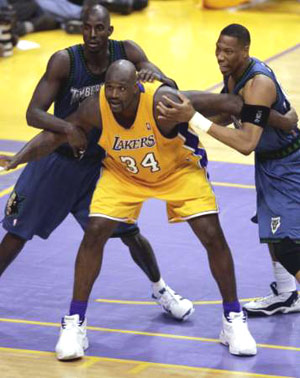
Shaquille O'Neal being defended by two Timberwolves players in the post.It should be no surprise to anyone that’s followed college ultimate in recent years that when I first started playing competitively while at the University of Florida, I quickly grew familiar with the idea of intentionally fouling. The benefits are pretty straightforward. Instead of letting an opposing player break your mark or run past you on a cut to the endzone, a little bump is all it takes to knock a player out of rhythm and stop play.

Knowing when to strategically foul — even if it means reseting the stall count or giving the offense a do-over —  in a sport with no systematic way of seriously dissuading minor infractions is wildly advantageous.

The foul-friendly mentality — which many elite players and teams share to some degree — is often very detrimental to the flow of a game. This was most visibly seen in the 2010 College Championship finals. Florida’s ability to overcome an arguably deeper Carleton team to win that year’s national title is often attributed to the use of calls to help control the pace of the game.

As our post about the possibility of referees in ultimate touched on, it also seemed that the USA Ultimate Observer system did more to aid in the disruption of gameplay than to avoid it. The PMF and TMF system clearly wasn’t a sufficient safeguard against serial fouling and the tedious chess match that played out was a disaster in terms of spectator appeal. This type of stop-and-go game is fairly rare at this point but it’s reasonable to assume that the more competitive ultimate becomes as the sport progresses, the further teams will push the rules to gain any possible advantage.

But what would happen if the foul system in elite ultimate was more similar to that of high level basketball? There, teams are systematically penalized as they accumulate fouls and individual players have a specific number of infractions they can commit before fouling out of a game. This help prevent NCAA and NBA games from being bogged down by unending stoppages and free throw attempts — aside from when the Mavericks briefly employed the “Hack-a-Shaq game plan — and could potentially do the same for ultimate if the right version were to be adopted.

Seemingly obvious is the fact that Observers — or possibly referees making active foul calls — would be necessary in any scenario where fouls are being tracked. Simply put, players can’t be trusted to be that objective. Attempting to self-police fouls this meticulously would only lead to more arguments, meaning that the system would have to be reserved for situations where officials of some sort are present.

The first detail of this hypothetical new foul system that would need to be ironed out is the number of infractions that individual players can commit before they are forced out of a game. This would certainly take a some testing and, once an appropriate threshold is eventually determined, the adjustment period for players would likely be significant. That said, regardless of the actual number of fouls that are allowed, the implementation of any limit at all seems like it would be enough to make players more cautious and help play keep moving.

One commenter suggested that in prior experiments with foul-based ejections, dirty, undesirable play actually increased instead of decreased. This could mean that the four personal fouls allotted to each player was too many but it could also allude to the need for a complementary team foul standard. Again, similar to basketball, ultimate could easily adopt an effective way to penalize teams that collectively break the rules too many times. The combination of penalties for personal and team fouls could certainly go a long way towards preventing any game from resembling that 2010 College finals again.

There is one glaring weakness to this system. What if players started looking to draw fouls, similar to the way NBA players drive to the basket in hopes of making it to the free throw line? At Florida, one of the first drills I remember taking part in was a dump drill where the focus was less on completing the throw than it was on making sure to draw contact and throw through it. This same mentality could certainly be applied to luring opposing players into foul trouble, making it necessary to regulate that as well. The most analogous situation I can think of in basketball is when defensive players are given blocking fouls while trying to draw offensive charges.

Developing a system that made it equally difficult for teams to benefit from intentionally committing or drawing fouls would take some serious testing but if the success that competitive basketball has had with it is any indication these concepts could definitely be applied to ultimate. It would take a good deal of tinkering but it’s easy to see how reforming the current system used to penalize infractions could improve the sport at its highest level.

Read more about Ultimate rule changes in our series, ‘Rethinking the Rules.’

Tagged , , , , ,

About Wes Cronk

Wesley Cronk is the Vice President of Business Development of Ultiworld. Originally from West Palm Beach, Florida, he started playing ultimate in high school and split his college ultimate between the University of Florida and New York University. He has played open club with Vicious Cycle (Gainesville) and Fox Trot Swag Team Unity (New York). He currently lives in Brooklyn, NY. You can reach him by email (wes@ultiworld.com) or on Twitter (@wescronk).

View all posts by Wes Cronk →

Related Posts

  • greenapples

    Why the ultimate community lets people from florida drive the observer/ref debate is beyond me. If you write articles about systemic rule bending/breaking while playing in the current system, why would anyone trust you not to do the same in any other system of rule enforcement? The theme of this article is that ‘I will cheat no matter what system I am a part of”. You personally act sanctimoniously about ‘driving the sport forward’ and ‘elevating’ it but you’ve written a public article detailing your efforts to undermine the rules and the expense of every team you’ve ever played against. You no longer get to talk about ‘improving the sport at the highest level’.

  • Pingback: Does Ultimate Need Referees? | Ultiworld

  • Colin

    Similar to one of the other articles. Does the 2010 College Open Final indicate that the Misconduct System is ineffective, systematically? Was it the system that didn’t allow a Misconduct Penalty to be imposed until so late in the game? Has the system been updated since then? Yes. Has the implementation changed since then? Yes. Have the College Championships since then been much cleaner? Yes. Partly rules and officiating changes. Pre-tournament communications. Different players/leaders. Coaching in some cases.

    Not saying the current system is perfect. I just think the more interesting discussion relates to the current system and implementation (as distinct issues) and not how things were done over two years ago.

    • Charlie Eisenhood

      Colin, you’re right about all of your questions/answers. I think that Florida game is being used as more of an example case than as the actual problem that needs fixing. There is still a problem at the highest levels of the game with strategic fouling, bad calls, etc. There’s no question that the observer program has been adapting to deal with that, but it could go a lot further. (Indeed, a lot of people think we need full-on referees).

      That’s why this post — and the referees post from yesterday — suggest changes within the observer framework, not a move to a new system. (Your point about travels is well-taken — we may need to rethink what qualifies as an infraction.)

  • Gearóid

    the basic thrust here is that international fouls aren’t punished.

    spirit scores reflect this. if be interested in reading an article on how to punish teams to get poor spirit rankings. currently public condemnation is quite effective, see Canada.

    but what more can be done in this area?

  • Darkorse

    Colin is right and Charlie, you don’t address the issue in your response. Using the 2010 final as a point of reference ignores all of the changes that were made to alleviate the problems related to the specific ways that Florida cheated. You do not see that type of cheating in well-observed games anymore.

    It would be like taking Mondays Green Bay/Seahawks game and using that as an example of the problem with referees in two years after the replacement referees are long gone.

    The problem with foul limits is that it creates a market for fouls. For players who are not spirited, there will always be some situations where those players will weigh the value of fouling vs the cost of being called for fouling and decide it’s worth it to foul. I’d rather not legitimate that with foul limits because that will make everyone foulers.

    The better tack is the one that USAU is taking which is to give observers latitude to appropriately punish players for taking repeated or egregious advantage of the rules while also making clear that that intentional rule breaking is an unacceptable part of the game (i.e. emphasizing SOTG).

    One step that could be made to help make the point is, now that someone has admitted that Florida’s behavior was systematic abuse of the rules, to engage USAU’s conduct committee and take action against the program and individuals who were responsible for this behavior.

    Darkhorse

  • Colin

    Reading again, I realize that this article has a cheap, superficial intro, and general approach to referencing the current system without actually providing any depth or analysis. Too much blanket assertion, and not enough supporting points and analysis. For example, “The PMF and TMF system clearly wasn’t a sufficient safeguard against serial fouling and the tedious chess match that played out.” How did the system fail? How did the implementation fail?

    Better to skip the whole intro and just start with “what would happen if the foul system in elite ultimate was more similar to that of high level basketball?”

    I also find it peculiar that the article concludes, without support, that the trend of the past two years will presumably reverse itself as the sport continues to grow and become more competititve. As the rules/officiating improves, and more and more youth players enter the college/club scene after getting exposure in high school to coaches emphasizing fair play.

    In response to Charlie and to Darkhorse, in part.

    For systematic abuse, teams will run into PMFs, especially at College Nationals where every game is Observed. That’s a big deal. Effective use of TMFs puts teams on notice before PMFs start dropping, and resolves issues before they escalate (or continue). Agreed that conduct committee action could/would be appropriate, too. I think that should be forward-looking rather than retroactive, though.

    The “highest level” of the game is an interesting standard. Does that exclude the College Division? Or are we just talking Nationals? Open, Women’s, Mixed, Masters? Just Open? Are the truly top Open Club teams (top 4?) creating significant problems? Persistent rules violations are more of a cusp-team kind of behavior (come-closer-to-winning, at all costs). But I agree, it exists in some places in say, the top 25 teams, as well as at various cusp points below that.

    A little more on the 2010 game. In the context of improving the system/implementation, I’ve previously watched the footage and noted where TMFs could/should have been given, and I came up with 17-28 TMFs for that game (3 in the first 4 minutes) between the teams. How many actually got issued, and how many early in the game? Failure of the system? (note, I do not recall for sure when the language allowing for a TMF for a single egregious act was added).

  • Colin

    Oops. Deleted a portion of my comment, which is that I like the topic of the Series. I think there’s lots of interesting stuff to discuss in this area. Not intending to be strictly negative-nancy.

  • Matt

    I think that, in creating an official punishment for fouls, we would be subconsciously telling players that fouling is okay. The beauty of this game is that it is built around sportsmanship (the way sports are meant to be played). If we institute penalties for fouling and referees to moderate the game, it will eventually become the same as soccer or basketball. Right now, for a true ultimate player, spirit is more important than winning, and changing the rules to deal with fouling will change that.

Find us on Twitter
Find us on Facebook