Highlighting players who took a leap toward stardom in the division this spring.
June 18, 2026 by Edward Stephens in Awards
Each year, Ultiworld presents our annual College Awards. Our staff evaluates the individual performances of players from throughout the season, talking to folks around college ultimate, watching film, and look at statistics, voting upon the awards to decide those to be honored. The regular season and the college Series are both considered, with extra emphasis for performances in the competitive and high-stakes environment at Nationals.
The Breakout Player of the Year recognizes rising juniors and seniors who made themselves known in a new light this season. While our nebulous definition of “breakout” reflects an evolving set of criteria, rather than celebrating the improvement of those from whom big things were already expected, we aim to use this award to celebrate the emergence of those who previously have not been on the national radar. Whether it be through growth in ability, role, or both, the Breakout Player of the Year and runners-up honor those who rose to the occasion with improved and high-impact performance on a new level this season — putting them squarely in the spotlight moving forward.
- All-American First Team
- Player of the Year
- All-American Second Team
- Offensive Player of the Year Award
- Defensive Player of the Year Award
- Breakout Player of the Year Award
- Rookie of the Year Award
- Coaches of the Year Award
- Full Awards Voting Breakdown
D-I Men’s 2026 Breakout Player Of The Year
Alex Hall-Witt (Oregon)
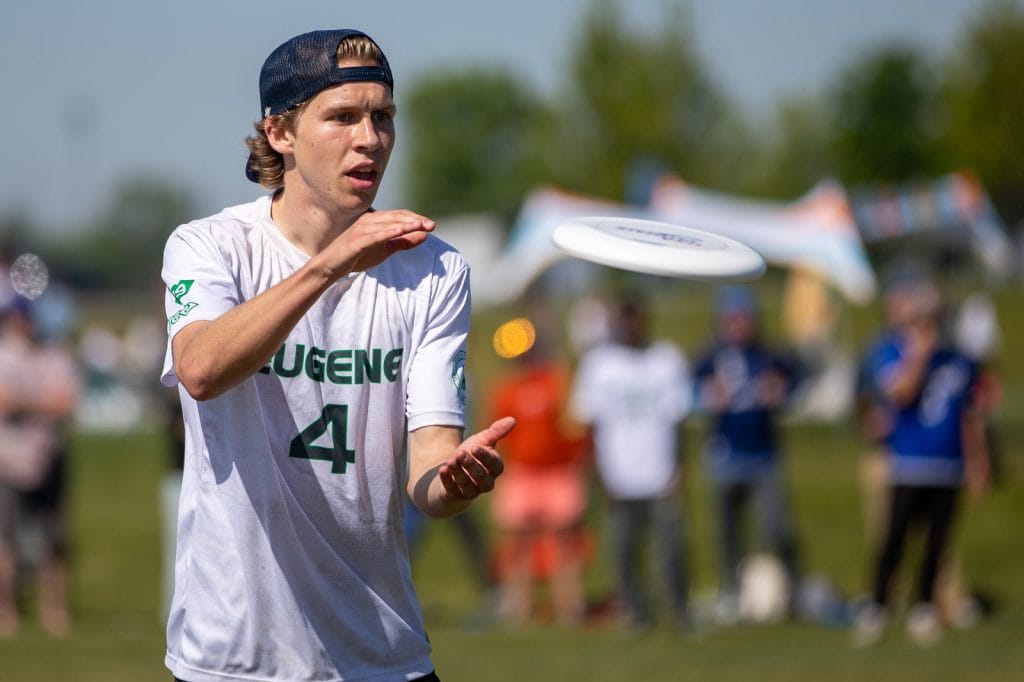
Sometimes, the Breakout Player of the Year only becomes clear to our panel of voters while reflecting on the season and inhaling extra Nationals film. Sometimes, though, you notice the breakout performance in real time. For some voters, perhaps the clarity came with Hall-Witt’s instrumental role in the comprehensive Ego takedown of Colorado in the Presidents’ Day Invite final. For others, it may have been some of the out-of-this-world blocks he notched at Smoky Mountain Invite. Or it could have the combination 80-yard pull and layout callahan at Easterns that was (for my money) the biggest moment of the regular season. Whichever of those impressive displays clued each of us in, the third-year player’s bloom from fast role-player to game-shaping force was unmistakable.
By the time Nationals rolled around, we were all used to the idea that Hall-Witt would be one of the tournament’s best two-way players, and so we could sit back and watch him play smothering defense, make astounding midair denials (some of his Ego-high six blocks), and lead counters with incisive (10 assists) throwing and sublime (one turnover) efficiency. The raw speed that was always a major factor in the best parts of Hall-Witt’s game expanded its footprint dramatically with major upgrades in throwing variety, game command, throwing distance, micro-footwork, airborne body control, and hand-eye coordination in pivotal split-second moments. There is plenty of footage from Nationals to affirm the way his hard work translated into on-field improvements in just about every way, and you can review it if you have a free afternoon – but why bother when it was basically visible from orbit for months?
– Edward Stephens
First Runner-Up
Gabe Dowd (Michigan)
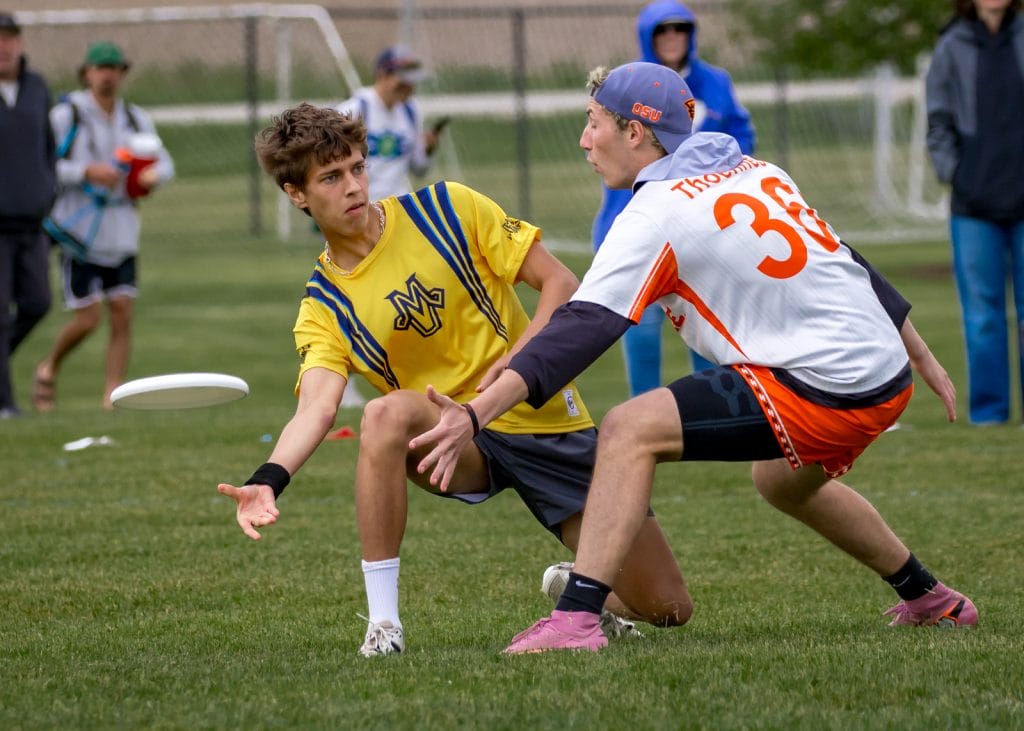
One of the joys of watching the college division each season is the way players who were completely off your radar can turn into revelations, and all of a sudden you want to ask yourself where such brilliance had been hiding. Speaking personally, that was my sense of Gabe Dowd, MagnUM’s newest wizard, and one of the key reasons to remain optimistic for the program in the post-Bartlett era. A look at his line – 9G/7A/2T – won’t blow you away (although it’s plenty good). It’s the dynamism and poise he shows as a connective piece on offense, and the heady way he picks his spots to break the defense, that inspire so much admiration. Expect Dowd to feature front-and-center next year alongside Filip Icev and Colin Jarvis, and get ready to gawk at the sure-to-be gaudier statline.
– Edward Stephens
Second Runner-Up
Zach Sadow-Hasenberg (Western Washington)
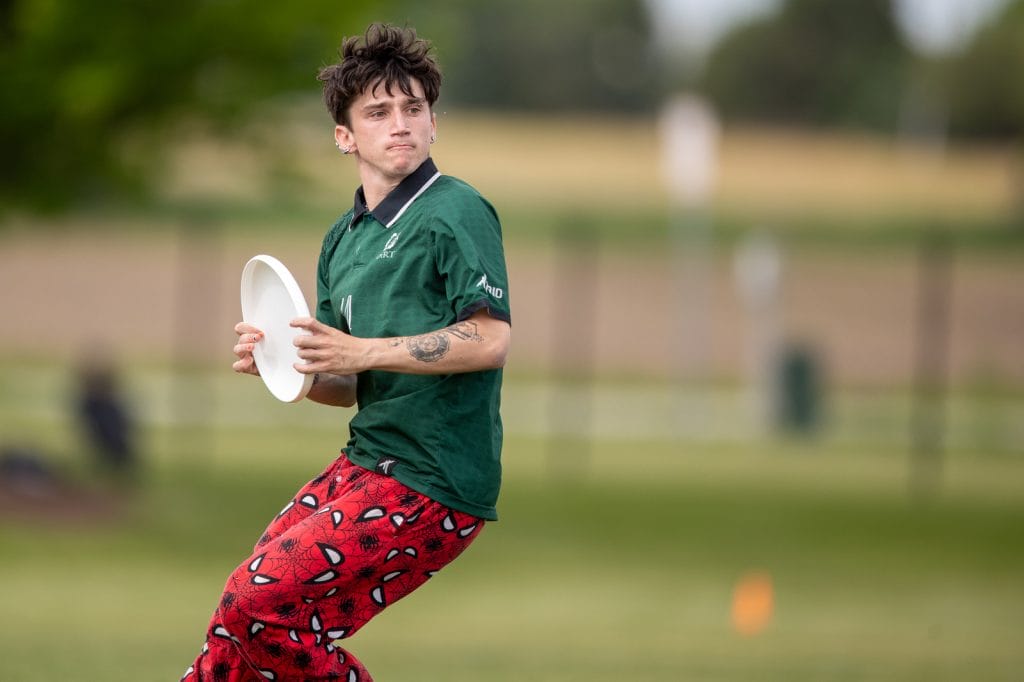
Second-year Zach “Shadow” Sadow-Hasenberg was exactly what the doctor ordered – and then some – for a DIRT side looking to spread scoring options beyond their Big Three. They were one of the division’s fastest players in a straight line, which, combined with virtually incomparable cut timing, led to heaps of goals all season long. Shadow’s scoring blitz continued all the way through Western Washington’s quarters-worthy run in Rockford: he posted a cool 10 goals (and notched five assists) to help drive them past the likes of UNC and UC Santa Cruz and put up a serious fight against Colorado.
– Edward Stephens