Seattle conquered San Diego with stout defense in the wind.
June 19, 2026 by Emilia Scheemaker in News, Recap
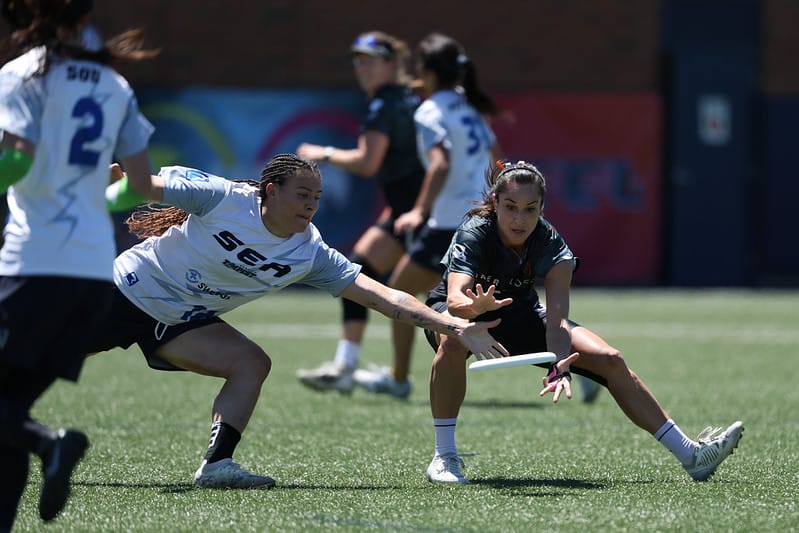
In difficult wind and heat, the Seattle Tempest claimed their third WUL title with a 13-8 win over San Diego. This championship wasn’t defined by perfect ultimate, but by the team that stayed connected when the game got tight. While both teams struggled to complete possessions consistently, Seattle spent more of the afternoon dictating where the game was played and capitalizing on the mistakes.
The final score doesn’t show the fight between these two teams. The game was tighter than the five-goal margin indicates, full of individual battles and grindy points. For three quarters, San Diego remained within striking distance. The difference was Seattle’s ability to maintain its discipline as the game wore on.
Seattle started fast, up 5-2 after the first quarter. But San Diego held the line, entering halftime tied at 7-7 after a crossfield blade from Kaela Helton to Abbi Shilts to cap off the half. The first half was defined by San Diego’s ability to shut down Seattle’s momentum and keep the runs from stretching. Players like Kaela Helton (2A/2B) and Kaitlyn Weaver (14/15 with 1G/1A/2B) were invaluable to disrupting the rhythm and putting Bloom back behind the disc. As wind picked up and the game shifted to upwind/downwind possessions, Seattle’s depth and defensive discipline became increasingly apparent.
Momentum shifted in the third quarter. Possessions stretched as the wind disrupted timing and execution, forcing both teams into long points full of turns. Rather than searching for difficult throws, Seattle consistently took the available yards and trusted their defense to create another opportunity. Seattle’s confidence behind the disc with Cheryl Hsu (55/57 with 2G/4A), Jamie Kauffman (3G/2A/1B), and Jess Spaulding kept the offense calm and balanced as they worked through shifting conditions on the field. The approach gradually tilted the field in their favor.
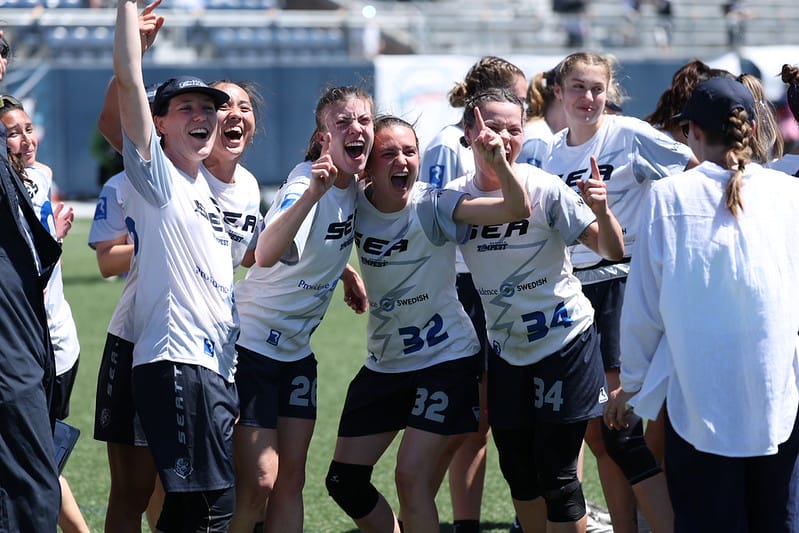
San Diego never found their offensive stability. After matching Seattle through the opening half, the Super Bloom managed just one goal in the third quarter and were shut out entirely in the fourth. The tight person defense behind Tempest repeatedly forced San Diego into uncomfortable downfield looks and capitalized when execution faltered. Tempest’s ability to contest jump balls and squeeze looks on the high side of the field kept them in control of the disc and control of the game.
In a championship defined by adverse conditions, patience proved more valuable than brilliance. Seattle understood that better than anyone. By the final whistle, they had turned a competitive title game into another championship and reinforced a familiar truth about the Tempest: when games become a test of composure, they are exceptionally difficult to beat.