Just four remained after two days of play: Seattle Seven Hills, California Current, Colorado Cutthroat and Minnesota Superior!
August 3, 2026 by Graham Gerhart in Recap
The YCC tournament has been in full swing over the last two days. Players have fought through the wind, the heat, and their opponents on their quest to earn the YCC title and at the end of Day Two of the tournament, we’re down to the final four. Seattle Seven Hills, California Current, Colorado Cutthroat and Minnesota Superior all won out over a tough crop of 20 teams to be the last four standing, and one of them will end 2026 as the champion. How each team got to semis is a story unto itself, so as we prepare for the final day of the tournament, let’s also look back at the weekend’s events and all the action that took place.
Seven Hills Dominate Pool A and Outlast a Fiery OAK Embers Team
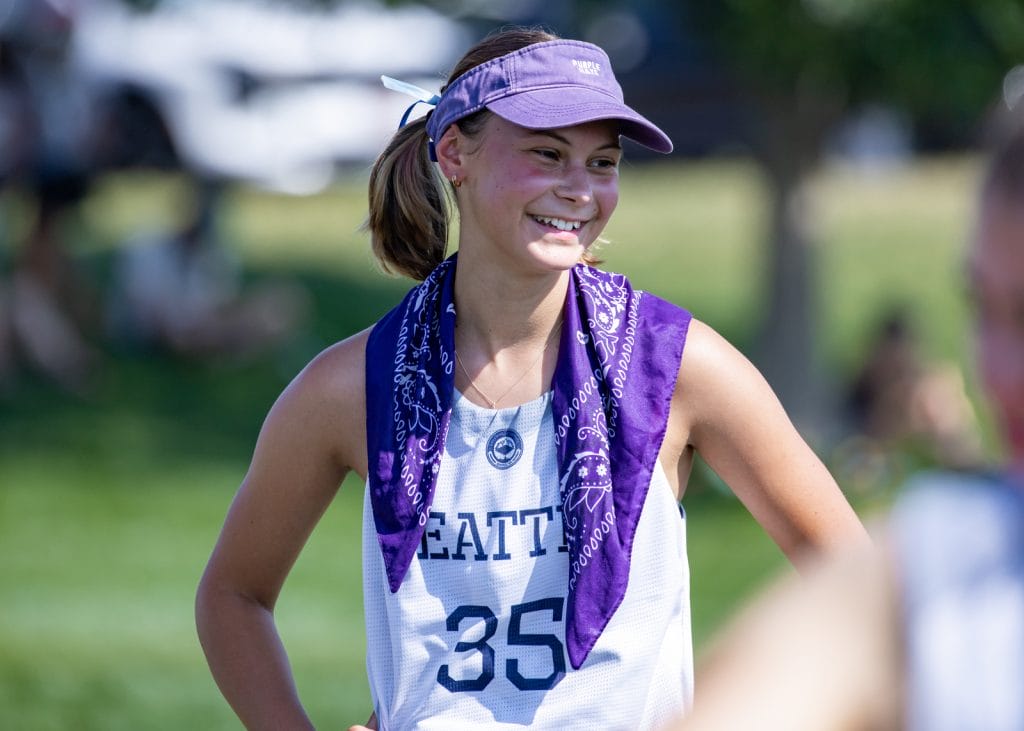
The top seeded team heading into the tournament proved why they deserved their ranking over the course of the last two days. Seattle Seven Hills were in a class of their own during pool play, rolling past opponents by establishing an early lead in games and never looking back. In their first four games, they took half by five breaks or more, and only cATLanta were able to get more than a single point against them in the first half. If that’s not domination, then nothing is.
Their first real challenge came in quarters against a Bay Area OAK Embers team that had the defensive talent to fluster Seattle’s otherwise unflinching handler core. Led by Rani Millstein and Nora Draut, the Embers were able to get the disc back after their own mistakes, and didn’t give any free points to Seven Hills right off the bat. Still, Seattle’s offensive line proved too tough of a riddle for the Embers to solve, and the game slowly slipped away. Despite a valiant effort, the Bay Area team didn’t earn a singe break, and Seven Hills slowly built up their lead before finishing the game 12-8 on the back of some very impressive throwing in the gusty wind that lasted throughout their game.
The stars of the Seven Hills team are well known at this point — Nora Luloff, Lily DiGioia, and Amelia Welsh have become household names for those that follow youth ultimate, but there are plenty of others on the roster that should be celebrated. Darby Bodayla, Sonia Snyder, and Elle Olivier all had phenomenal games throughout the tournament, and they help solidify the reputation of this team as the one to beat. At this point, it seems likely that the path to the YCC title goes through Seven Hills.
Colorado Cutthroat Survive Pool D & a Late Downpour Comeback to Make Semis
Arguably the most exciting game of the tournament occurred in the quarterfinal between Colorado Cutthroat and Oregon Downpour. The good news for fans of the division is that the game was streamed and is well worth the watch. Without spoiling too much, it ends with a play that’s sure to make the highlight reel of the tournament, and potentially a Catch of the Year bracket.
Let’s not get too far ahead of ourselves, though. Before Cutthroat made it to quarters, they were taking names in Pool D. The team won their first three games handily, using the depth of their cutting core and utilizing the power of their throwers to full effect. Neela Emerson and Anna Needy were two standouts who now seem to be WJUC snubs, as they broke every mark from every defender and kept the offense moving at a clip few teams could match. As said, the team’s depth was their calling card, and almost every on-field player scored a goal or two, making it difficult for opposing coaches to decide where to place their best defenders. Still, it wasn’t all golden for Cutthroat. They ran into the buzzsaw that was California Current in pool play, which set them up for an impossibly difficult matchup in quarters: Oregon Downpour.
Downpour made the final in both of the last two YCC events, and won it all in 2024. While they lost cutter phenom Asa Kimball, the majority of their 2025 roster returned. Facing off against the likes of Kyla Hurt, Dana Herrmann, and Eva Armstrong is a daunting task for any team, but Colorado Cutthroat played without any nervousness. They played just as they had in every other game, and while they went down a break early in the game, Cutthroat kept fighting.
Perhaps the previous loss against California Current prepared them to be resilient, because Cutthroat never let a turn or a mistake drop their heads, and were aggressive on the fast break when Oregon made any mistake. This flustered Oregon’s offense, who had not yet felt a lot of pressure through the tournament. Colorado built an 8-6 lead that started to make Oregon nervous, and they started to play nervous, which ballooned that lead to 10-6 in a few short minutes.
Downpour were not out of it, though, and composed themselves long enough to break back into the game, tying it at 11s. That’s when Colorado’s resilience really shone, as they made play after play to keep possession on offense and maintain the small advantage they had left. No matter what Oregon threw, Cutthroat managed to fend it off.
On the final point of the game, a huge huck went up and… well… it’s worth watching for yourself. Go look it up. It’s amazing ultimate. Colorado has to be proud of their performance this weekend, but the team’s not done. Not by a long shot.
California Current Cruise Through Pool Play & Calm the Utah Swarm
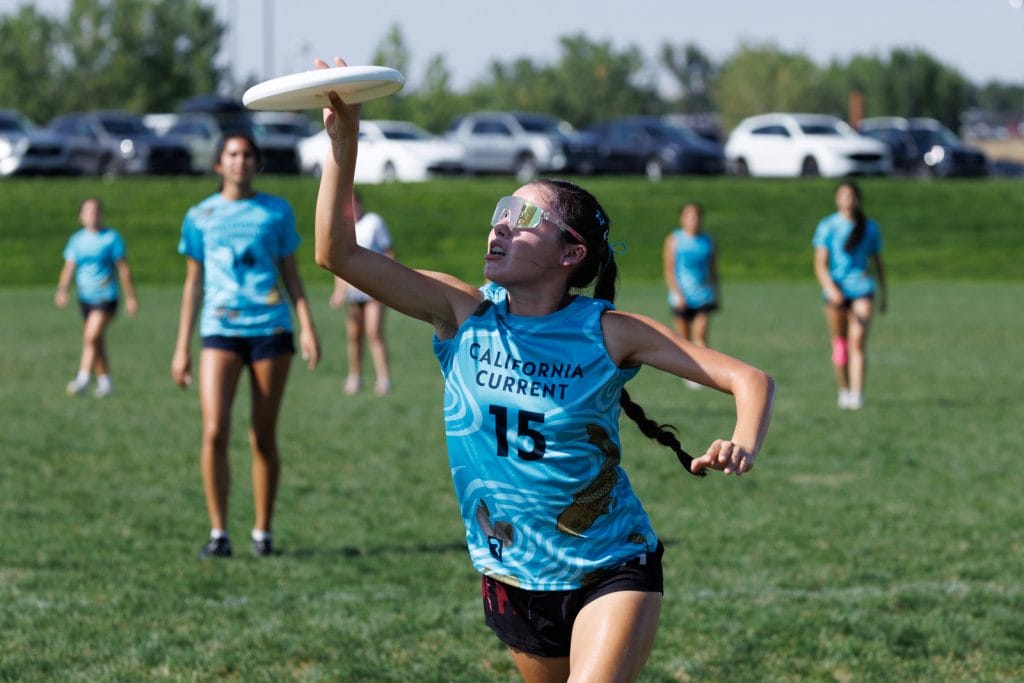
The hardest pool on paper heading into the tournament seemed like it was going to be Pool D. The trio of Valley Ultimate, Colorado Cutthroat, and Maine Rip Tide promised to have some very close games in the early rounds of the tournament. That didn’t play out quite as expected, largely because everyone underestimated California Current.
That’s a bit of an exaggeration. California Current did have plenty of hype heading into the tournament thanks to the reputation of players like Violet Yap and Mabel Athanasiou, but they had underperformed in 2025 and it wasn’t clear what to expect. Whatever expectations fans had must have been blown out of the water. The throwing prowess displayed from California Current was next to none, and they looked disciplined and well-drilled in contrast to their opponents. While Yap and Athanasiou lived up to the hype, it was players like Mrida Sadhu, Cameron Do, and Tam Ly Mai-Clark that really showed the firepower on the roster. The Bay Area team could beat their opponents any number of ways, and had a plan on defense for almost every situation. It was rare to see California Current playing frenetically, which served them well all weekend.
California Current’s path to semis has a case to be the hardest of the lot. Getting past Colorado Cutthroat and Valley Ultimate is no easy feat, but the team sure didn’t make it look hard. They beat their two toughest pool play opponents handily and only allowed a combined seven points. That’s impressive. They then capped it off in their quarterfinal by taking down a Utah Swarm team that also blew out teams in their pool, so it wasn’t as if it was a walk in the park.
Swarm came out aggressive and the teams traded points for the start of the first half, as California Current tried to figure out how to stop Elsa Bloch and Linnea de St. Germain. Once they got in rhythm on defense, though, they started to pull away, taking half 8-3 and riding Yap and Athanasiou’s strong throwing performance to a 13-6 win.
While California Current have been on quite the run so far, nothing has prepared them for Seven Hills, their semis matchup. Both teams will have to give it their all early if they’re to get any edge, and fans should tune in for a contest of two of the most polished teams at the tournament.
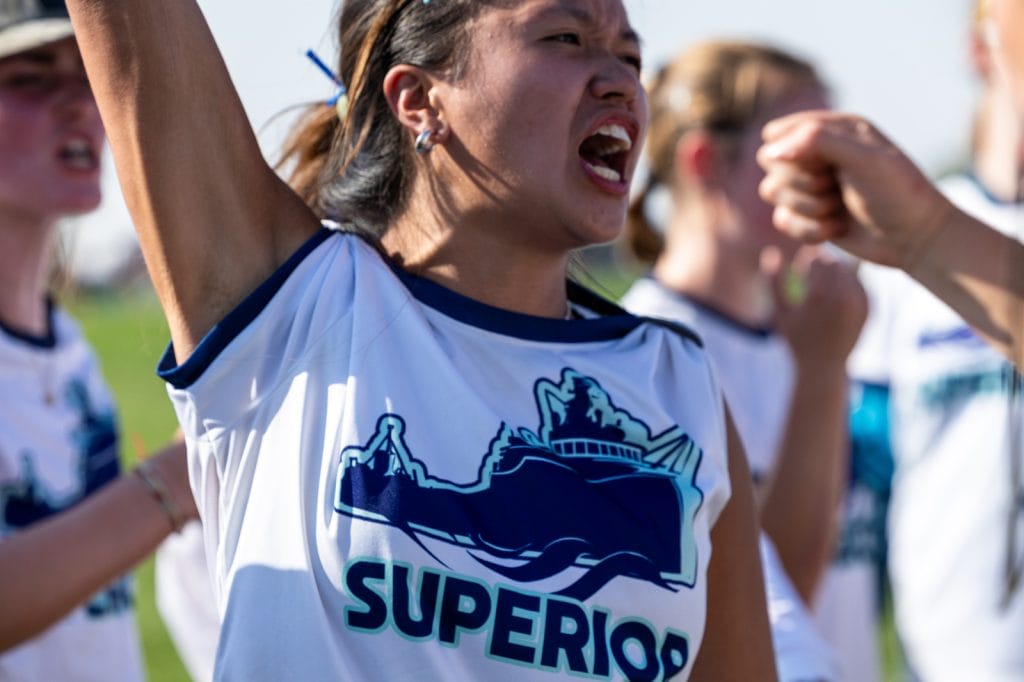
Minnesota Prove They’re Superior Against cATLanta and Pool B
Say you’ve earned a reputation as one of the best teams in the nation on the back of one of the best players in the nation, and all of a sudden, that star player isn’t able to compete for most of the weekend. What does that do to a team? In the case of Minnesota Superior, it inspires the rest of the roster to play out of their minds. Despite missing Kumari Okumura for almost the entire tournament, every other player stepped up in a major way to carry this team to a semis berth.
It wasn’t always easy. In fact, they almost didn’t win their pool. OAK Embers came within a point of taking down Superior in a pool play game that could very well have been the tournament final in an alternate universe. Both teams threw everything they had, and Minnesota was down 10-9 in the last minutes of the game. It took some late heroics from Riley Gage, Haley Chau, and Clover Dosh Galdames to put them in a position to win the game, and it made them over-prepared them for their confrontation with cATLanta in the quarters.
The game against cATLanta was a drumming by Minnesota despite the size and defensive pressure of the Georgian squad. Everything cATLanta did to slow them, including a disciplined zone defense, did little to stop Superior’s handlers from moving the disc down the field and setting up their cutters to score. Nine different players recorded a goal for Superior in this game alone, showing the equitable offense that this team employs. Yes, Clover Dosh Galdames or Ailin Tse probably could have scored every point they stepped on the field, but the team didn’t rely on them to do so, and that’s what made Superior so effective. cATLanta had to respect every player on the field, and it wore them out.
The problem for Minnesota? They’re about to run into a team that can match their depth pound for pound. Colorado Cutthroat might not have the same throwing depth, but they’re a group of real athletes who can pressure teams like no other, and are aggressive after the turn. It will be a real test from both sides as neither will be able to avoid relying on their stars, but the team that best plays the depths of their roster is likely prevail. Colorado should be a little nervous, though — Kumari Okumura is ramping back up to play in semis, and that’s an entirely new wrinkle to this Minnesotan squad.