Boasting both a deep and star-studded roster, Seattle Seven Hills claimed their second title in as many years
August 7, 2026 by Graham Gerhart in Recap
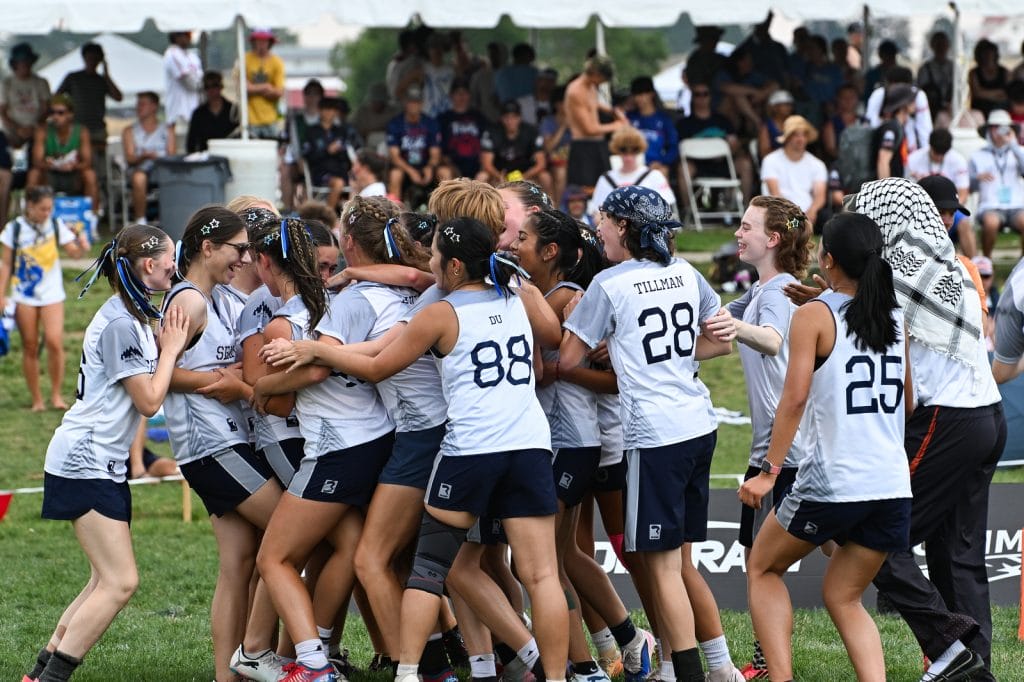
Call it good coaching, outstanding athleticism, or just something in the water, but Seven Hills ultimate has once again shown their dominance in the U-20 Girls Division by winning their second straight Youth Club Championships. Minnesota Superior gave them everything they had in a thrilling final that seemed close until Seattle’s depth shone through late in the first half.
Both teams came entered the final locked in after some of the most competitive semifinals we’ve seen in a long time, taking down two worthy competitors in California Current and Colorado Cutthroat. Despite playing their semifinals on the same day, neither Seven Hills nor Superior looked spent during their title bout, and it was a tremendous showcase of the future of women’s ultimate on the final day of YCCs.
Seattle came into the game as the title favorite and had the deck stacked in its favor. Not only did they have the consensus best player in the division, they also had maintained the core roster that had won the event the year before. This institutional knowledge is an intangible edge in big games, especially for players so young. Knowing how to handle the pressure and play through jitters isn’t something that can be taught until players experience it in the moment.
To Minnesota’s credit, if they were experiencing any early game jitters, they didn’t show. The very first point of the game set the tone for Superior as Ailin Tse got a run-through block on Seattle’s offense, and set up an endzone play for her team that enabled Clover Dosh Galdames to find Charlotte Eskola for the goal. In a flash, Minnesota earned the first break of the game, something that hadn’t happened to Seattle all tournament. Not only had Seattle never started down a break in the six previous games, they had never once trailed an opponent, either. Though just the first point of the game, what Superior had done was already anomalous.
Of course, as one would expect from a team of Seattle’s caliber, Seven Hills didn’t stay down for long. The team’s offensive firepower was too much for opponents all weekend, and they showed just how effective they could be, using their combined throwing prowess to stretch the field in ways few other teams could. Their cutters gave lots of room for each other in the center of the field and never aborted a deep cut too early, believing that the huck could go up.
This spacing was what Minnesota struggled with the most. Superior have capable defenders, but they had to respect every Seattle player when they went deep. Thus, there was always an opening on the field for Seattle’s cutters to move into, making it easy for their throwers.
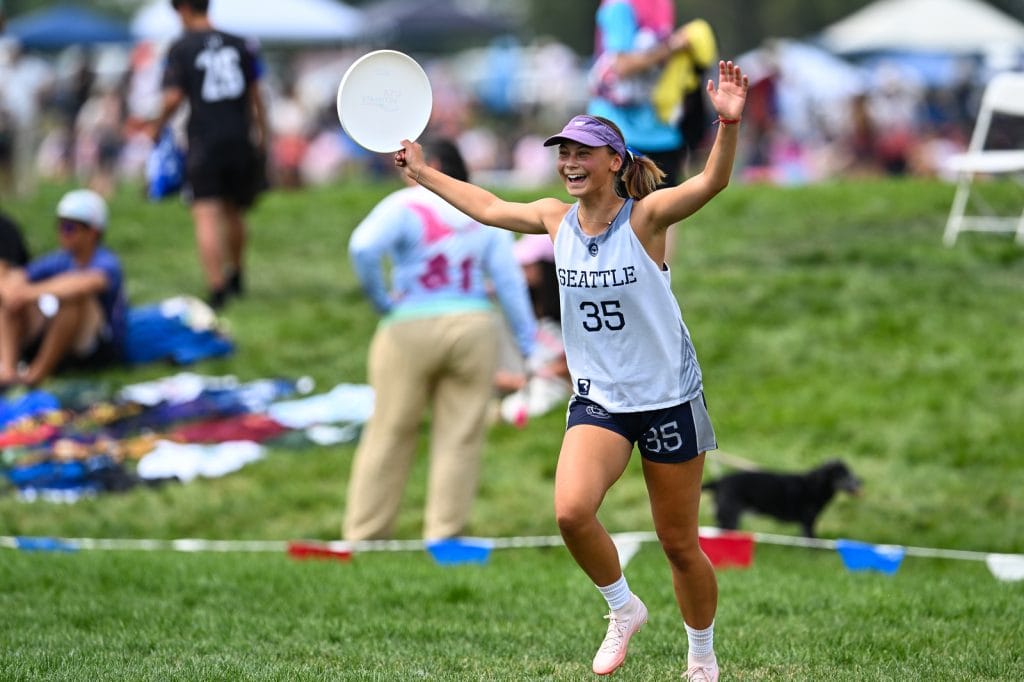
After that initial break, Seattle’s offense played an almost-perfect half of ultimate. They only turned the disc over once more through the first frame, and generally played as if the defense wasn’t giving them trouble. The core of Nora Luloff (3G/6A), Elizabeth Muss (5G), and Lily DiGioia (1G/3A) was just too much to handle. Having Amelia Welsh and Sonia Snyder was just the icing on the cake for the offense, as it felt like Seattle was ready for anything Superior could throw at them.
Minnesota wasn’t giving up without a fight, though. While their offense wasn’t quite so efficient with the disc, they still knew how to put points on the board. Most of their attack centered on the disc skills of Dosh Galdames (1G/6A) and Riley Gage (1G), but they were bolstered by the return of Kumari Okumura (2G/1A), who rejoined the offense after playing limited minutes all weekend. Downfield, Minnesota’s cutters found ample opportunities to be effective, but there was no single focal point. This played to their advantage, as Seattle’s defenders had a tendency to poach or watch the disc a second too long, leaving the deep space open.
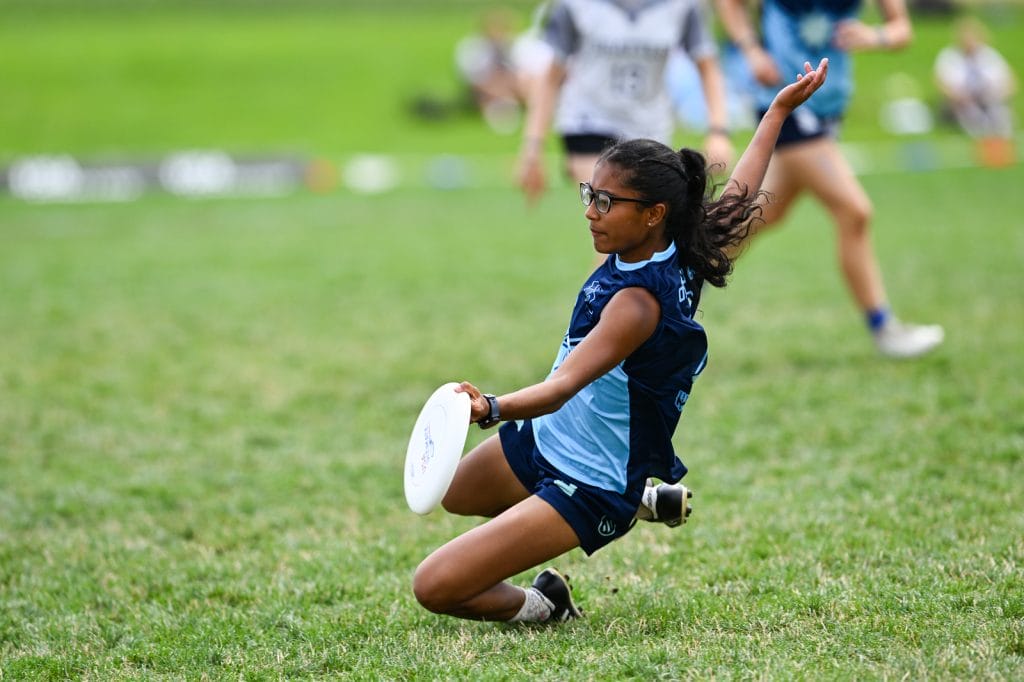
For the first half hour of this game, both teams put up a stand on offense that proved why they deserved to be in the title match. Seattle’s stars did their job, but Superior’s balanced attack was able to keep up, preventing either side from surging ahead.
This all changed in the final few points of the first half. At 6-5 in Seattle’s favor, Seven Hills prepared their first major defensive wrinkle. They had crossed over their best players to play defense, but after a long offensive point, Seven Hills opted to allow their central defensive players to go to work. After a wonderful pull from Mia Icev, Seattle showed its hand. They threw out a zone that slowed Minnesota’s offense, forcing them to play more conservatively.
Eventually, Superior took the bait and threw a floaty same-third huck to the end zone that Icev read best. Seattle would return them the disc on a rushed huck, but the damage had already been done. Tired lungs on the Minnesota line dropped concentration, allowing a routine swing pass to get battered by the wind and brought down by Julia Stewart. Shortly after, Stewart would get the bookends for the Seattle break to go up 7-5.
Minnesota secured the next hold to keep the game close heading into half, but the damage had been done. Up 8-6, Seattle could taste blood in the water. They knew what it took to win a title and were eager to prove they could do it again.
The first three points out of half proved why Seven Hills were the best team at the tournament. While halftime offered an equal amount of rest, you’d have thought Seattle got a shot of adrenaline in their arms, too.
Minnesota started on offense, but rather than finding their rhythm against a classic defensive set, Seattle threw out another defensive scheme: a handler sag zone that closed off throwing lanes and forced Minnesota to swing the disc and string together a ton of passes. While Superior seemed up to the challenge for most of the point, eventually they lost concentration and turned the disc ten yards shy of the end zone. With Luloff, Welsh, and Icev on the field, Seattle had no problem marching the disc to the opposite end zone for the break.
They weren’t done there, though. With Luloff, Icev, and Welsh off the field, the depth of Seattle got their chance to prove their worth. Stifling handler pressure and good downfield positioning gave Superior’s throwers no options, leading to one short turn after another. While Seattle’s counterattack wasn’t perfect, it was relentless, and it powered them to a break, which they soon followed up with another, and another shortly after that.
Without a chance to settle, Minnesota gave up four breaks in a row, effectively icing them out of the game. Being down 11-6 is already a difficult hill to climb, but coming back from such a deficit to Seven Hills seems mission impossible.
The rest of the game was a little more balanced, but it was clear Seattle retained control. Superior did find an opening late in the game, Dosh Galdames beating their mark to the disc during a long Seattle offensive point. With Okumura going deep, all Dosh Galdames had to do was fire off the huck for her to easily chase down, giving Minnesota their first break of the half to cut the deficit to 13-10.
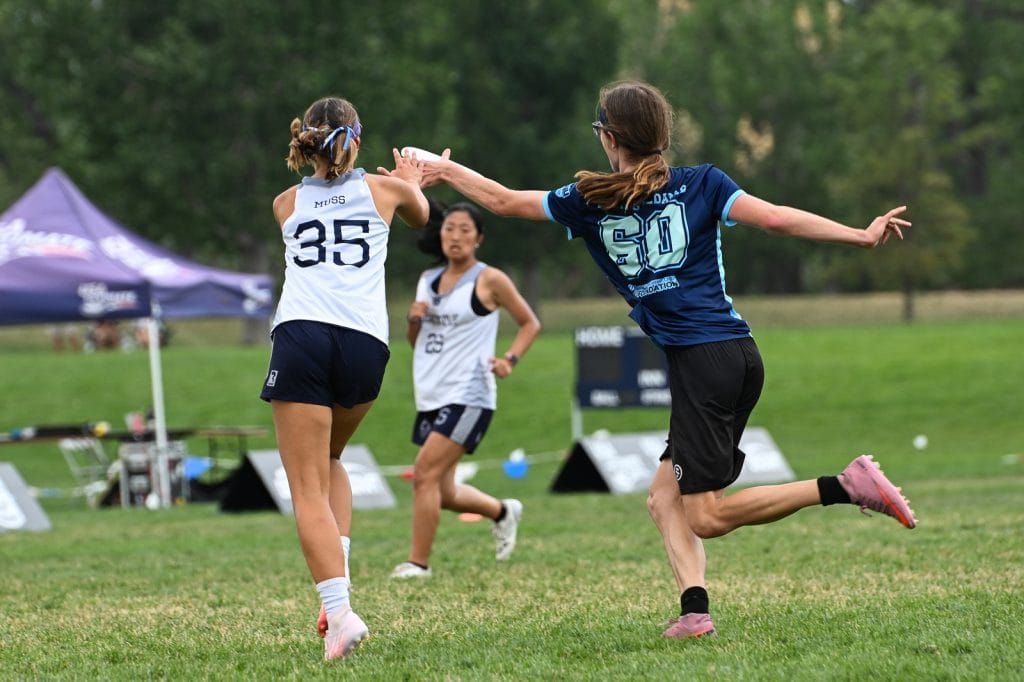
That small semblance of a comeback didn’t last long. Seattle took a timeout to give their players time to reset, and for a moment, it looked like Seattle was going to concede another break after Luloff overthrew a huck when Seven Hills retook the field. But Minnesota forced a throw to the center of the field, and it sailed wide of the intended receiver. That was all Seattle needed to recommit to their attack, setting up an upline pass from Luloff to Muss.
Up 14-10, Seattle sent out their standard defensive line, which proved to be fortuitous. Devani Parker recognized the inside pass coming from Superior’s handlers and swatted it down, allowing Kiran Joe and Elle Olivier to connect in handler flow soon after, capping off the point and winning Seattle the game.
That final point wasn’t the poetic or emphatic win that many would have expected from Seattle. None of Seattle’s stars were on the line that got the final break. Instead, it was demonstrative of what actually makes Seattle ultimate so great. They develop exceptional players up and down the roster that are all just as capable of winning the game as any other.
Seattle Seven Hills didn’t win because they had the best players, they won because they were the best team.