Reflections on the importance of the mental game for ultimate from six-time Boston Death or Glory national champion Steve Mooney
March 6, 2026 by Guest Author in Opinion
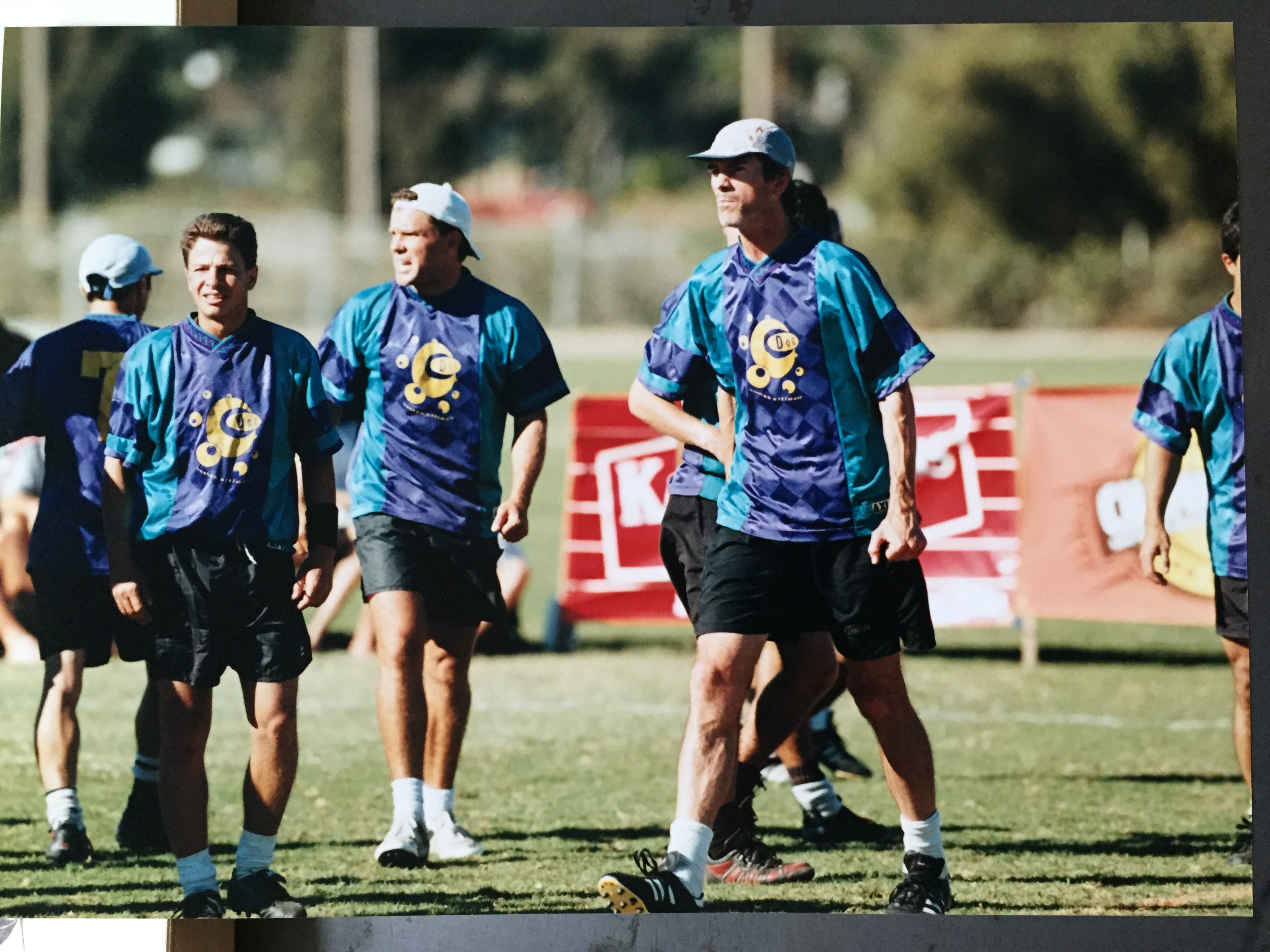
This post was written by guest author Steve Mooney, a title winner with the Rude Boys and Death or Glory and current board member for Ultimate Impact
What makes us mentally tough when playing ultimate, or any sport really, and can we train for it? That’s the question I asked myself after after learning that Wesleyan’s men’s and women’s ultimate teams were taking Tiina Booth and Tim Bobrowski’s Mental Resiliency course.
“We’ve run this course for twenty years,” Booth said to me when we talked. “It’s why our high school team could beat college and even club teams.”
So intrigued with the idea, I signed up for her NUTC-sponsored course, both to support Wesleyan Nietzsch Factor and Vicious Circles, but also to discover if the teams I played with had any secret sauce when it came to controlling the emotions of a game. I sent a note to my own team’s, Death or Glory (DoG), email list, as well as posed the questions to the Wesleyan captains.
“Did we train with resilience in mind?” I asked DoG. “And if you were coaching today, how would you prepare a team to be resilient?”
And to the Wes captains I asked: “How are you preparing your teams with the takeaways from the NUTC training in mind? What are you doing differently this year?”
Before receiving their answers, I jotted down my own thoughts, recognizing that DoG had a bit of a history of unraveling before we went on our run of six national championships in a row (1994-1999). I asked myself, how did we lead the team to be resilient? Did we talk about it? And what exactly are we talking about?
Here are my initial thoughts to how to build mental resilience:
Do the work. Put in the hours. In 1982, the Rude Boys held 6 AM practices, which gave us a mental edge when playing other teams. DoG took it to the next level with track workouts, plyometrics, and stadiums. Do the work, and get yourself and the team in shape. You can’t be mentally tough when you’re sucking wind.
Visualize success. While this sounds trite and simplistic, there are studies which support the idea. I bought into it and would not only walk down the street saying positive things to myself out-loud, we also had fun with one of our cheers. I’d yell, “Who’s the best player on the field?” and the team would shout, “ME!” John Axon made us shirts with the words Big Ego Ultimate, with the word ME! printed all over them. Silly and a bit over the top… but you get the point. Say it to believe it!
Repetition. After years of practices comprised of scrimmages with little more than O vs. D, we finally came up with a couple of game-changing drills (Ten Pull and Double Score) which rewarded possession and high percentage play. It’s not that we got mentally tougher as much as we got out of our heads and into a comfortable rhythm which could be repeated under pressure. Like when Bill Belichick set the :30 play clock to :25 during Patriot practices. Practice to silence the noise.
Here are some answers back from my DoG teammates, as well as from both Nietzsch Factor and Vicious Circle captains.1
“Mental resilience isn’t something you ‘have’ or don’t have, it’s something you actively train, just like throwing or strength and conditioning. I really liked the emphasis on controlling the controllables and shortening recovery time after mistakes. ‘Learn, burn, return,’ goldfish memory.” — Nietzsch Factor captains
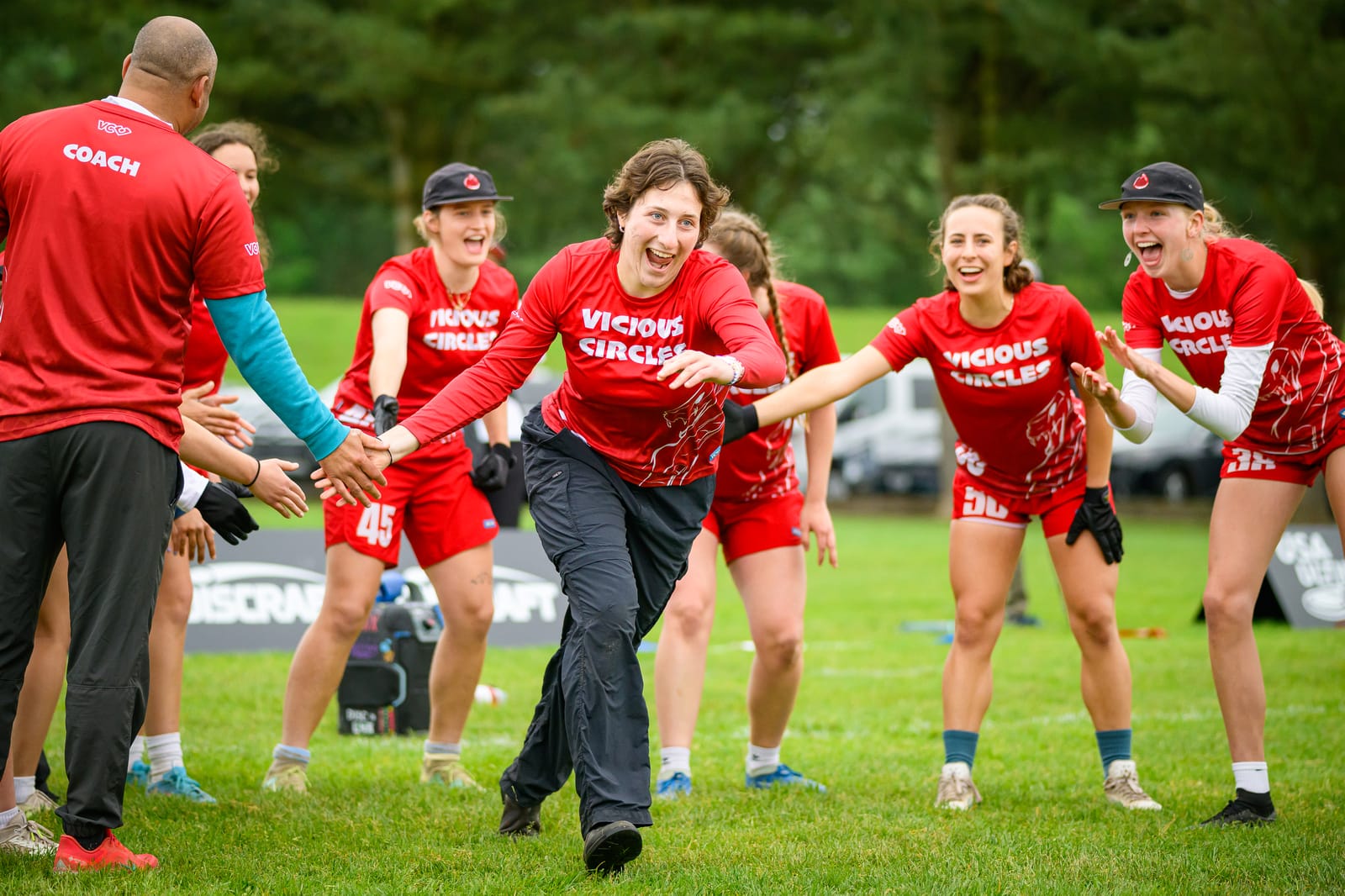
“Team culture on Vish is something we take great pride in. We are a loving, cohesive group that has built trust both within the sport and in our friendships off the field. Without that trust, we wouldn’t be capable of pushing through tough games, because there is a support system among teammates that keeps us going.” — Vicious Circle captains
“This year, the focus is on keeping our weirdness through adversity, using it to stay connected, resilient, and locked in rather than letting pressure shut us down. The goal isn’t to change NF culture, but to lean into it as a real competitive advantage.” — Nietzsch Factor captains
“I think the timeless piece that contributed to our resiliency is accountability. The ways that we manifested it would probably cause dissension and destroy chemistry today.” — Jim Parinella (DoG)
“I heard yelling ‘you suck’ works, but only if combined with the positive ‘stop sucking.’ But also playing double score and 10 pull. And I mean double score at every practice all season. They can play single score at tournaments.” — Jeff Brown (DoG)
“Happy-Sad-Happy Sandwich usually got it done in the day… Usually, a means of delivering some constructive criticism (sad) pressed between two uplifting comments (happy). The goal is to not wreck someone’s confidence or make them play ‘afraid’ to make a mistake.” — Bob Lobel (DoG)
“We want to practice losing more. It can be hard to stay positive when we’re down a few points or feel like we might lose, and we want to be prepared for those moments so we can bounce back quickly.” — Vicious Circle captains
“Resilience starts with conditioning, knowing you can dig deep when the game gets tough. Resilience is built at practice. Practices should be harder than games. This requires creating an environment where everyone has to compete and grind at practice, especially when they are tired. O vs. D, three hell, whatever it takes to help motivate people to work harder. Resilience is knowing your team has your back. Teammates will support you if you make a mistake. Everyone feels responsible to everyone else enough to put out their best effort physically and mentally (stick with the plan, give best effort).” — Jay Seeger (DoG)
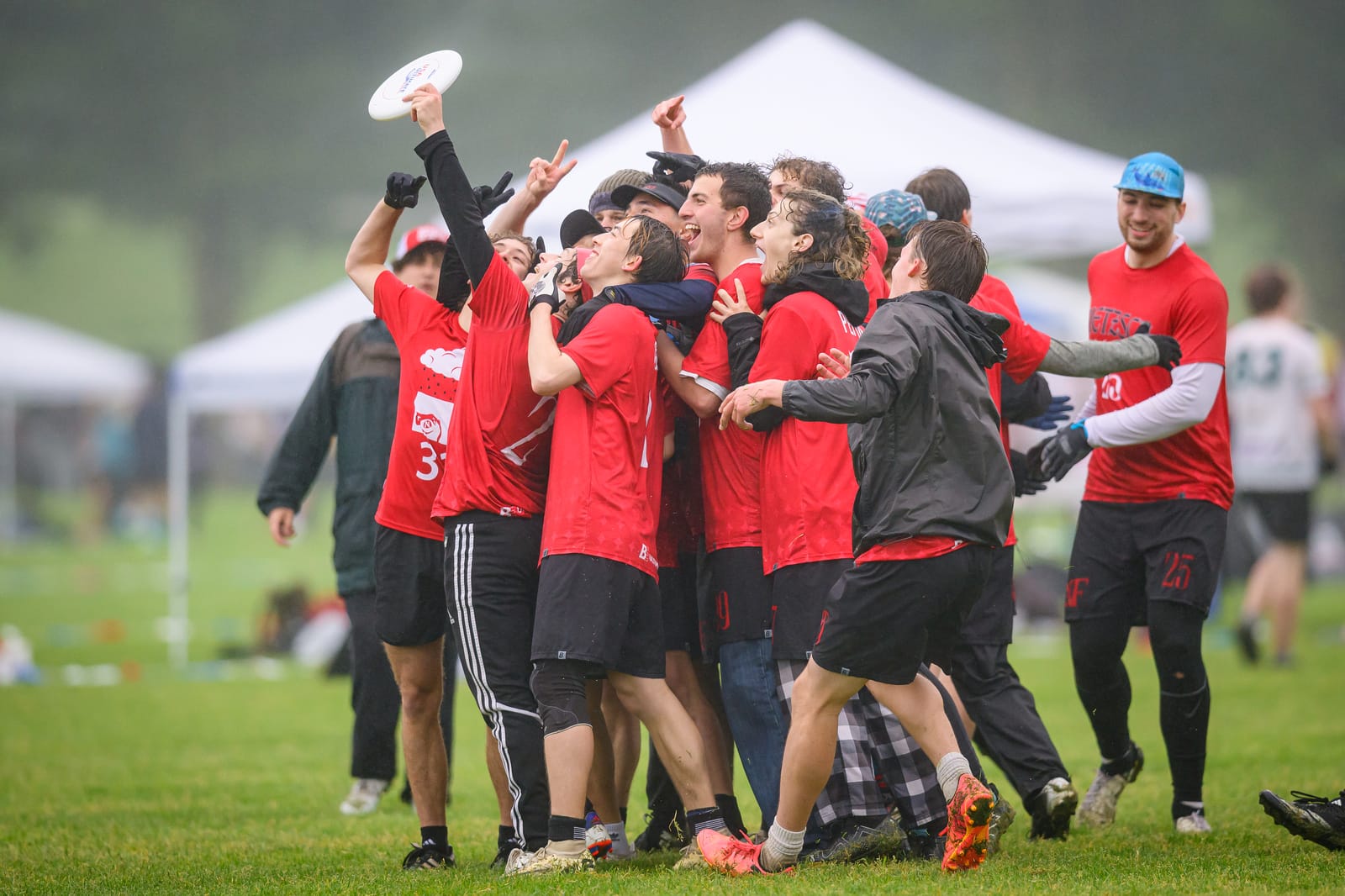
“As captains, we’re being more intentional about building mental resilience into our day-to-day habits rather than treating it as something that only matters at tournaments.” — Nietzsch Factor captains
“Reminders at the big event. Nationals is a long tournament. You can’t focus on that—just one game, one half, one point, one moment at a time. If you are struggling to stay focused, own/recognize that it is happening and use one of the tools you have thought of in advance to get back into the zone. This could be a personal tool—I know of players who do something as simple as adjust their hat or pull up their sleeves to refocus—or it can be a time when players lean on teammates or coaches to help them get refocused.” — Nathan Wicks (DoG)
“Oftentimes, we get distracted or nitpicky about ourselves or our team’s flow, but it’s essential that we limit distractions and stay focused on our team goals, especially in high-intensity scenarios.” — Vicious Circle captains
“It all start with stats. Shorthand stats on every pass (type, kind, result) in every game and then totaled for the weekend.” — Jordan Haskell (DoG)
There are so many great answers here. I wish we’d been more aware of just how much can be in a team’s control when it comes to mental toughness. Maybe DoG could have won ten in a row.
Bobrowski led the NUTC training on the evening I attended with the Wesleyan captains. The next day, Booth texted to ask me what I thought of it.
“Loved it,” I replied. “Here are my takeaways:
- 1. Left to ourselves, the emotions of a game and tournament are chaotic.
- 2. There’s a way to keep a team focused and energetic.
- 3. There are mental devices and training exercises that facilitate a more even mental level.
- 4. Nerves are OK. Even helpful. Good nerves.
- 5. The goal isn’t to win, but to excel. To find the present, be present.
- 6. As captain or coach, you can only control what is controllable. Learn to let the rest go, and help others do the same.
- 7. And as Yogi Berra famously said: “This game is 90% mental, the other half is physical.”
“You got it!” Booth said.
The lasting thing I take away from Booth’s course and the team is how little I really know about how to captain or coach a team to be mentally resilient. Thank you Tiina, Tim, DoG, Nietzsch Factor and Vish for your insights.
For a full transcript of answers from Wesleyan captains, click here. ↩
