Celebrating the best off-field leaders of the season.
June 23, 2026 by Keith Raynor in Awards
Each year, Ultiworld presents our annual College Awards. Our staff evaluates the individual performances of players from throughout the season, talking to folks around college ultimate, watching film, and look at statistics, voting upon the awards to decide those to be honored. The regular season and the college Series are both considered, with extra emphasis for performances in the competitive and high-stakes environment at Nationals.
Our final D-I award podium is for the Coaches of the Year. As so many teams have added more and more sideline-savvy consultants to their roster with less asked of a single head coach, this has essentially morphed into “Coaching Staff of the Year.” Coaches can impact the game in so many ways — tactics, motivation, communication, personnel management, program development, skill-building, etc. — and it can be hard to divine what exactly each has contributed to their team. But good coaching is something that we feel that ‘we know it when we see it.’
- All-American First Team
- Player of the Year
- All-American Second Team
- Offensive Player of the Year Award
- Defensive Player of the Year Award
- Breakout Player of the Year Award
- Rookie of the Year Award
- Coaches of the Year Award
- Full Awards Voting Breakdown
D-I Women’s 2026 Coaches Of The Year
Jackson Dolan, Ashika Mani, Laine Cravotta (Pennsylvania)
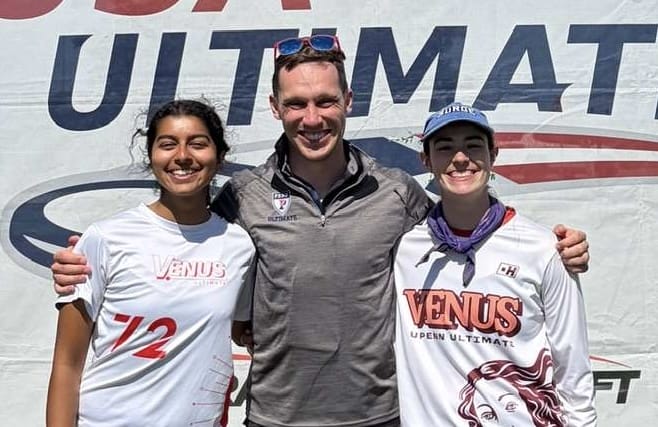
Like all of our College Awards, Coach of the Year attempts to isolate the contributions of the recognized in the slice of time we call a season. But simply put, it is basically impossible to do with this award. While Pennsylvania’s coaching staff had a tremendous season, presiding over arguably the most successful season in the program’s history, it is hard not to see the steep upward trajectory of the team and think glowingly of the leadership presence. Dolan and Mani were both part of the staff honored with Second Runner-Up for this Award two seasons ago after helping this program reach Nationals again. Now they are back, along with Laine Cravotta, with both higher internal and external expectations, the latter of which they certainly met and exceeded.
Venus made no secret that they had a true star in Grace Maroon, and a heavily-relied upon top end. Deploying this group – knowing which buttons to push, when, and how often – while also engendering buy-in and keeping the team cohesive and focused was a real challenge. But Penn always felt like they were maximizing on the tools they possessed, squeezing impressive results out of challenging situations. So while the seasons prior did not impact our staff voting, it certainly laid the foundation for the staff’s fantastic 2026.
– Keith Raynor
First Runner-Up
Nick Tolfa (UC Santa Cruz)
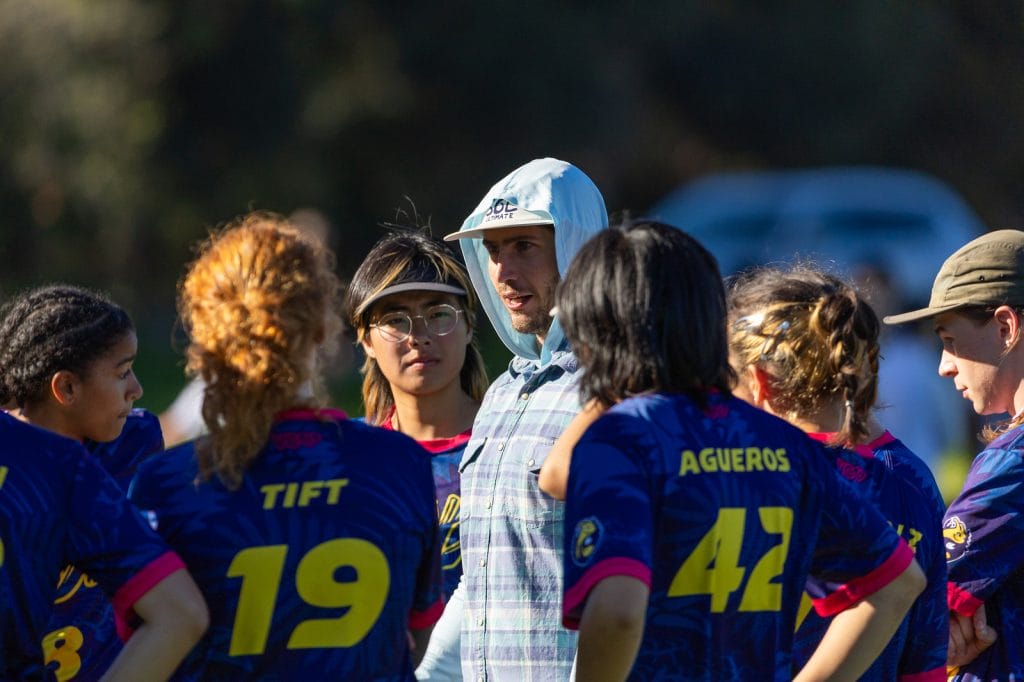
In a college coaching scene where sidelines have ballooned into legions of managers, UC Santa Cruz’s Nick Tolfa was something of a lone rōnin. Despite flying solo, he stewarded Sol through the program’s best seasons since the 1990s.1 Despite some notable stars, Sol’s role players also had plenty of places to shine, helped both by their coach’s instruction and X-and-O scaffolding. While UCSC’s season included some heavy swells, Sol found ways to emerge stronger, reaching semifinals at every tournament prior to their narrow quarters defeat at Nationals.
– Keith Raynor
Second Runner-Up
Meriden Estes, Caitlyn Lee, Megan Wilson, Edi Lam (Tufts)
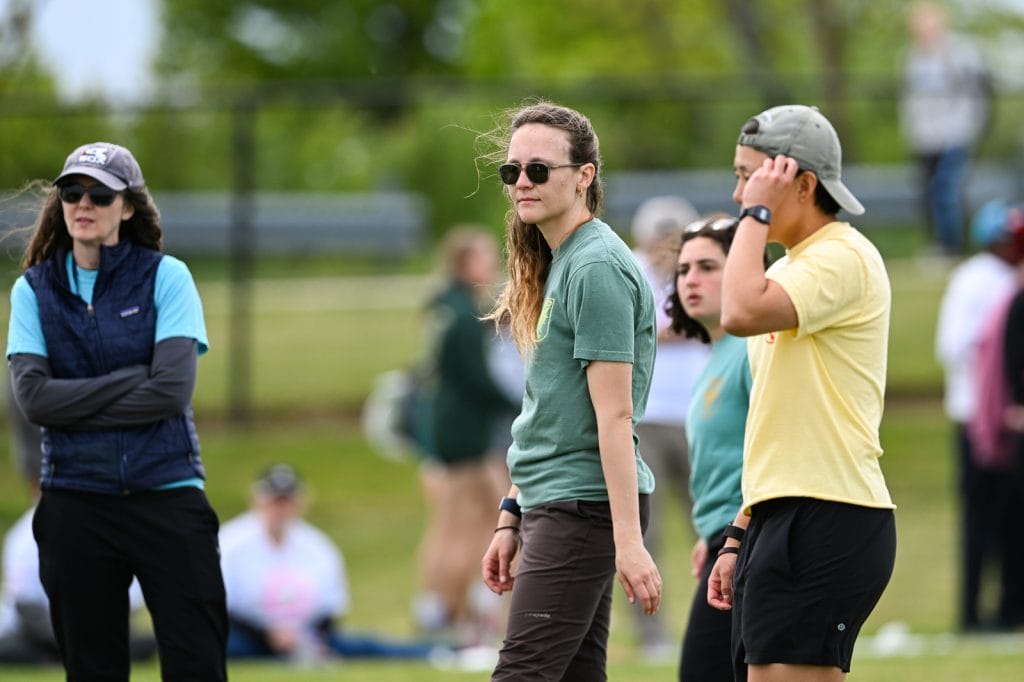
We often highlight how players leave programs with holes to fill, but we rarely talk about coaches. Sangwha Hong’s exit from Tufts could have proved stifling for their remaining and new coaches, but their team rose to the challenge. EWO’s ability to consistently play strong in second halves was a testament to the coaches’ ability to set up their charges for success with smart adjustments and necessary encouragement. Few outside the program had them making the type of run Tufts put together by season’s close.
– Keith Raynor
After they won back-to-back championships in ‘94 and ‘95, they failed to qualify for Nationals again until 2024. ↩