The teams and top players matched to Association counterparts.
August 31, 2026 by Rhea Patney in Opinion
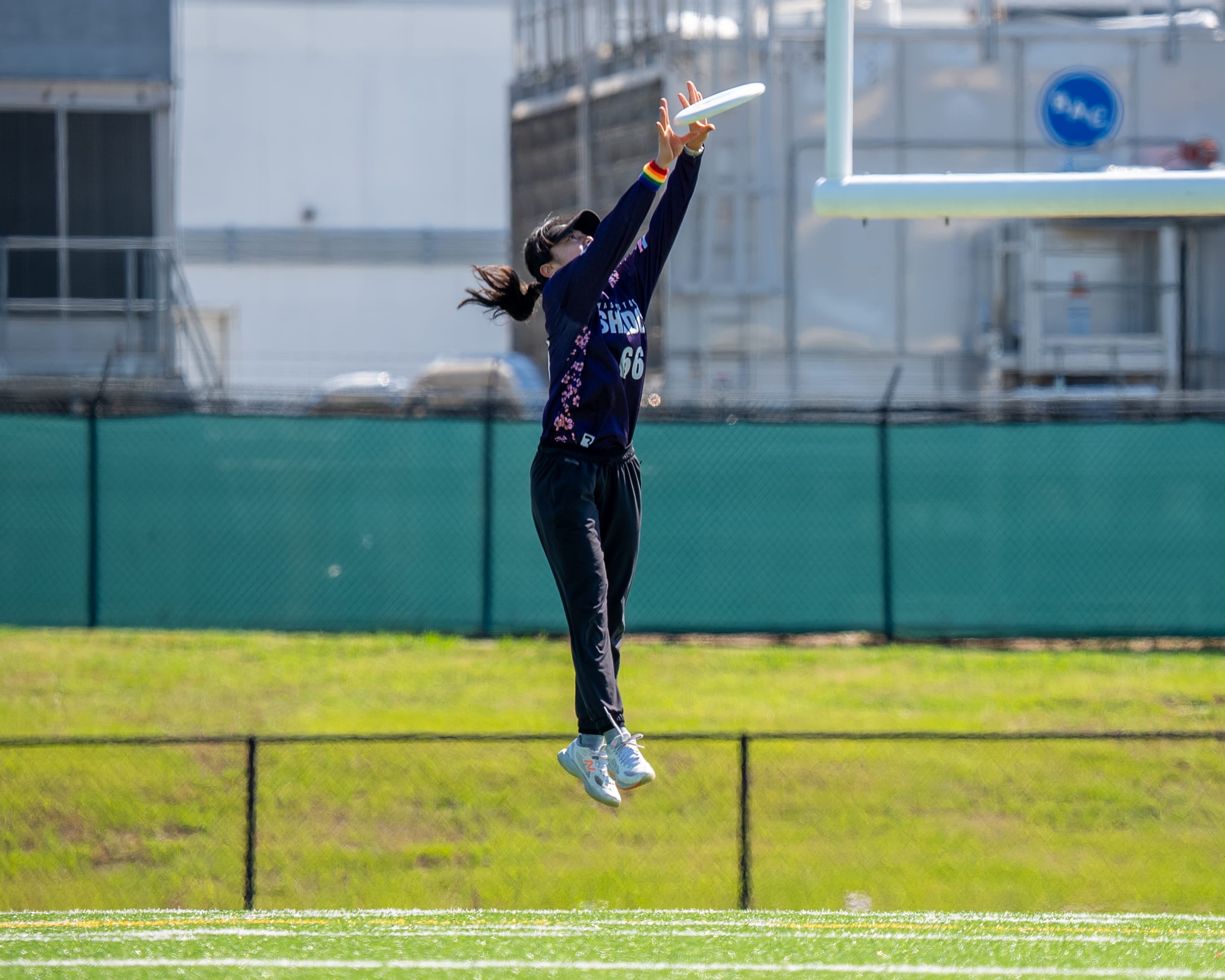
For those who may not know, this year’s Premier Ultimate League Player Sponsorship Program jerseys were modeled after WNBA jerseys. So naturally, with the PUL season wrapped up and the highlights of the PUL/WUL All-Star Game hitting the timeline, it felt like the perfect time to have some fun with team and player comparisons across both leagues.
Now, before anyone gets too upset about their favorite player or team not having the “right” comparison: I know basketball and ultimate are completely different sports, and a true 1-to-1 comparison is impossible. The WNBA season is also far from over, and things can change quickly. But with the league roughly halfway through the season, this felt like a fun snapshot of where teams stand right now.
That being said, this is all about finding the connections. Some comparisons come from playing style, some come from team identity, and some come from the moments and impact that make certain players impossible to ignore. And at the end of the day, this is just a celebration of women’s sports, the athletes who make these leagues so special, and the fun similarities between two games that continue to grow.
DC Shadow → Las Vegas Aces


I just had to put the two current champs together. Both have defined excellence over the past few years in their respective leagues. The Aces have admittedly had their ups and downs during the regular season, especially over the past two years, but the brilliance of Jackie Young, Chelsea Gray, and of course, four-time MVP A’ja Wilson has allowed them to rise to the occasion when it matters most. The Las Vegas Aces have won three WNBA championships in the past few years, claiming league titles in 2022, 2023, and 2025. DC Shadow have built that same winning culture in the PUL, winning the last two championships and losing just four games in franchise history. While DC has more of a well-rounded cast than an A’ja Wilson-led team dominating every statistical category, the championship pedigree cannot be ignored.
- Ashleigh Jentilet → A’ja Wilson: Dominant two-way presence who changes the way opponents have to play. While Jentilet does not lead DC in every statistical category the way Wilson does for the Aces, her impact goes far beyond the stat sheet. Her dominance in the air, defensive presence, and ability to command the field make her a player every opponent has to account for.
- Kira Flores → Chelsea Gray: Elite playmaker who makes the impossible look routine. Like Gray, Flores has an incredible ability to see plays develop before they happen, consistently dropping dimes and creating opportunities for everyone around her.
New York Gridlock → New York Liberty

I didn’t take geography into account when making these comparisons, but the New York Liberty and New York Gridlock comparison weirdly works. Both New York teams are loaded with star power, championship expectations, and a supporting cast built to win at the highest level. They each won league championships in 2024, but neither has quite lived up to those expectations this season. Gridlock finished the regular season 2-4, although losing Genny De Jesus for the year was a massive blow to a roster built around its stars. The Liberty have found themselves in a similar position, hovering just above .500 despite a roster featuring Breanna Stewart, Sabrina Ionescu, Jonquel Jones, and Satou Sabally. On paper, both teams have everything needed to contend. This year has just been a reminder that talent alone doesn’t always translate to wins.
- Abby Hecko → Sabrina Ionescu: Versatile offensive engine who can impact the game in a variety of ways. Hecko can beat defenses as both a handler and cutter, combining great throws with the athleticism to sky for the disc or make plays on the ground. Like Ionescu, she has a diverse offensive skill set and uses her size to impact every possession.
- Jolie Krebs → Breanna Stewart: Complete player who impacts every part of the game. Krebs can make plays downfield, take on difficult matchups, and step up in big moments, much like Stewart has throughout her championship career.
- Sadie Jezierski → Jonquel Jones: Matchup nightmare whose size and athleticism force opponents to adjust. Jezierski’s ability to dominate in the air and make defensive plays changes the way teams have to approach the game.
Minnesota Strike → Golden State Valkyries


The Golden State Valkyries have a motto: If we can’t score, they can’t score. That’s exactly how I felt watching the Minnesota Strike this season. Their 2-4 record doesn’t reflect how good they were, especially on the defensive end. Minnesota led the PUL with 75 blocks during the regular season and consistently held opponents well below their typical scoring averages, even if the results didn’t always go their way. The Valkyries have built a similar identity in the WNBA, boasting the league’s top defense and proving they can win games by making life miserable for opposing offenses.
- Sarah Mondschein → Gabby Williams: Defensive playmaker who sets the tone for her team. While Mondschein does not lead Minnesota in scoring the way Williams does for Golden State, she anchors the Strike’s defense, leading the team with 34 blocks. Like Williams, Mondschein covers an incredible amount of ground and generates momentum-changing blocks and turnovers.
- Mia Beeman-Weber → Veronica Burton: Two-way contributor who impacts the game beyond one category. Burton leads Golden State in assists while bringing relentless perimeter defense, and Beeman-Weber filled a similar role for Minnesota, leading the Strike with 16 assists and recording the second-most blocks on the team with 10.
Nashville Nightshade → Washington Mystics


The Washington Mystics are the youngest team in the WNBA (average age of 23.5 years old), and while Nashville Nightshade isn’t nearly as young by age, both teams are still pretty inexperienced at the professional level. A lot of Nashville’s impact players, like Sara Mog, Rebecca Fagan, and Savannah Sillivant, are only in their second PUL seasons, even if they have years of high-level club experience. Then there’s rookie Holly Sillivant, who has never played at the highest level of club ultimate but still led the team in several statistical categories this season. Washington is in a similar spot with second-year standouts Sonia Citron and Kiki Iriafen playing huge roles. You can see the potential with both teams—they’re talented enough to push anyone and pull off an upset—but when the game gets tight, their inexperience sometimes shows. Give both teams another year or two, though, and I think they’ll be a problem.
- Rebecca Fagan → Shakira Austin: Young veteran presence who brings stability and leadership. Despite still being early in their professional careers, both players provide a steadying force for teams built around developing talent.
- Holly Sillivant → Sonia Citron: Confident scorer who is ready to make the big play. Both players have shown the ability to take over offensively and become reliable options when their teams need a bucket.
- Sara Mog → Kiki Iriafen: Versatile, all-around contributor who impacts the game in multiple ways. Mog and Iriafen both bring well-rounded skill sets, contributing beyond just traditional scoring numbers.
Austin Torch → LA Sparks


The Austin Torch and Los Angeles Sparks comparison is an interesting one. To me, this comes down to the mix of players these teams have. Both the Sparks and the Torch have a blend of standout young talent and seasoned veterans, and both groups make large impacts. While that mix has not necessarily translated into wins this season, it does create a great mentorship structure where younger players can learn from veterans who have been in high-pressure situations before. Where this comparison falls short is defensively. The Sparks have some of the worst defense in the WNBA, while the Torch have actually been one of the better defensive teams in the PUL, ranking fourth in total blocks this season with 71 despite only winning one game.
- Jaime Estes → Nneka Ogwumike: Veteran leader who has become the heartbeat of her team through consistent production and leadership. Ogwumike continues to be one of LA’s top statistical contributors, while Estes has been a key part of Austin’s identity for four years and leads the Torch in assists.
- Advika Basden → Cameron Brink: Dynamic young two-way player whose athleticism allows her to make game-changing plays on both offense and defense. Basden led the Torch in goals and finished second on the team in blocks, while Brink has already established herself as a dominant defender with offensive upside.
- Carly Atwell → Rae Burrell: Explosive athlete with the versatility to contribute across the field and take over stretches of a game when called upon. Like Burrell, Atwell can sometimes fly under the radar, but her athleticism and ability to impact the game in multiple ways make her a valuable piece of the Torch’s roster.
Milwaukee Monarchs → Toronto Tempo


I honestly struggled a little bit to come up with my comparison for Milwaukee. From my view, one of their most defining moments of the season was their first win — an upset over Indy Red. That immediately reminded me of the Toronto Tempo’s first game this year, which was also their first game as a franchise. As an expansion team, expectations were low, but Toronto immediately showed they weren’t going to be an easy opponent, taking the Connecticut Sun to overtime in a thrilling debut (I know Connecticut isn’t really a good team, but it is the principle of it). Milwaukee isn’t an expansion team, but with key pieces from last year’s roster moving on, including Eileen Bequette and Lina Montenegro, and several players taking on new roles, the roster retooling creates a similar feeling to the Tempo’s expansion process. Both teams entered the season with questions and responded by proving they could compete.
- Erynn Schroeder → Marina Mabrey: The heart and soul of the team. Mabrey has been the heartbeat of Toronto this season, putting together multiple 50-point performances and consistently providing the firepower the Tempo need. Schroeder brings that same energy to Milwaukee, leading the Monarchs in assists (19) and blocks (8) while serving as the player who can spark the team on both ends of the field. Both players have a confidence and competitiveness that sets the tone for everyone around them.
- Rachael Kern → Kiki Rice: The poised young point guard. While Rice’s rookie season was interrupted by injury, she immediately showed why she was such a highly regarded prospect, stepping into a starting role and running the offense with impressive composure. Kern has had a similar impact for Milwaukee, being thrust onto the O-line as a rookie and immediately looking comfortable. She finished second on the team in assists (13), showing the calm decision-making and confidence of a player far beyond her years.
Philadelphia Surge → Minnesota Lynx


When I think of the Minnesota Lynx, I think of consistent excellence. The Lynx built a dynasty in the 2010s with four championships and have remained one of the WNBA’s model franchises, finishing at or near the top of the standings over the past three seasons. The Philadelphia Surge give me that same feeling. Every time you step on the field against the Surge, you know you’re going to get disciplined ultimate. Every player understands the system, everyone knows their role, and that system consistently puts players in positions to succeed. In four seasons, Philadelphia has never lost more than two regular-season games. Like the Lynx in recent years, the Surge have also been perennial contenders, reaching the semifinals or finals multiple times without quite getting over the hump to win a championship.
- Lindsay McKenna → Napheesa Collier: This one was a no-brainer. McKenna was named the 2026 PUL MVP after an absurd season, leading the Surge in both goals (13) and assists (17) while adding six blocks. Like the Lynx’s perennial MVP candidate Napheesa Collier, she does a little bit of everything. She can score, facilitate, make game-changing defensive plays, and always seems to come up biggest when her team needs her most. Collier has missed time with an injury this season, but she just came back and will likely find herself right back in the MVP conversation. That’s the kind of all-around impact McKenna had for Philadelphia this year.
- Grace Maroon → Olivia Miles: An offensive superstar who makes everyone around her better. It’s crazy to think Grace Maroon is already somewhat of a PUL veteran with three years of experience, despite still having another year of college. Like Miles, Maroon is a dynamic playmaker who can create offense from just about anywhere on the field. Whether she’s attacking herself or finding teammates in space, she has a knack for making the right read and elevating the entire offense. Miles has quickly established herself as one of the league’s most exciting young facilitators, and Maroon brings that same combination of creativity, vision, and game-changing offensive talent.
Raleigh Radiance → Seattle Storm


Both the Raleigh Radiance and Seattle Storm feel like teams in transition. Raleigh lost huge veteran pieces in Dawn Culton and Alex Barnett, while Seattle said goodbye to stars like Nneka Ogwumike, Skylar Diggins, and Gabby Williams. Even with those departures, both teams still have plenty of talent. They’ve just had to reshuffle roles. Raleigh saw Ellen Yu move from the D-line to the O-line, Jenny Wei switch from offense to defense, Emily Przykucki take a massive step forward, and Julia Hoffmann emerge as an offensive scoring machine. Seattle has gone through something similar, asking rookies Awa Fam and Flau’jae Johnson, along with second-year standout Dominique Malonga, to take on much bigger roles. The results haven’t fully been there yet—Raleigh finished in the middle of the South Division, while Seattle is currently at the bottom of the WNBA standings—but both teams have plenty of pieces to build around.
- Erica Birdsong → Dominique Malonga: Young, versatile athletes who impact every part of the game. Birdsong’s combination of athleticism, great hands, throwing ability, and defensive instincts makes her one of the most exciting young players in the PUL, much like Malonga has become for Seattle. Both have also had to battle injuries early in their careers. Birdsong started the season on the injured reserve list, while Malonga has been in and out of the Storm’s concussion protocol. When they’re healthy, though, both look like foundational players with incredibly bright futures.
- Julia Hoffmann → Flau’jae Johnson: Pure bucket getters. Hoffmann, just in her second season with the Radiance, emerged as one of their top offensive weapons this season and led the PUL in goals. As a rookie, Johnson has quickly become one of Seattle’s go-to scorers at 13.7 points per game. When their teams need someone to generate offense, both players have the ability to take over a game.
Indy Red → Indiana Fever


This comparison is less about championship pedigree and more about the feeling you get watching these teams play: somehow, someway, they always find a way. The Fever are still a young team figuring out how all their pieces fit together, but with stars like Caitlin Clark, Kelsey Mitchell, and Aliyah Boston, every game feels like it can come down to one big play. Indy Red gives me that same feeling. They don’t always make things easy, but they are the type of team that heats up at the right time and wins the games they need to win. Indy Red started the season with an upset loss to Milwaukee and also dropped a game in week four to Philadelphia, but they responded by grinding out close wins, including a battle against Minnesota where a critical late break swung the game in their favor. They then delivered when it mattered most, beating New York Gridlock in a championship weekend -clinching game to secure their spot and eliminate Gridlock from contention. The Fever have a similar identity: they may not win every game, but when the moment gets bigger, they somehow find a way to make the play that matters.
- Eileen Bequette → Aliyah Boston: Dominant presence who changes the game every time she steps on the field. Bequette’s ability to control the air, impact matchups, and anchor Indy’s success mirrors Boston’s ability to be a reliable two-way force for Indiana. Both players are the type of presence where opponents have to adjust their entire game plan around them.
- Maketa Mattimore → Caitlin Clark: The field general who can take over in multiple ways. Like Clark, Mattimore has the ability to rack up assists, create opportunities for her teammates, and step up as a scorer when her team needs it. Both players have an incredible feel for the game, and when the pressure is highest, they are the ones you trust to make the big play.
Atlanta Soul → Atlanta Dream


The Atlanta Dream are known for their analytics-driven offense. Head coach Karl Smesko’s philosophy is simple: layups and 3-pointers, because they’re the most efficient shots in basketball. Watching the Soul this season gave me a similar feeling. Atlanta has so many talented throwers and deep receivers that they’re never afraid to take shots downfield, trusting that enough of those hucks will connect to make it a winning strategy. Both Atlanta teams also lean heavily on veteran leadership. The Dream spread the wealth with stars like Rhyne Howard, Allisha Gray, Jordin Canada, Brionna Jones, and Naz Hillmon, while the Soul get contributions from Quincy Booth, Mia Griner, Ximena Montaña, Charlotte Doran, Tori Taylor, Liv Ford, and so many others. No one player has to carry the load because everyone is capable of making an impact.
- Dena Elimelech → Angel Reese: High-profile additions who made an immediate impact. Reese arrived in Atlanta after her time in Chicago, while Elimelech joined the Soul from San Diego Super Bloom in the WUL, and both quickly became focal points for their new teams. Elimelech led the Soul with 12 goals and 19 assists, while Reese has been a walking double-double, leading the Dream in rebounds. Different styles, same kind of instant impact.
- Quincy Booth → Rhyne Howard: Did somebody say shooter? Rhyne Howard leads the Dream in 3-pointers made, shooting 35.4% from beyond the arc, and is one of the league’s most dangerous perimeter threats. Now, I recognize shooting threes and hucking the disc aren’t exactly the same thing, but it makes sense in my head. Quincy Booth is a bonafide hucker, and her full-field backhand and cross-field vision are absolutely unbelievable. Both players have the ability to stretch the field/court and completely change how defenses have to play them.