The best players in the mixed division right now
October 14, 2026 by Ultiworld in Opinion
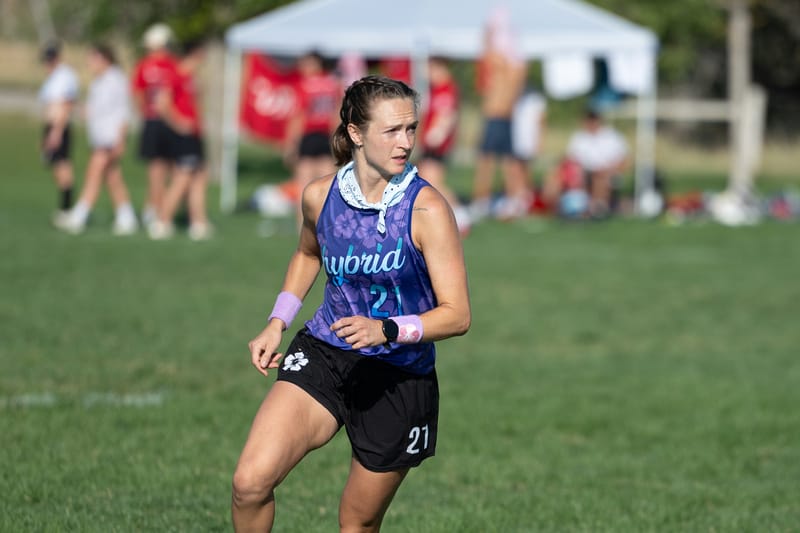
There’s no shortage of talent in the USA Ultimate Club mixed division. We look a lot at team success, and often see familiar names and faces in those discussions. But who are the best individual players? Who brings the most value to winning a championship? Figuring out which stars shine the brightest is more art than science, but perhaps there’s democratic power in numbers.
So who are the best players in the division right now? To try to clear away as much of the white noise created by circumstance as possible and get to the heart of each individual’s value and contribution, we asked members of our coverage team, as well as an anonymous group of elite players, to weigh in on the following prompt:
If you were starting a club team today with the singular goal of winning a theoretical Club Championship this October, how would you rank the players within the division? You aren’t building a team of all of your selections, so don’t worry about how the players complement each other. Consider each pick the first pick of a team, drafting in order, only you can’t pick the players you’ve already ranked above. All players who were on a 2026 USA Ultimate Club mixed division roster of a team that reached regionals are eligible to be drafted. With regards to injuries and absences, we will include all rostered players unless there is confirmation a player will not be competing, or would not be able to compete, at Nationals.
In order to improve how representative our rankings are of the opinions of our voters, we have iterated until arriving at this process. We each listed out our top 35 players to iron out some of the gradations on the fringes and then combined our lists to create a composite ranking. In addition, we included the ballots of a few anonymous elite players and coaches from different teams and regions. We used a weighted scoring system for votes, with Participants’ Ballots accounting for roughly 30% of the composite rankings, and Subscriber Ballots about 13%.1
The Scoring System (Methodology)
There are three voting groups whose ballots are incorporated: Ultiworld Staff, Participants (Players and coaches from nationally competitive teams), and Ultiworld Subscribers. Staff ballots account for 60% of the final composite score, while Participant ballots take up 30%, and Subscribers make up 10%.1
All staff ranked between 25 and 35 eligible players, and went through multiple rounds of revisions, and make their ballots visible to the public. Subscribers and Participants were asked to rank a minimum of 15 and maximum of 35. These ballots are anonymous to readers.
This year, we changed to a normalized scoring system to account for the variance in ballot volume by group. We converted raw point totals into a Grade (0-100). This represents the percentage of total possible points a player could have received from that specific voting group. A player who was the unanimous #1 choice of every Subscriber, for example, would receive a Subscriber Grade of 100. This keeps us from getting 500 subscriber ballots that overwhelm the other opinions in the mix.
We’ll start with our top 10, and discussion about that group. Then we’ll reveal the entire top 25, followed by the complete ballots, and additional conversations about the rankings.
Staff Voters
Alex Rubin (Senior Staff Writer)
Charlie Eisenhood (Editor-in-Chief)
Graham Gerhart (Senior Staff Writer)
Josh Katz (Staff Writer)
Keith Raynor (Senior Editor)
TJ Lee (Staff Writer)
The Top 10
| Player | Composite Score | Alex Rubin | Charlie Eisenhood | Graham Gerhart | Josh Katz | Keith Raynor | TJ Lee | Participants (34) | Subscribers (18) |
|---|---|---|---|---|---|---|---|---|---|
| Rachel Mast (Hybrid) | 76.09 | 4 | 1 | 3 | 5 | 2 | 1 | 2 | 1 |
| Lindsay McKenna (AMP) | 72.31 | 2 | 3 | 2 | 2 | 1 | 3 | 3 | 9 |
| Tannor Johnson-Go (Sprocket) | 72.24 | 1 | 2 | 1 | 4 | 3 | 4 | 6 | 2 |
| Robyn Fennig (Tower) | 63.69 | 8 | 7 | 12 | 1 | 6 | 6 | 5 | 5 |
| Jolie Krebs (XIST) | 62.73 | 5 | 4 | 8 | 6 | 7 | 20 | 4 | 3 |
| Dalton Smith (Hybrid) | 54.95 | 3 | 5 | 4 | 3 | 8 | UR | 12 | 4 |
| Nathan Champoux (Hybrid) | 52.67 | 17 | 6 | 11 | 8 | 4 | 11 | 14 | 19 |
| Zeppelin Raunig (Mixtape) | 52.38 | 7 | 8 | 6 | 19 | 5 | 17 | 13 | 13 |
| Khalif El-Salaam (Burrito) | 51.30 | 12 | 10 | 9 | 16 | 20 | 5 | 11 | 6 |
| Sadie Jezierski (XIST) | 50.74 | 6 | 20 | 5 | 9 | 24 | 2 | 22 | 8 |
[Editor: There may be some sorting issues with the table that cannot be altered at the time. Our apologies for the inconvenience.]
This year, our staff held live roundtables in our Discord. These are available for subscribers to listen to, including below in the subscriber portion of this article. The conversations below are modified versions of those transcripts.
The Top Three
Three players separated themselves at the top: Rachel Mast (Hybrid), Lindsay McKenna (AMP), and Tannor Johnson-Go (Sprocket). How were you making decisions at the top of your rankings?
Graham Gerhart
The most obvious elephant in the room is Tannor Johnson-Go not making Nationals. That, more than an elephant in the room, is just a major bummer, a super big disappointment. Even with that, you can’t make an argument that he is not a top #3 player or a top #5 player, and no one here has made that argument. There is just too much to his game that he’s been able to do and show even this year, playing at Worlds, too. It’s very clear if you are starting a team in the mixed division, you kind of want to have Tannor Johnson-Go on that team. There are a lot of other players on this list that you could say a similar thing about, but what he brings to the table with his team is a skill set that few other people can match.
And in some ways, it works against Sprocket, and it worked against them at Regionals: teams know how much he is relied upon to be great for his team, and all it takes is a bad game from him, or him feeling like he needs to do too much, getting in his own head, and Sprocket can really struggle. They’ve had some incredible depth in previous years — maybe not as much this year — but it’s never been Tannor Johnson-Go’s fault, and over and over again he’s proven just how capable he is and just how capable his team is when he’s on the field. So him not making Nationals is more of just a tragedy for people who like mixed ultimate more than anything else, because he is incredibly fun to watch, and nobody can dispute that. I’d love to hear if somebody has changed their mind on him because of the Regionals results, because it’s pretty hard to make a case against him, even with the results.
Alex Rubin
I am also surprised that Tannor was not more of a consensus top choice. Rachel Mast is incredible. Lindsay McKenna is also incredible. They’re all towards the top of my list here, but Tannor just changes the shape of the field when he’s on there. He makes defenders defend every single inch available, horizontally and vertically. And even with the Regionals results — I mean, look, put Tannor Johnson-Go on Hybrid. He looks just as good as Rachel Mast. Players shouldn’t be penalized for playing for the teams that they play on. He’s clearly a top talent.
I also had Lindsay McKenna ranked above Rachel Mast, which — I don’t know how much of a hot take that is. They’re obviously both ranked as our #1 and #2 players here. Lindsay adds a little more throwing ability, and in the mixed division especially, where you’re throwing to all sorts of different matchups kind of interchangeably within a point, having a more versatile throwing arsenal is more valuable, in my opinion. And so, even though Rachel Mast is an incredible athlete, an incredible defender, and has good throws, I ranked her #4 on my list. She’s really talented. I just valued what I saw in Tannor, Lindsay, and actually Dalton Smith (Hybrid) above her.
TJ Lee
I initially had Tannor right up there with Mast. I almost had Tannor Johnson-Go at my #1. I do recognize, to an extent, the question of how much you want to penalize someone for not holding seed at Regionals. It’s a debate to have. But for me, I just know the kind of player that Tannor can be, and I was just kind of expecting them to be able to pull it off and make it work, and so that’s why I ended up dropping Tannor a little bit lower.
I put Mast at my #1. For me, Mast is just that dominant of a player this year, and the fact that she’s a consensus #1 kind of just proves that. The potential hot take I have is that I had Sadie Jezierski (XIST) actually slip into the #2 spot once I dropped Tannor Johnson-Go to #4. It’s a similar thing — just seeing what Jezierski’s done for XIST this year, it felt to me like that was that top-tier, top 1% kind of performance.
Keith Raynor
I struggled a lot with what to do with Tannor Johnson-Go. I get the idea that you don’t want to penalize the guy for his team, but I’ll cast myself as the hater here. I had Tannor at #3 on my ballot, and before Regionals, I had him at #1. I see the case you all are making. When you watch Tannor and Sprocket play, he is so central that it feels like the game is warping around him. That’s totally fair. But there’s an uncomfortable pattern of his teams underperforming, and in an exercise where we’re trying to identify the player who gives you the best odds of winning a title, failure to even qualify for Nationals feels like a pretty big strike against you. That’s especially true when it comes after multiple episodes of teams where Tannor Johnson-Go was the best player not being able to successfully climb the mountain — and in some cases, not even make Nationals. This is not the first time we’ve had this conversation about a Tannor Johnson-Go-led team.
Alex Rubin
I realize we’re talking about this year, but they made the final, like, two years ago as a huge underdog.
Keith Raynor
It was — I have him at #3. I see it, but I just can’t say that I feel like you’re the best player to help me win a title if you couldn’t even get your team to Nationals. And that team is good. It’s not like he’s the only person on the team. There are four or five other people from Sprocket who are in consideration for spots on this list. Sometimes I feel like the rest of the division is like, “Will you stop talking about this guy? What are we doing here?” But yeah, Tannor Johnson-Go is #3, and the only other players who even received top #3 votes among staff are Sadie Jezierski and Dalton Smith — and I’m not looking through all the participant and subscriber ballots when I say that.
The top 10 is surprisingly consistent, with seven players returning from last year. Last year’s top 10 was Jolie Krebs (XIST), Tannor Johnson-Go, Nathan Champoux (Hybrid), Rachel Mast, Robyn Fennig (Tower), Khalif El-Salaam (Burrito), Caleb Denecour (Drag’n Thrust), Travis Dunn, Yuge Xiao (Slow), and Lindsay McKenna. So Travis Dunn, Caleb Denecour, and Yuge Xiao all moved out of the top 10, and they are all still ranked, with the exception of Dunn. That does not feel like what I think about when I think of the mixed division — steadiness.
Graham Gerhart
Dunn isn’t playing mixed anymore, right? He’s playing men’s.
With mixed, when I was making my list, it was very hard to do the middle class of the top 25, but I was fairly confident with the players that deserved their spot in the top 10. For players that broke into it, it was just how incredible of a season they were having. My most obvious example that comes to mind is Zeppelin Raunig (Mixtape). Look at what Mixtape has done. They might cause BFG to fold as a program with how consistently they have wounded this team in the games that matter, and a large part of it is just what he has been able to do for his team. The entirety of Mixtape is a very capable team, filled with veterans and young players on the rise alike, but nobody really personifies Mixtape like Zeppelin — kind of in the way that Khalif El-Salaam did for Mixtape all those years ago, too, right? It takes a level of dynamism and standout — not just playing ability, but attitude, too — to get your way onto a top 10 list and to break into the list. And he’s got it. He’s got that star factor that you really want and expect from a player.
On the other hand — and the list has changed slightly — so many of the female-matching players maintain their spots in the top 10 because of how consistent they are and just how incredibly solid they are. They are kind of the bedrocks of their teams. One exception to that rule is Sadie Jezierski, but for the most part, so many of these players are just able to do everything their team asks of them without having to play outside themselves, and they still have such incredible impact on the game. There is this incredible example of consistency that has brought so many of these female-matching players to the top 10 and kept them there, for the ones that have stayed. So there is that contrast in many ways.
TJ Lee
Zeppelin was definitely someone that I started moving up a little bit after I saw the Regionals performance in particular, and even now, I’m ready to move them up a little bit further. I have Zeppelin more in the middle of the pack of the top 10. But really, a lot of it is what was just said about consistency. For example, look at Robyn Fennig and what they’ve been able to do with Tower, really holding down the fort over there, and seeing that kind of value. And then seeing the different players moving up and down on the list — it’s just really cool seeing players consistently hold that form.
Alex Rubin
It’s a bit of a symptom of some of these bigger programs really entrenching and keeping their rosters year over year. This is becoming more of a thing, and maybe the mixed division is becoming — people think of it as more legitimate. But we don’t have a Space Heater popping up, or, you know, like 10 years ago when Mixtape was just starting and it wasn’t clear that they were going to become the powerhouse program that they’ve become. When you look at the rosters of your Hybrids, your XISTs, even your Towers, they have really stayed together for a significant chunk of time — for most of the post-COVID era, at least. So you’re seeing these players develop into the team and become part of the division’s consciousness in a way that is keeping them at the top of the division and keeping our attention on them. We’re not seeing as much transition between teams and between divisions as we saw when we first started making these lists half a decade ago.
And then the way to break into the top 10 is to just be really good at ultimate. That’s what we’re seeing from Zeppelin Raunig. I saw a clip on Instagram earlier today of one of his contested catches at Regionals where he flashes the peace sign, which a lot of players will do when they break someone’s ankles and they’re 20 yards clear of the defender. He has a defender right on his tail, within an arm’s distance, and he’s like, “Don’t worry, I got this,” and then goes on to sky the defender for the goal. Sorry, I don’t remember exactly which account had that clip to credit them, but that, to me, encapsulates what Raunig brings to his Mixtape teams: he’s open even when he’s not, and he’s able to generate some instant offense for them. It takes that kind of superhero ability to break into the top 10, and in recent years, we’ve seen players do that. A few years ago, Jolie Krebs was just coming onto the scene, and some of the throws that she was able to make were like, “Wow, she’s really good!” It takes that kind of wow factor to break in.
Keith Raynor
Well, the guy certainly has got the wow factor, I’ll say that much. I’ll victory lap that I had him on my list last year, although not nearly this high. There’s a chance that he’s one of the five best male-matching defenders in the division, and he also can be your initiating cutter, which says a lot about his total capability.
The Top 25 and Beyond
Our experience has shown that participants’ ballots trend towards regional concentrations and emphasizing the strength of their teammates, as well as other quirks such as occasionally not ranking themselves or hate-ranking rivals, which is why their ballots are weighted in this manner. ↩
The Top 25 Club Mixed Division Players in 2026 is only available to Ultiworld Subscribers
Already have a subscription? Log in
Whether you visit Ultiworld for our reporting, our podcasts, or our video coverage, you can help us continue to provide high quality content with a subscription. By becoming a subscriber, not only do you receive benefits like exclusive articles and full article RSS feeds, you also help fund all of Ultiworld's coverage in general. We appreciate your support!
