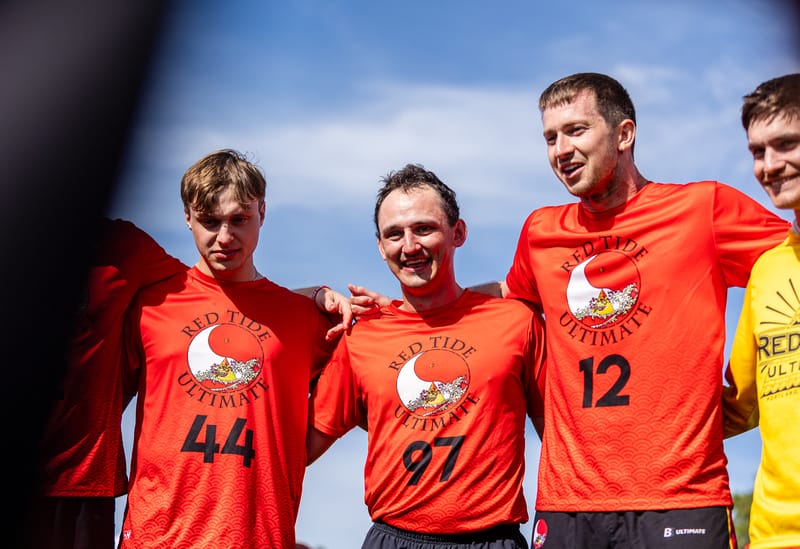
The story of how one of the longest running men's division teams ended a record-setting 26 year drought between Nationals appearances.
October 13, 2025 by Guest Author in Profile
Ultiworld’s coverage of the 2025 Club National Championships is presented by Spin Ultimate; all opinions are those of the author(s). Find out how Spin can get you, and your team, looking your best this season.
This post was written by guest author Gene Buonaccorsi.
For a brief moment, the entire crowd at Fort Devens held its breath. Henry Babcock stood in the end zone gesturing to the nearby observer after receiving a wide open away shot from Rocco Linehan. Nearby, Babcock’s defender looked on in what can only be described as a mix of desperation and exasperation. With no small sense of theater, the observer’s hands first waved off the pick call and then slowly raised to signal “goal.” The game was over: Portland Red Tide celebrated atop a mess of challengers, grabbing the third bid to Nationals that had dangled in front of the Northeast Region’s many hopefuls a mere 24 hours prior.
Predicting regional results is a sticky business outside of the top tier teams. Even putting the unpredictability of the tournament format aside, there just simply aren’t enough brains and bodies covering club ultimate at the moment to compile the information that might foretell what’s to come. With this in mind, it’s no surprise that Red Tide entered Northeast Regionals as one of 6-8 teams that each had what looked like a dice roll’s chance to claim the region’s third bid to Nationals in the men’s division.
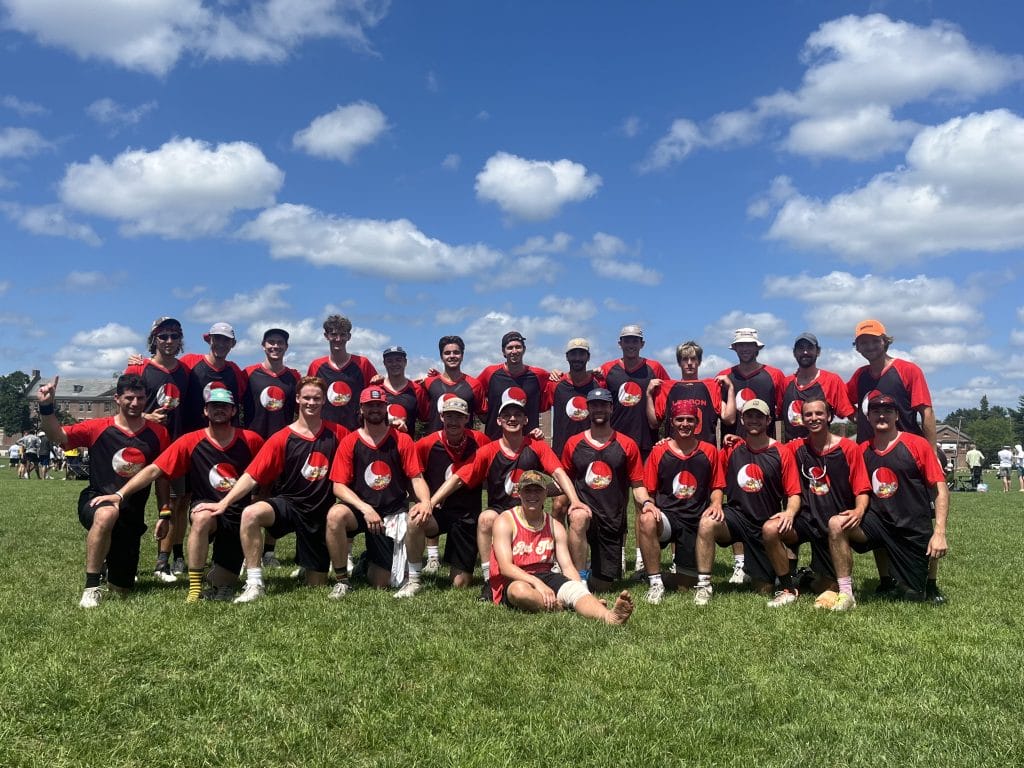
Prior to this year’s Regionals, Red Tide were featured in zero games in the entire Ultiworld video library and only boasted a middling set of post-COVID season finishes. All there was to hint at the team’s potential were some familiar names on the roster and a regular season full of ups and downs. To most of those concerned, Red Tide were in the mix, but as hardly more than just another mid-level team hoping for the best. When the dust settled, they had asserted themselves over the crowd and ended a record-setting 26 year drought between Nationals appearances.
What of those 26 years, though? And what of the decade prior to their first Nationals appearance, when Red Tide were just a fledgling group of bruisers from a small, working class city? For one of ultimate’s longest running men’s division clubs, the journey has been one of community, dedication, and homecoming. Investment in youth opportunities, exceptional organizational infrastructure, and good old fashioned love of the sport have been the gears that keep the machine running year in and year out. For members of the Maine Ultimate community, their corner of the world is not only a great source of pride, but it’s one they tended to for decades outside of the public eye. And so it makes sense that there’s a little wink of mischief as generations of Red Tide faithful say, “This was anything but random.”
Success Through Community
The ultimate community of 1988 in Portland, Maine, was, like others across the country at the time, still nascent. Early Red Tide member Alex Pozzy remembers moving to Portland for the summer and finding an assortment of local college kids with only a couple of leaders who knew the game. Mike Moser, in particular, had brought experience from the Eugene, Oregon, Dark Star program, and the first few years found Red Tide trying to convert athleticism into teamwork while getting humbled at Regionals by established teams like NYNY and Boston’s Titanic.
Soon after forming the club, though, the roots of community started to set. In 1989, led by Moser and his involvement with Oregon’s Solstice tournament, the team hosted the first annual Red Tide Clambake. From fewer than 10 teams in the inaugural year, Clambake grew into one of the country’s most beloved tournaments over the following three decades, hosting hundreds of players yearly and raising over $500,000 for the Special Olympics to date. Even from the start, there was a grassroots energy among the Red Tide community, a willingness to work hard at creating the environment they desired.
“By 1992, I was really itching to get to Nationals personally, and had zero interest in moving to Boston or New York to try out for one of those teams,” said Pozzy. “So I decided my best chance to go on my terms with my homies was to start a summer league and see if I could build up a farm system, develop enough players so that we could take our small-town team to the dance and compete with the big cities.”
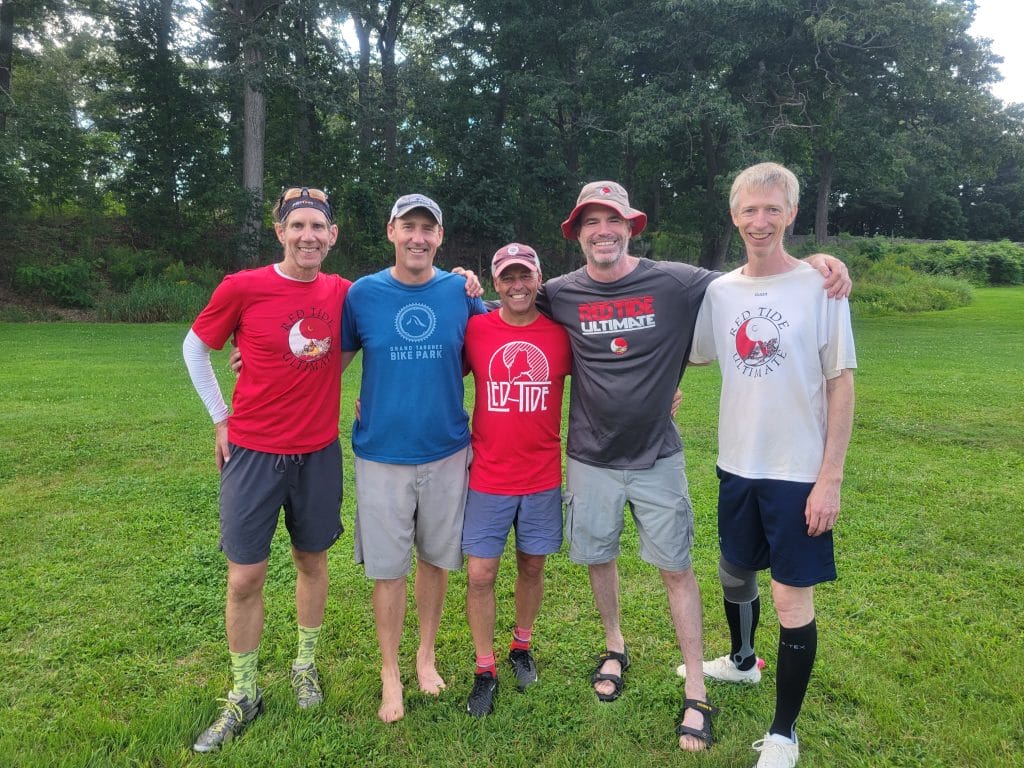
Pozzy and his teammates started a small summer league that not only provided accessible instruction for new players but also fostered a social environment for young people in the city. Portland Summer League was a place for everyone to face off each week before hanging out at the bar with the rest of the league. By 2000, there were 32 teams. Local organizer Rich Young notes that the league and the Tide roster at the time both featured numerous players who stuck around the area and passed the sport down to their now adult children like Tommy Stoughton, Kevin Massey, and Alberto Morales, to name a few.
The growth of Clambake and Portland Summer League through the 1990s successfully raised the level of local play and buy-in. Towards the end of the decade, the final pieces started to fall into place for Red Tide in the form of transplants from the legendary NYNY program – first Ben Usadi in 1996, and then none other than Kenny Dobyns in 1998 on a one-year stint. With experienced Nationals level players in tow, the deal was sealed. Tide punched their ticket in 1998, then rode the experience to a second, Dobyns-less appearance in 1999.
The magnitude of the achievement is still not lost on Pozzy. “I never had to move to Boston, and I got to play at the highest level of the game,” he said. “It always amazed me to see the list of teams at Nationals: Chicago, Boston, NY, LA – all the major cities in the country. And little old Portland, Maine, population 60,000.”
Returning to Form
Red Tide’s rosters of the late 2010s may not have featured many household names, but new additions and development from within have helped the picture come into focus in recent years. After Donovan winner, Boston DiG alum, and current Boston Glory mainstay Henry Babcock rejoined in 2022,1 a steady stream of homegrown Mainers and regional talents started to populate the Red Tide roster.
In 2024, they added Rocco Linehan (DiG, Sprocket, Drag’n Thrust), and in 2025, Maine youth products Noah Backer and Cole Moore made their homecoming after years with Boston DiG. Meanwhile, a strong YCC program and flourishing local high school league fostered the growth of young stars like Stewart Kelley, Bode Iris, Benjamin Wall, and Tucker Livingston, all of whom are still under 24 but have opted to stick with their hometown club rather than “graduating” to the usual New England powerhouses.
View this post on Instagram
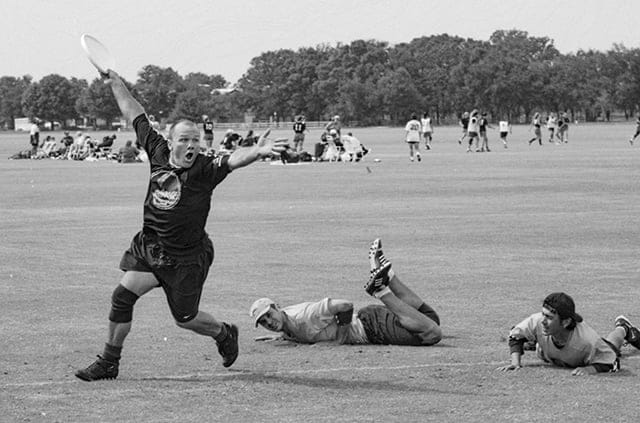
Red Tide’s Stewart Kelley gets up for the score in the Northeast Region men’s game-to-go.
Coming into the 2025 season, Red Tide’s leadership knew preparation was going to have to take a front seat if they wanted to achieve their lofty goal of returning to Nationals. “That was the big thing coming off of the 2024 season. We wanted to play more competitive teams and face a bit more adversity through the regular season. In 2024 we didn’t really get challenged until regionals and we weren’t really ready for it,” said three-time captain Danny Bronshvayg.
After finding their sea legs with a victory at the Boston Invite and a third place finish at their home tournament Vacationland, Red Tide traveled to face teams primarily from the North Central at Cooler Classic in Milwaukee. The goal: battle-testing their roster and potentially wrestling a fourth bid for the region away from another team on the fringe. While the latter didn’t materialize, sparks of cohesion continued to show as the team prepared for the Series.
Creating a Pipeline
The growth of Maine youth ultimate after the turn of the century can be traced to many of the same early Red Tide players that started Clambake and Maine Summer League in the ‘90s. Backer, who started the high school ultimate program in Cape Elizabeth, Maine, circa 2010 saw this firsthand: “If it weren’t for the adult leaders in our community setting up the opportunities for our youth to play at Youth Club Championships every year, putting on clinics, etc., we wouldn’t be where we are. We really owe everything to them for giving us the chance to take advantage of our love for this game.”
Meanwhile, longtime local organizers and Red Tide alums Mike Leding (who played throughout the ‘00s and ‘10s while also helping start the Maine High School Ultimate League as a coach) and Rich Young are quick to point to how players like Babcock, Linehan, and others have carried the torch by coaching at the YCC and high school level.
“As Maine Ultimate grew, our YCC players, once they graduated from college, came back and started coaching in our high school ranks and also in the YCC program,” Young said. He counts 15 former Maine high school players on the Red Tide roster and 11 local youth coaches.
The resulting rise in quality of young players over the last decade is no secret to Red Tide’s leadership. Bronshvayg, reminiscing on a 2022 meeting at a bar2 where he and his co-captain at the time workshopped a plan, remembered saying, “If we could keep the core of young players together and continue to consistently improve, and then slowly convince the experienced players to join us over the course of a few seasons, we could build out a Nationals level roster within a few years.”
“Some players weren’t up for that and moved on from the team which was always tough to see,” Bronshvayg added, “but there seemed to always be a mutual understanding that we were building towards this Nationals run.”
While many pieces came together to create success, it’s hard to overstate the importance of Henry Babcock’s role in this story. Referred to by one of his teammates as “the life blood of this program,” his stamp is all over the success of Maine Ultimate. Watch even a single point of Red Tide at Regionals and you’ll see a calm, poised center handler with a near-perfect sense of pace and a cannon of a right arm.
Off the field, Babcock has invested himself in the growth of youth ultimate in Maine and in his younger teammates’ success. The aforementioned youth stars — Stewart Kelley, Bode Iris, Tucker Livingston, Benjamin Wall — and others all played under Babcock’s YCC coaching before taking the field as his teammates on Red Tide.
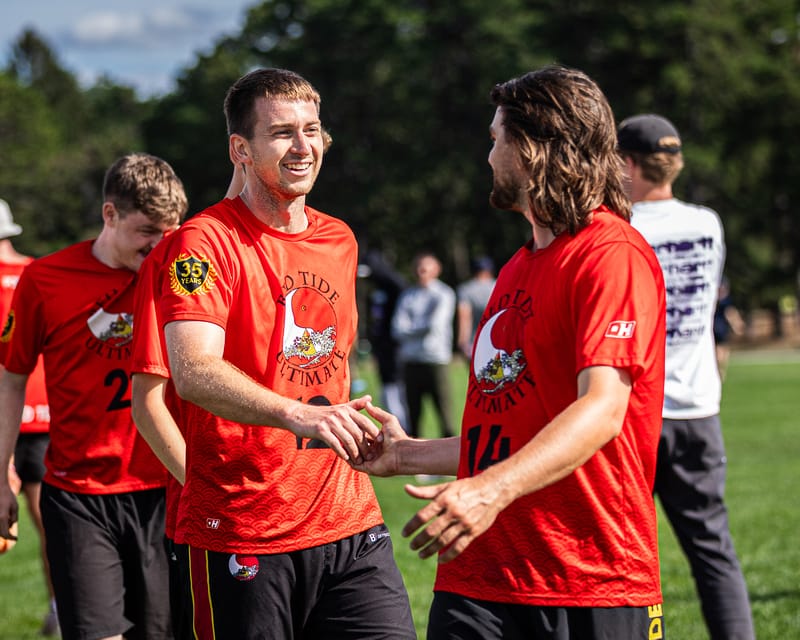
It’s a mentality that matches the reflections of Tide legends like Pozzy and Leding. “We care about the game and giving back to a sport that gave us so much,” said Leding. “I could not possibly be more proud nor inspired by the current crop of Red Tide players, who truly seem to embody everything that Tide has ever meant to me,” added Pozzy.
In this, you find the through line of Maine Ultimate — a deep dedication to the culture as much as the results. Through the ebbs and flows of success over time, this element seems to ring true. Recent success seems to reflect the growth, time, and dedication that is fostered deep within this community.
“What Henry, [Bronshvayg], and a number of others have built here in Portland is something incredibly special,” said Backer. “They’ve done a phenomenal job of taking an old school culture built on scrappiness and pride and combining it with smart, fundamental ultimate that produces positive results.”
Next Stop, Nationals
For the decades of Red Tide alumni that watched or heard about what happened at Devens, nothing could have been sweeter than knowing the spirit of Tide was going strong. “We started an alumni GroupMe and some of the notes from the current players about how they feel like they don’t just play for themselves but they play for us too…well it brings tears to my eyes,” said Leding.
“We always talked about how good the team would be if the best players who grew up here played Tide, and it’s amazing to see that coming to fruition now,” shared Toby Jacobs, who played a jaw-dropping 19 seasons for Red Tide through the ‘00s, ‘10s and early ‘20s.
What goes down at the Club Championships is yet to be seen. Red Tide face a tough pool of Nationals mainstays in DiG, Johnny Bravo, and Truck Stop. There’s likely to be a touch of the happy-to-be-here mentality, but going on four decades now it seems that a dose of joy and community alongside competition is just the Red Tide way.
Despite being a Massachusetts native who only moved to Maine in 2021, Danny Bronshvayg is proud to carry the torch. “I don’t know how it is for those other teams, but the guys that played on this team 10, 20, 30 years ago are still very much present here locally in Maine,” he said. “I can feel their excitement surrounding this Nationals appearance. I know they’ll be following along rooting for us, some are even flying out to watch. Not many club teams have that much support. Red Tide is special.”