Cal Poly SLO adds another tournament title to their resume
March 8, 2026 by Alex Rubin in Recap
Ultiworld’s 2026 college coverage is presented by Spin Ultimate; all opinions are those of the author(s). Find out how Spin can get you, and your team, looking your best this season.
At the end of a rainy day, #8 Cal Poly SLO SLOCORE emerged from Northwest Challenge as the tournament winners. Adding to a season-long trajectory of growth and improvement, SLO finished the weekend undefeated as they took on some of the best teams in the Northwest and Southwest regions.
SLO Ascendence
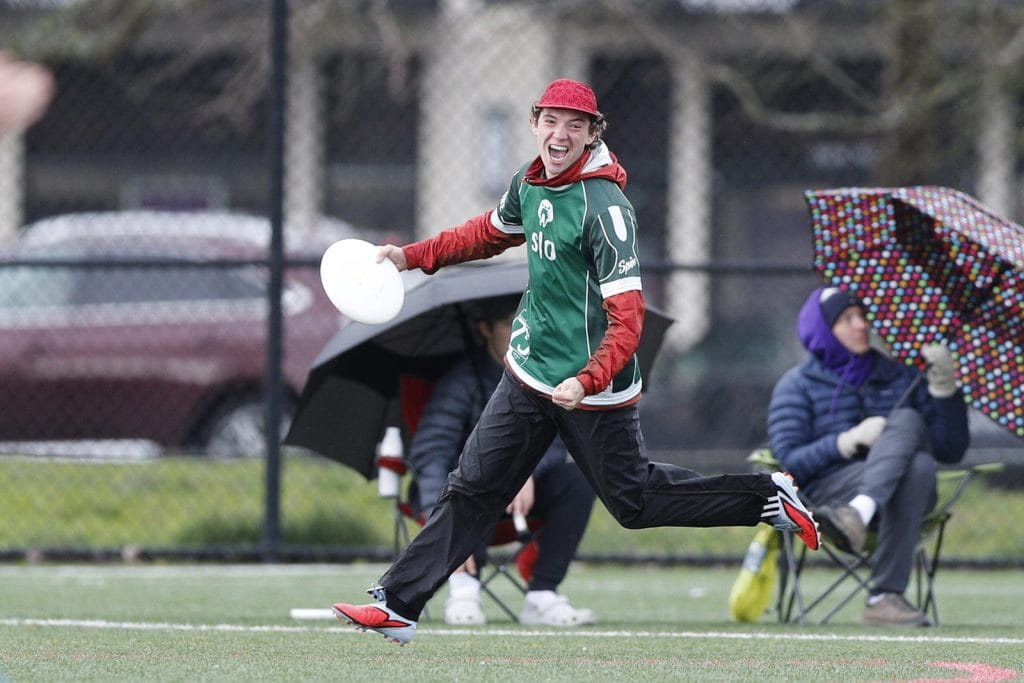
When they lost to then-unranked Stanford in the quarterfinal round at Santa Barbara Invite, there was no guarantee Cal Poly SLO would figure out how to bring their ceiling closer to that of the Nationals bracket staple of the last seven seasons. Another quarters loss to regional rival #5 California-Santa Cruz Slugs at Presidents’ Day Invite showed some growth, but nothing approaching the highest highs of recent seasons. But the best teams are not built to peak in January and February, and this year’s SLO team was simply…slower…to find their form.
As the season shifts to March, SLOCORE started to better resemble the team the ultimate community has come to appreciate since their 2016 breakout. An undefeated run through the Northwest Challenge bracket with all five wins at the tournament coming against ranked opponents is impressive for a team that was as low as #18 in our Power Rankings earlier this season. The tournament win also announces SLO as a serious contender at the Nationals level. With Max Gade, Anton Orme, and Alex Nelson leading the roster, SLO always had the talent to compete even with teams that had a deeper well of talent. But after a difficult weekend of action, role players are finding their places, rookies are gaining comfort playing at the college level, and the team is finding the kind of edge needed to win close and important games.
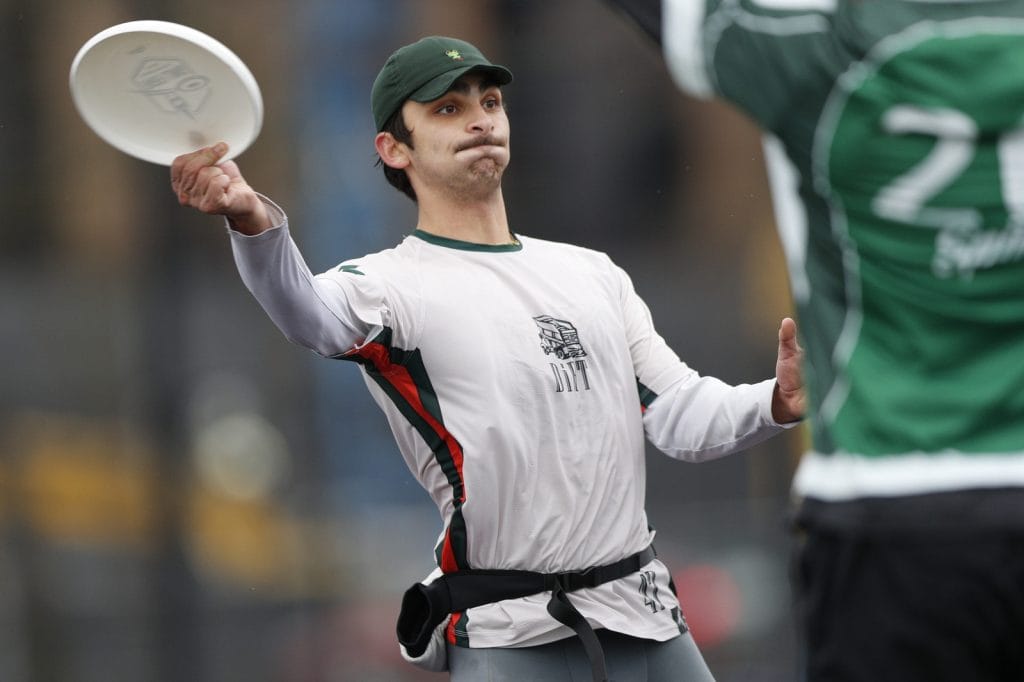
SLO faced #7 Western Washington DIRT in the tournament final. WWU started on the front foot, punching in a quick hold and break to build an early lead, with Graham Peck’s two early blocks helping to keep the flow of gameplay in DIRT’s favor. Without Elijah Diamond, out with a reported elbow injury, Cedar Hines and Zoli Ishikawa-Szabo took the lead in the backfield, though they were assisted frequently by Thomas Simms (who is enjoying more offensive responsibility in his 6th season) and Zach Sadow-Hasenberg (a sophomore enjoying a breakout tournament).
But much like their season outlook turned around after some rough moments early on, SLO turned the game around in the middle of the first half. Frequently crossing over Gade, Orme, and Nelson to bolster the counterattack, SLO flipped a 5-2 deficit into a 7-6 halftime lead. The mistakes that plagued the team early in the game disappeared by the end of the game.
The SLO offense went unbroken in the second half, and the D-line started converting breaks without crossovers, relying instead on the throwing brilliance and tenacity of rookie handler Henry Garcia. By the time Orme lofted a head-high away shot that Emmett Steele caught for the game winner, SLO had built a four goal lead and took the game 13-9.
The ease with which SLO put away a higher-ranked opponent to win a major tournament was impressive. After the first quarter of the game, which was marred with execution errors and some questionable decision making on tough throws, SLO looked like a team that could beat anybody on their best day. For much of the season, SLO appeared to be the second-best team in their region behind UC Santa Cruz, but as they continue to develop it’s looking like the region might actually be up for grabs.
On the other side of the field, it’s clear Western Washington look significantly more dangerous with Diamond on the field, but they proved they’re more than a three-person show with the way other players needed to step up throughout the weekend. Getting to the final and playing a competitive game against a top team is surely a confidence-builder, and it was clear all the way through that even without their best player, DIRT believed they could win the game. That’s the mark of a great team, and should serve Western Washington well as they work towards qualifying for Nationals in the most competitive region in the division.
Semis = Success
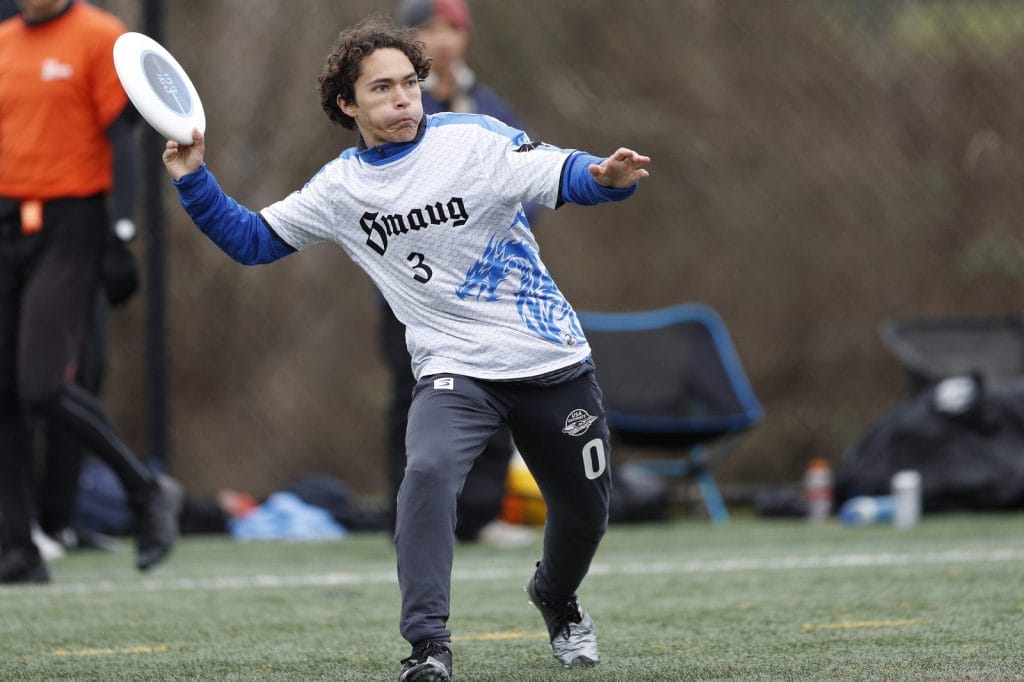
Yesterday, I praised UCLA Smaug for pulling off two upsets and unexpectedly winning their pool. Sometimes, a team has a hot day or finds a good matchup. With their 12-10 win over #23 Utah Zion Curtain in this morning’s quarterfinal, UCLA proved they were more than a one-day wonder. Smaug might want to consider asking to move to the Northwest region since they now have wins over three ranked teams who compete there.1 If SLO’s tournament win makes UC Santa Cruz sweat their place atop the region, UCLA’s sudden success should have both of them on alert as a possible bid stealer.
UCLA finished the weekend in fourth place, falling to #9 Victoria Vikes in the third place game. The Vikes were upset by California Ursa Major on Saturday, but recovered to beat #25 Washington Sundodgers and #6 Oregon State Beavers in the prequarter and quarterfinal round respectively, before falling 13-7 to SLO in their semifinal matchup. Max Pettenuzzo continues his All-American campaign as the leader of this Victoria team that is pushing to make Nationals for the first time in the 2020s. Sunday’s rebound after a shocking Saturday loss is a good sign for a team that will likely need to fight through one of the backdoor brackets at Regionals in order to play at Nationals.
Meaningful Moments in Consolation
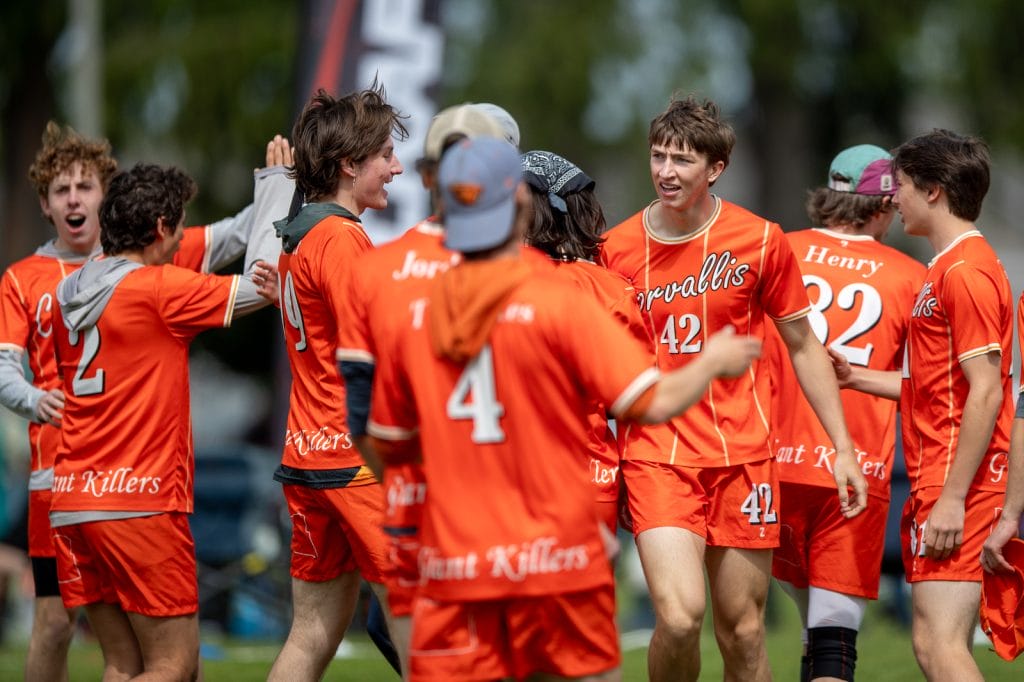
After winning this tournament last season and winning their pool on Saturday, Oregon State is sure to be unhappy over their quarterfinal exit, but there are still positives to take away from this weekend’s fifth place finisher. The Beavers beat a full-strength Western Washington on Saturday, building their confidence ahead of a tough Regionals coming next month. Their wins this weekend came without team leader Felix Moren, who was on the sideline in street clothes. With just the one loss on the weekend, Oregon State should be proud of beating a tournament finalist and for rebounding from their bracket loss to score two in-region wins in consolation.
Utah rounds out a 3-3 weekend in sixth place, beating all of their unranked opponents except for UCLA in their quarterfinal matchup, and otherwise losing to SLO and Oregon State – both respectable losses for a team at their level. Utah still seems to be fiddling with their lines and finding the best roles for their most talented players. They’ll have everything they need to compete in the scrum that will be Northwest Regionals, but to come out of that with a place at Nationals, the team will need to find some more offensive consistency.
Seven Players Who Impressed Me In Streamed Games
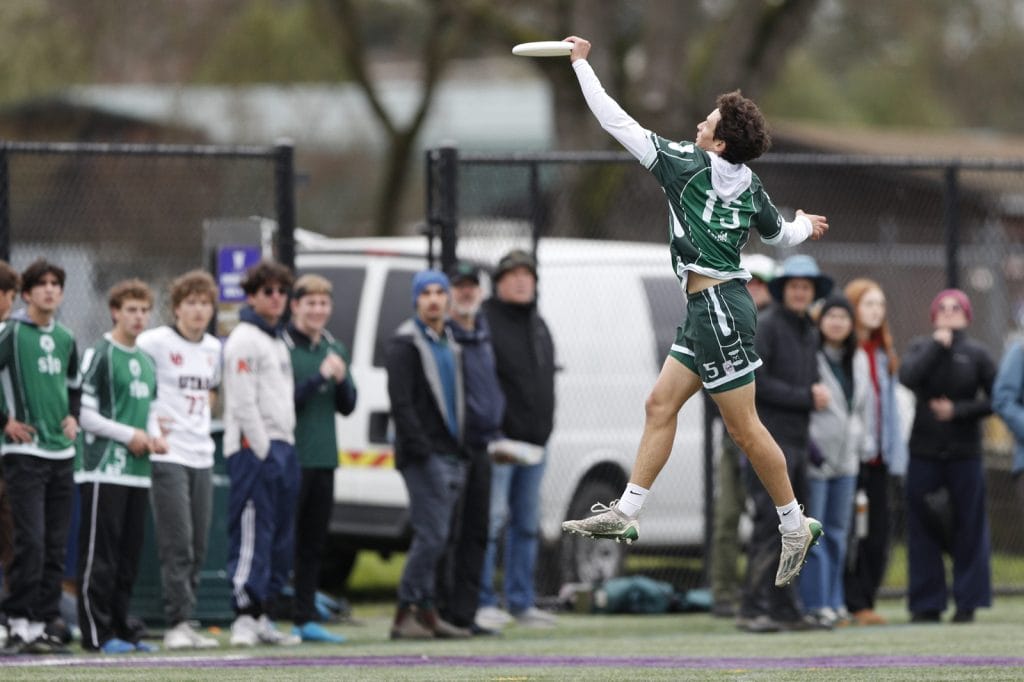
- Thomas Simms (WWU) – Stepped up well for a team that needed somebody to do so, and rarely made a mistake.
- Henry Garcia (Cal Poly SLO) – Sign me up to watch these daring backhand hucks and pacey deep shot run downs for the next four seasons.
- Anton Orme (Cal Poly SLO) – Let’s see if Orme can make the next winter Olympics team – he glides on the field with the skill of a figure skater and looks so comfortable no matter what he’s doing on the field.
- Loic Billaut (UCLA) – It can be difficult for smaller players to have a huge impact on the game, but Billaut has figured out how to use his speed and quickness as a major weapon for an ascending team.
- Max Pettenuzzo (Victoria) – Few players have his combination of offensive control and defensive doggedness. In the semifinal against SLO, he was one of the few players able to make good things happen in incredibly rainy conditions.
- Dylan Pearson (Cal) – Pearson stepped up as a massive support for Ridge Huang and Carter Lankford. His comfort in both midfield and finisher roles opens up multiple options for Cal.
- CJ Kaperick (Oregon State) – Kaperick is coming into his own in his second year on the team. As he continues to gain comfort at this level, he should get the green light to take more daring chances.
#17 British Columbia Thunderbirds and #25 Washington Sundodgers being the others ↩