Eight weeks into the college season, we're taking a look at the narratives that could shape how we view 2026
March 6, 2026 by Aidan Thomas in Opinion
Ultiworld’s coverage of the 2026 college ultimate season is presented by Spin Ultimate; all opinions are those of the author(s). Find out how Spin can get you, and your team, looking your best this season.
The Line brings together lists of sevens from our reporting staff.
One of the most talented rookie classes the division has ever seen, waning extended eligibility rules, and intense jockeying to defeat heavy title favorites has made the 2026 D-I college season one to watch. We’re still in the early goings, with tournaments like this past weekend’s Smoky Mountain Invite and Commonwealth Cup in the women’s division already heavily impacting bid rankings. This weekend’s Stanford Invite (in the women’s division), as well as Easterns and Northwest Challenge in the men’s division, are on the horizon. And that’s all before the postseason, when a strength bid cap will leave every region feeling like there’s not enough to go around.
But before we get there, let’s take stock of the season as it stands so far. These are the seven storylines you need to know at the season’s midpoint.
Women’s Division
Pilfering Strength Bids from the West Coast
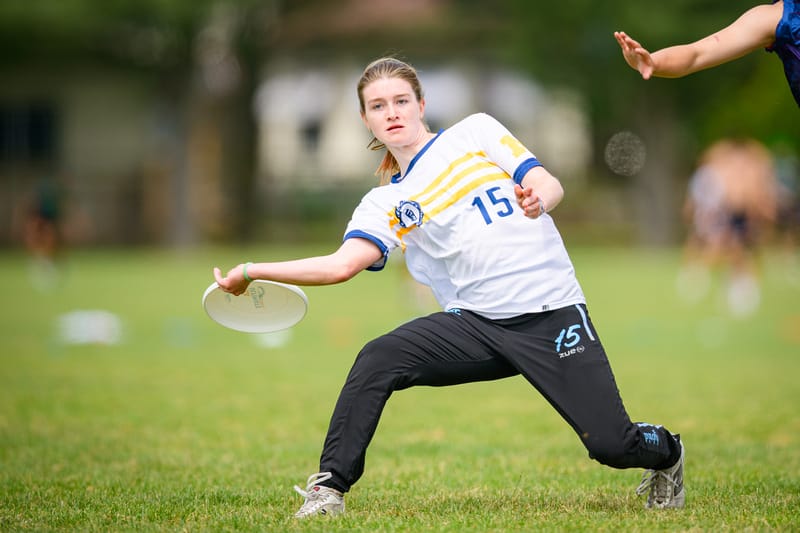
The puzzle pieces will fit more snugly after Stanford Invite and Northwest Challenge, but the question of how the strength bid count will break is are already becoming pressing. It feels like a near-lock that the Northwest and Southwest get five bids apiece, the maximum under the new rules. That leaves eight auto-bids and two strength bids from the remaining regions. And honestly, where those two coming from is anybody’s guess right now.
New England definitely has the inside track, as Tufts and Vermont are both top-20 teams. But Vermont is No. 18 in Ultiworld’s Projected Rankings, and they played some lower-ranked teams very close at Queen City Tuneup and were upset by Penn. I wouldn’t bet the house on Ruckus not suffering some ill-timed upsets down the stretch. Maybe Northeastern could push for a bid here? It’s unlikely but possible.
After New England teams, who do you trust to gain a second bid? And if it wasn’t for the five-bid maximum per region, would you feel confident about any region east of the Rockies for that matter? Neither Notre Dame Echo nor Michigan Flywheel are inside the top 20 for the Great Lakes, with Flywheel sitting outside the top 40 after a 5-8 start. Texas and Minnesota face uphill battles to garner a second bid in the South Central and North Central, respectively. The Virginia Hydra already suffered some damaging losses, most glaringly a loss to Notre Dame, in their pursuit of a second Atlantic Coast bid, and American and Georgetown would be quite the shock to see push up the rankings into bid-earning territory. Ohio Valley isn’t inspiring outside of Penn, and the Metro East is… well, it is the Metro East. The Southeast hasn’t had a challenger for Georgia Athena in quite some time (we can shout out Tennessee for being 11-0, but their best win is No. 38 Emory).
While the move to have a maximum amount of bids per region is a new one and intriguing to see more parity and geographic disparity in the Nationals field, early signs this season are that a deserving team out of the Southwest (or maybe Northwest) will lose an earned strength bid to a lower-seeded team to the east to meet the new rule.
Carleton Done Being Silver Medalists
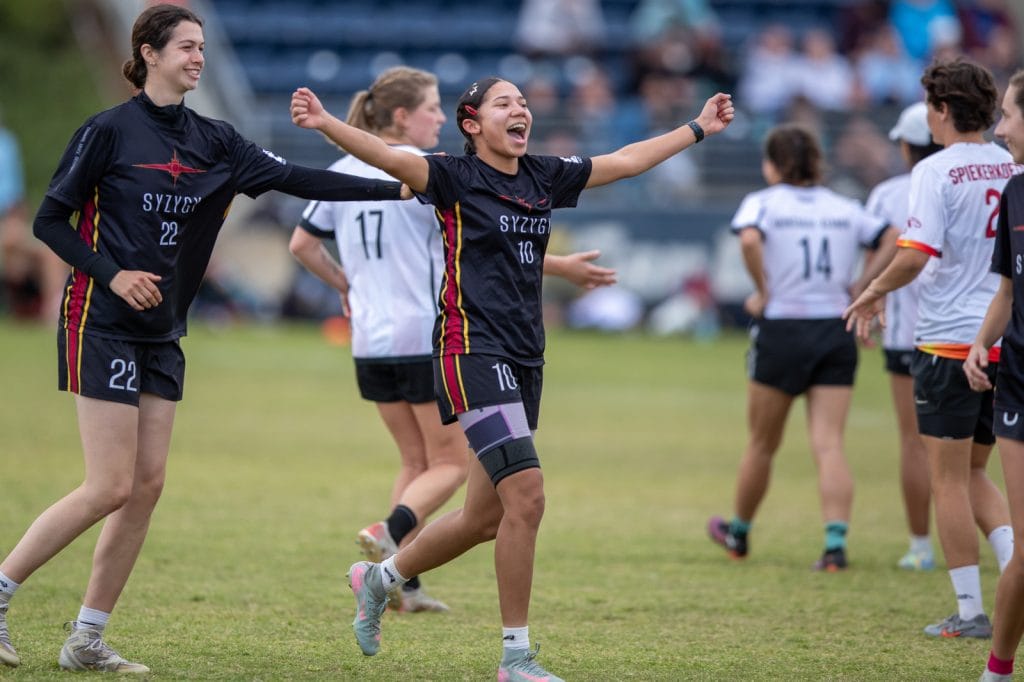
We’ve been speaking of semi-cursed programs that look strong in the early going… so it’d be wrong to not mention Carleton Syzygy in that same conversation. The five-time national runner-ups have not won a title since 2000. This year, Carleton is 13-0 and has already toppled defending national champion British Columbia, as well as other primary challengers UC Santa Cruz and Stanford. With uncertainty about the quality of teams on the East Coast, and a myriad of teams struggling to make a significant challenge at the top spot, this feels like Carleton’s best chance at a title in recent memory—a season with no clear top dog… unless that top dog is Syzygy themselves.
How Many New Teams Make Nationals?
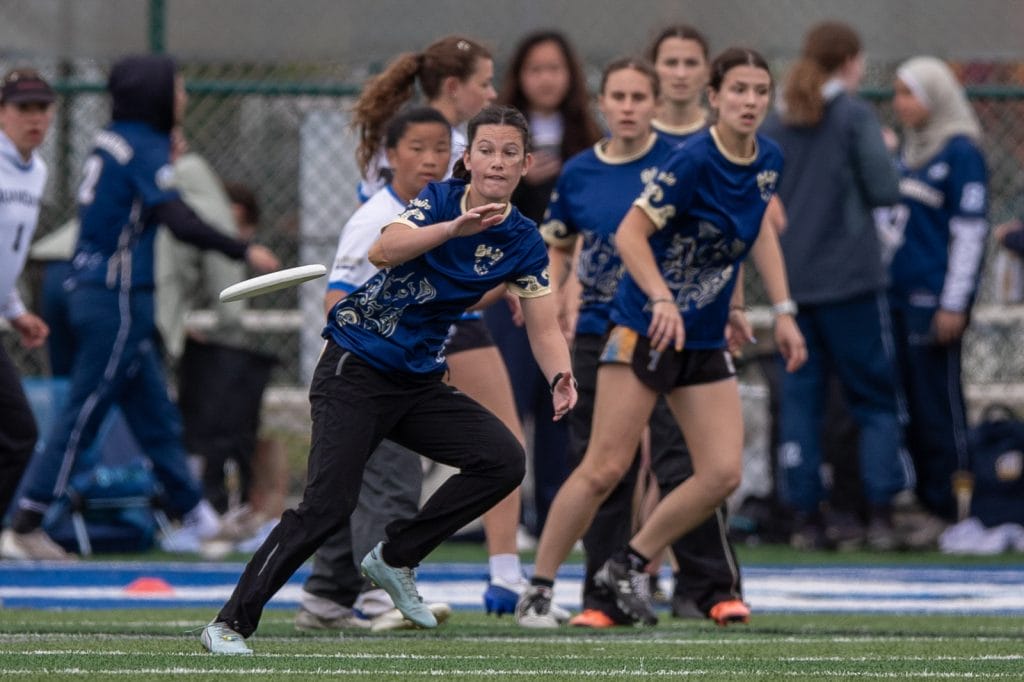
The scarcity of East Coast strength bids naturally bleeds into a larger concern: the potential for a historic number of — or complete lack of — new faces at Nationals. Last year we saw 11 bids between the Northwest and Southwest, and the number could be similar again this year, though the bid caps ensure they won’t match that total. In the Northwest, Western Washington feels like the biggest challenger to crash the party, with Utah struggling out of the gate. Meanwhile, in the Southwest, there’s lots of intrigue with UCLA threatening to usurp UC Davis, Cal Poly SLO, and UC Santa Barbara. Southern California is creeping into contender territory, but they definitely feel like the clear seventh-best team in a region that will max out at five bids.
So what’s the most “boring” situation? Well, due to the new five-bid maximum, we won’t get all 11 Northwest and Southwest teams from last year in the field, but a maximum score of 10 is very attainable. Then if Tufts, North Carolina, UPenn, Colorado, Michigan, Cornell (the Metro East favorite), Vermont, Carleton, and Georgia handle business, you’ll see 19 of 20 teams return and you’ve got a near carbon copy of 2025 Nationals headed to Rockford. That would leave all other regions to vie for a coveted extra bid and send a new face to Nationals (at least relative to 2025).
What’s your chaos potential? Let’s maximize it for one moment. Michigan and Notre Dame make up ground at Northwest Challenge and East Coast Invite and surge back into the bid-earning picture. They both defend their bids atop a weak region and Notre Dame gets back to Nationals for the first time since 2017.
Northeastern, Minnesota, and Texas garner additional bids for their respective reasons and defend them. Suddenly the cutthroat Northwest and Southwest regions are down to seven combined bids. Western Washington and UCLA, a pair of teams that weren’t at Nationals in 2025, each steal one of those spots, making for now six new teams at Nationals.
A windy Ohio Valley Regional sees Penn dethroned in favor of Ohio State, Ohio, or another challenger. Some other Metro East squad, such as NYU, SUNY Binghamton, or Yale, topples Cornell, and now you’ve got eight new teams. It’s pretty hard to picture Georgia Athena or UNC Pleiades losing their grip on their regions, but one-bid regions can get dicey, particularly in any kind of inclement weather. That’s 10 teams that didn’t make the field last year that, if you squint, you could envision being in Rockford this year.
That’s not going to happen. But it’s fun to think about. In a division that’s wide open at the top, the hidden storyline is who is rounding out the second half of the field this year, and will we have a Cinderella story emerge from the ashes this spring?
Men’s Division
From Big Four to Big Three
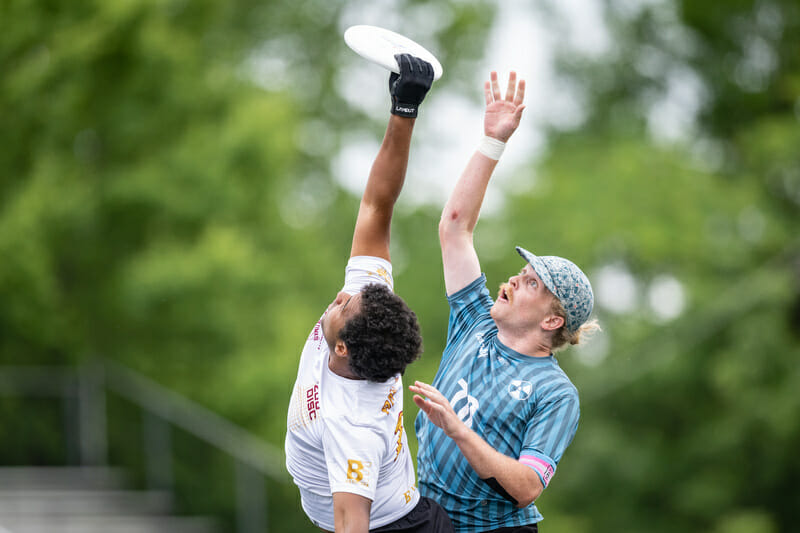
The preseason expectation was that 2025’s semifinalists (Carleton, Colorado, Oregon, UMass) were a cut above the rest of college ultimate in 2026, the favorites to make this year’s semifinals a carbon copy of last year’s final four. Midway through the season, Carleton, Colorado, and Oregon are a combined 44-4, with three of these four losses to each other. Zoodisc? They’re 10-5.
Yes, UMass was missing names, and yes, rumor is they had a host of people under the weather while at Smoky Mountain Invite. It’s hard to ignore the 3-4 record and prequarterfinal exit, however. You still had one of the country’s premier throwers in Jonah Stang-Osborne, another star in Caelan McSweeney, and a roster that should be deep enough to contend for a title. Also hard to ignore? A lack of a true elite win this season (their best is Pittsburgh). UMass has two of the best (injury-prone) players in the division, but with Carleton, Oregon, and Colorado putting up the performances they’re putting up, with all three of them notching tournament wins already this season, is UMass really in the same tier?
Oregon Going All In with Strong Hand
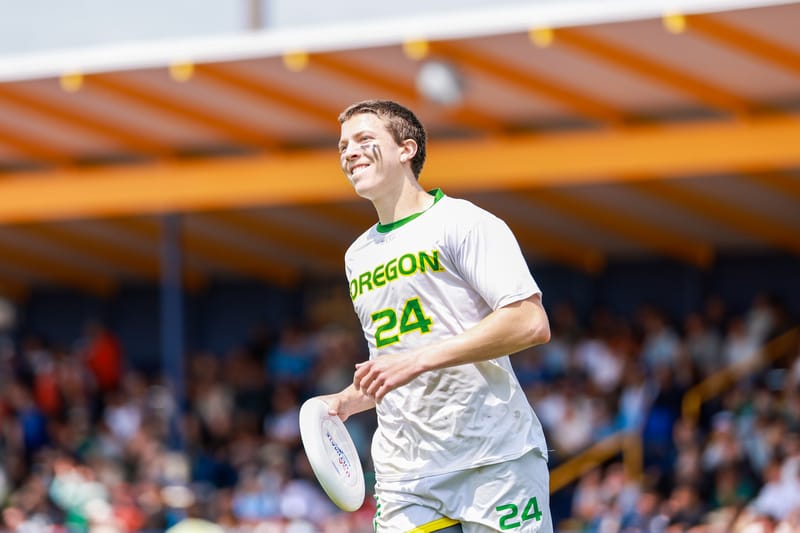
In 2023, Mica Glass introduced himself to the college ultimate scene with a stunning upset of title contender Colorado Mamabird in prequarters before bowing out in quarterfinals. In 2024, a controversial (and frankly, incorrect) stall call spoiled Oregon’s upset of UNC Darkside, and Ego fell in quarterfinals again. Last year, Ego made it back to semis, but they lost to Colorado on that stage. And now Raekwon Adkins has emerged for a superhero-style team-up with Glass, giving Ego a pair of aces.
Always the bridesmaid? Or can Ego be the bride this year? They absolutely throttled Colorado in the Presidents’ Day Final and didn’t win a game by less than three points en route to a 12-0 start. At Smoky Mountain Invite, Oregon lost two games, but it was actually overall a positive as they played much of the tournament without Glass, and their depth still pushed defending champion Carleton CUT to the brink in semifinals. Mica and Co. have been knocking on the door. Can they piece together the long-awaited title run?
The Battle for the Southeast Crown
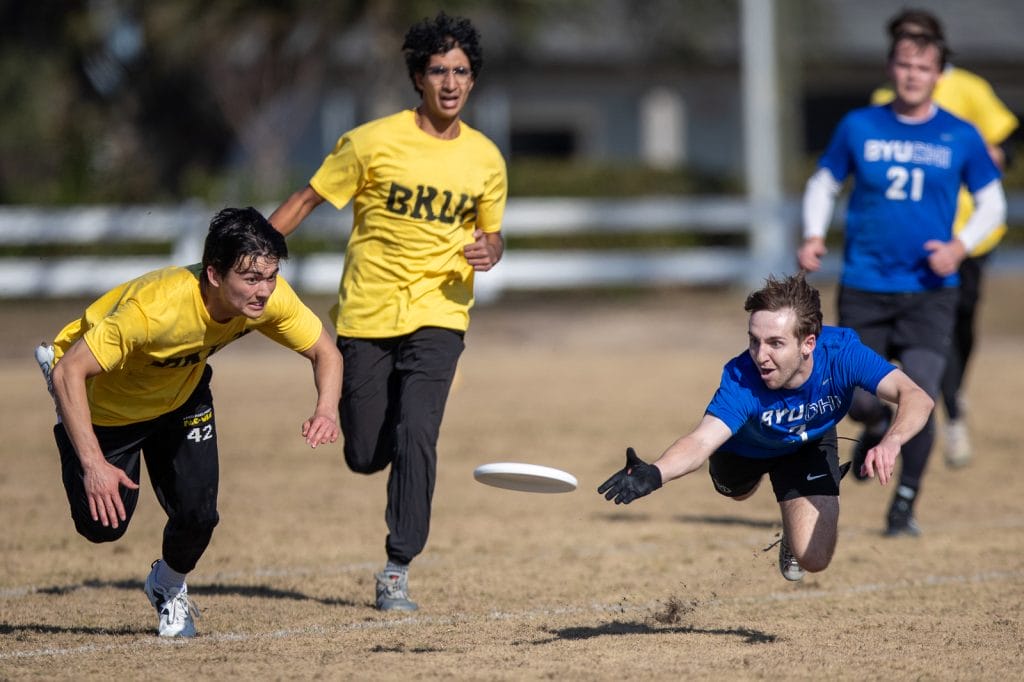
Georgia Tech’s strong performance at Smoky Mountain Invite has reinstated one of the most hyped preseason teams as regional favorites. But it hardly seemed that way after a 3-4 performance at Florida Warm Up that dropped them out of the rankings, with losses to BYU, Northeastern, Wisconsin, and Georgetown. However, Tribe was better in their second showing, going 6-1 with wins over UMass and UC Santa Cruz. But they turned around and immediately lost in prequarters to Vermont. The ceiling is there, but the inconsistency is very much cause for concern in a one-bid region.
But looking elsewhere, it’s unclear who might be Tribe’s biggest challenger. Longtime Southeast champions Georgia Jojah have been injury-riddled and are 4-11 to start the year. They lost to Ave Maria (13-3) and Yale (13-6) at Florida Warm Up, plus suffered blowout losses to Georgia Tech (15-5), UMass (15-2), and an in-region loss to Tennessee at SMI. Their one win at Smoky Mountain Invite? The Michigan team that beat Georgia Tech later that day. But if Jojah gets fully healthy, are they strong enough to challenge Tribe?
Elsewhere, Tennessee (beat No. 15 Vermont), Tulane (pushed No. 3 Carleton in a 13-10 loss), and Ave Maria (throttled Georgia 13-3) all have showcased relatively high ceilings that could make things get interesting in a hurry at Regionals.
Georgia Tech may still be the betting favorite on talent alone, but this region could be fun to keep an eye on and see if we don’t get a wildly unexpected name heading to Rockford in May.
Auditioning For the Fourth Semifinalist

You’ve got your three sure things—Carleton, Colorado, and Oregon. After that, proverbial hell breaks loose. Who’s the de-facto favorite to earn that fourth semifinalist spot, with UMass doing everything they can to convince you they aren’t the team we thought they were? UNC saw a 10-year semifinal streak snapped last year on a universe-point loss to Colorado. This year, Darkside started 9-0 against a fairly weak schedule before going 4-3 and finishing fifth at Smoky Mountain Invite. They lost to Oregon and Colorado, with their only other loss to a rising Pitt squad. They still have Josh Singleton, Matthew Barcelos, and Seth and Eli Fried all back and serving as major contributors. UNC may not have the same star power as prior years, but they’re exceptionally talented. If they can find a way to avoid a quarterfinal against the top three, it would feel silly to bet against the Darkside program at Nationals.
Outside UNC, look to a trio of West Coast squads: UC Santa Cruz, Victoria, and Oregon State. Those three teams have all beaten each other and are a combined 0-7 versus Colorado and Oregon. None have suffered a truly bad loss and their ceiling seems to be high enough that the right draw at Nationals could pave a road to semifinals.
After UMass, UNC, UCSC, Victoria, and OSU, the dark horse tier includes a plethora of squads. Last year’s Cinderella Western Washington beat Oregon State, 2024 runners-up Cal Poly SLO toppled Victoria, Brown and Pitt have both beaten Massachusetts, and Georgia Tech has a win over UC Santa Cruz. That gives you an eight-team grouping that feels like they all could feasibly make a run at semifinals and the biggest key may be the one thing they can’t control—a bracket draw that avoids Carleton, Colorado, and Oregon until the final four.