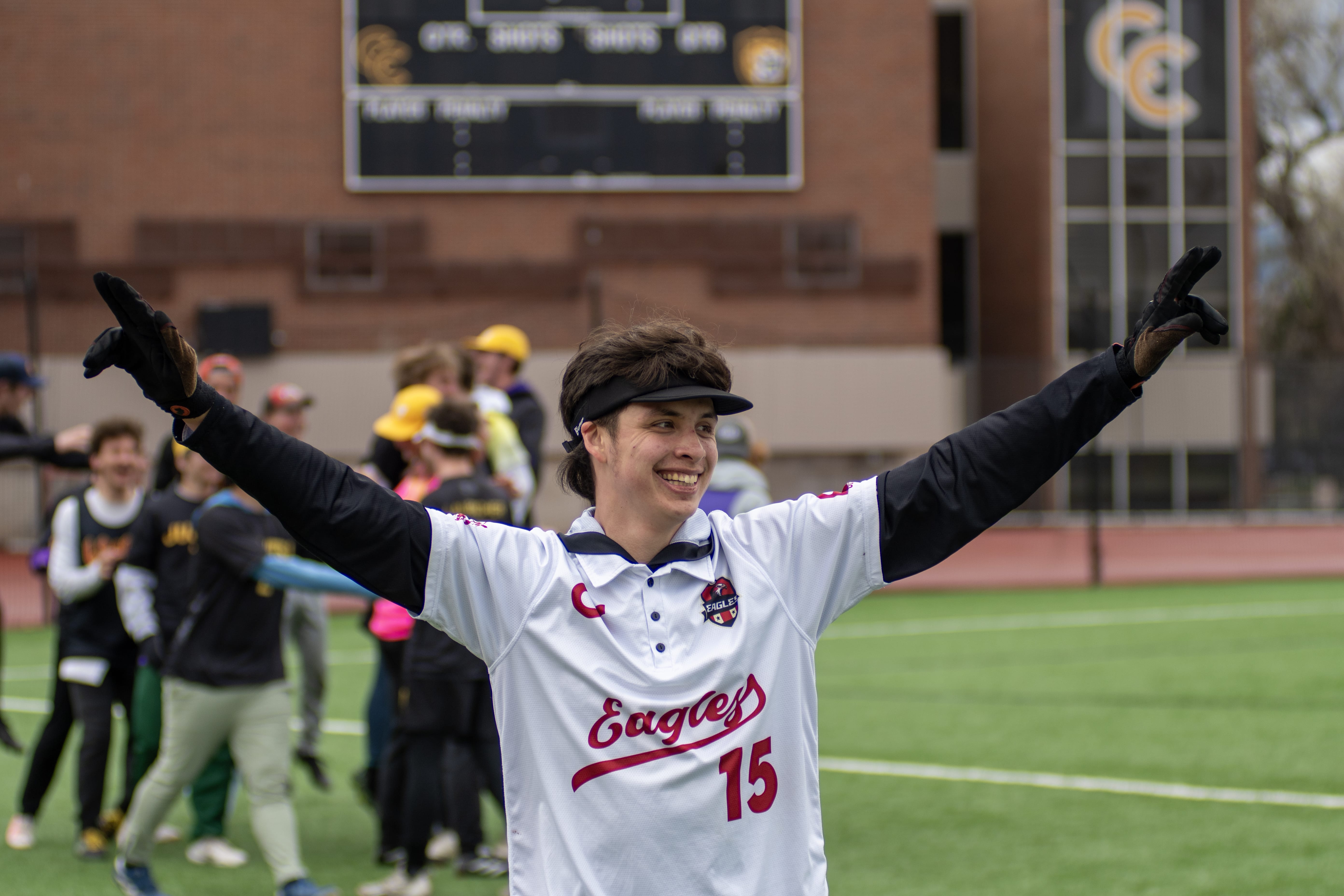
Tufts battled back from a 12-8 deficit to force universe against undefeated Carleton, but Syzygy's stars proved too bright to be dimmed in semis
May 24, 2026 by TJ Lee in Recap
Ultiworld’s coverage of the 2026 college ultimate season is presented by Spin Ultimate; all opinions are those of the author(s). Find out how Spin can get you, and your team, looking your best this season.
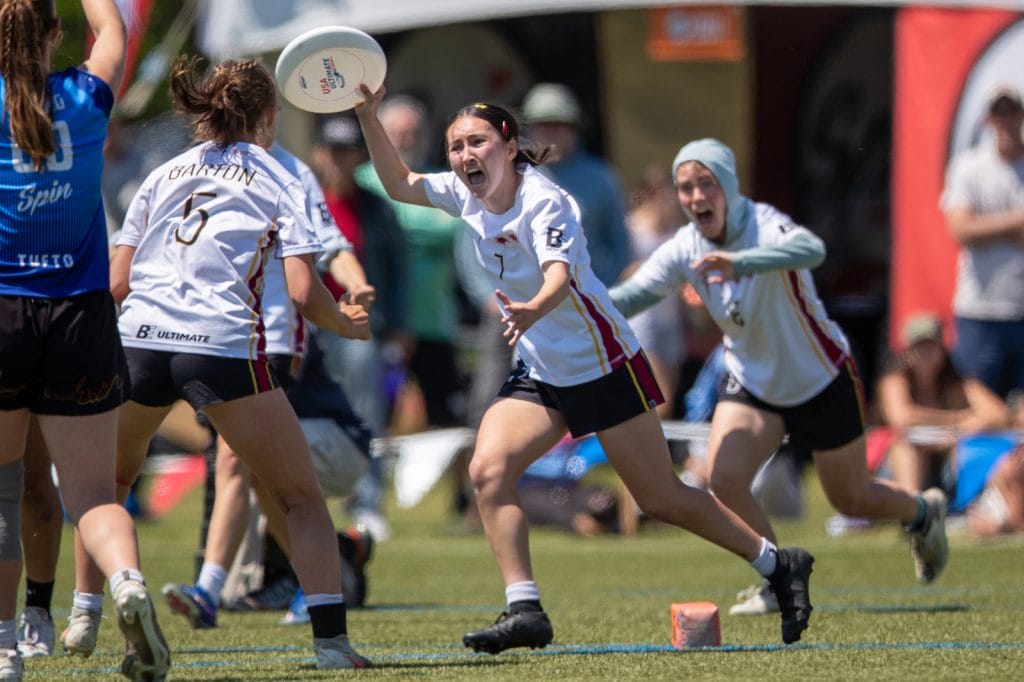
ROCKFORD, IL — Fans were treated to an absolute stunner to kick off the semifinal round, as #7 Tufts EWO gave #1 Carleton Syzygy everything they could handle — and then some — in a universe point thriller where Tufts had the disc with a chance to break for the game. But even with reigning OPOTY Chagall Gelfand playing limited minutes, Carleton flexed its depth and sensational rookies to put the game away. Chloe Hakimi accounted for 11 of her team’s scores and worked closely with Naomi Fina (3G/2A/3B) and Helen Burruss (4G/1A) to drive Syzygy to their second consecutive national final.
Carleton’s offense had one simple game plan: get the disc to Chloe Hakimi. Hakimi was doing everything to quarterback Syzygy’s offense, from breaking marks with crafty arounds or hitting downfield cutters with smooth hucks. Hakimi was more than just a thrower, however. Her athleticism and field awareness were crucial in making some key plays during the first half, including some nice footwork to toe the line to equalize the game at 2.
The next step to Carleton’s offense was pushing cutters deep to open up space for handler strikes. This flow opened the game not just because of Hakimi and Fina’s cuts, but also because it got Hakimi and Gelfand in optimal shooting positions.
The biggest side of Carleton’s offense came from their comfort in staying on one side of the field. Even on a nervey universe point, Carleton was able to execute their upline strikes and unders.
Tufts responded to Carleton’s flow in an array of ways. While some looks gave up some easier goals1), their zone threw Carleton in an absolute fit. The zone forced Carleton to win with smart throws, and not work with their cuts.
When running person defense, Tufts trusted their teammates to take their matchup and leave them on an island. This defense was critical on universe point, as it forced cuts and throws from Carleton to be perfect.
For Tufts, the offensive plan was simple. If Carleton was gonna look at Hakimi to win with throws, Tufts would let Lia Schwartz do the same.
Hakimi finished the game with nine assists, enough to land her fourth on the all-time leaderboard for single-season assists in the college women’s division with 36. With one more game tomorrow, and only needing two to tie the record, expect history to be made in Rockford. Lia Schwartz’s five assists in the semifinal place her at 34 total at Nationals this year, good for a sixth-place all-time, tied with Han Chen.
Whether it was a visionary backhand around the zone or shooting into coverage and letting her cutters make plays, Schwartz was gonna put it up. This isn’t to say Schwartz only threw into coverage; there were times when the throw was in the perfect spot where the defender couldn’t make the play.
But Tufts was more than just Lia Schwartz. Mina Brown, and Ellie Lemberg were both making plays, too. With cutters that can win the sky ball, even with defenders starting in better position, Tufts was able to pressure the Carleton defense better than anyone else had all tournament.
Knowing Tufts’ willingness to shoot, Carleton brought back their zone that worked so well against Oregon. It involved using handler sags to limit looks downfield, while often leaving a defender to play tight matchup defense on Schwartz. The goal was simple: let someone else throw the assist.
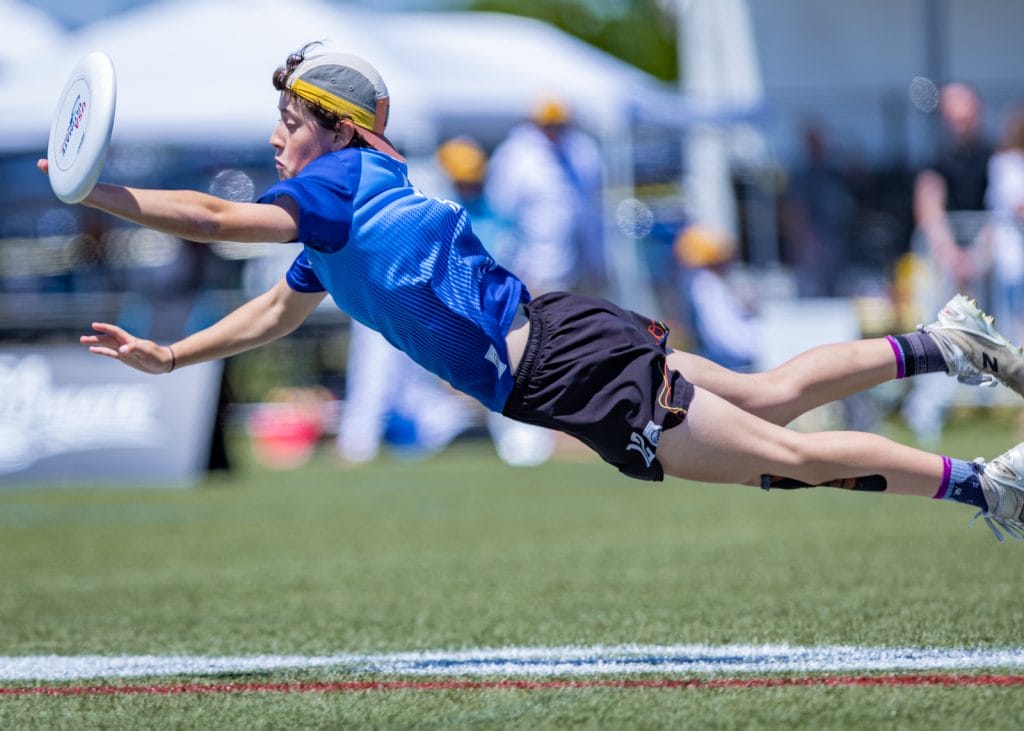
For the zone offense, Schwartz had to make significant adjustments. With a wall of defenders contesting hucks at the source, EWO opted to find space for handlers to chisel and get short but safe passes. This more patient offense paired well with the explosive shooting side of Tufts, and put the pressure on Carleton to make plays on the disc.
With two teams working to play their game, while working as hard as possible to force their opponent out of the game plan, one clear, deciding factor began to appear. As the game progressed, Tuft’s stars faced more and more fatigue. This was particularly capitalized when the game was 14-13.
Carleton is one point away from winning, but there’s something interesting about the line Syzygy sent out. I’ll let you take a look at it before I reveal my observation.
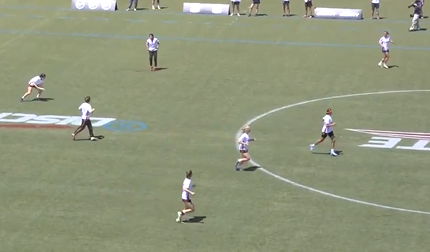
Looking at this line, one simple question emerges: Where is Chagall Gelfand? Gelfand had put up moderate stats this weekend, but entered the weekend as the definitive best player in college (according to our player rankings).
The answer was simple: Carleton had depth. Gelfand took the point off, and was able to play universe point with fresher legs than Tufts could. On top of that, Carleton’s bye to quarters meant that Tufts had played a full extra game over Carleton.
Speaking of playing more, Tufts entered the semifinal having played 152 points, compared to Carleton’s 116. And while Tufts allowed double digits to every opponent they played, Carleton only allowed double digits in two of the five games played prior to the semifinal.
Just like they had at Queen City Tune Up, Tufts, facing a four-goal deficit at 12-8, scraped and clawed their way back, leveling the game at 14-14. Only this time, the exhaustion and sunlight proved to be too much. EWO gave it their all to force a turn on universe point, only for this to happen.
Cruising through pool play has given Carleton a huge advantage over their bracket play opponents: fresher legs. Now, they prepare to enter their second-straight final with the one disadvantage to an easy pool — not being tested — no longer apparent. Syzygy have proved they can both blow out opponents and hold on at the end of tight games.
They have not had to bounce back from being down at halftime, but if they can maintain this level of momentum and energy, alongside the high level of play that Fina and Hakimi provide, Syzygy will walk away champions.
I’m sorry, but why are you giving Chloe Hakimi a free backhand huck, and only relying on your defender downfield to make a play? ↩