Your guide to the biggest players, teams, and stories of the 2026 D-I college season!
January 22, 2026 by Edward Stephens, Alex Rubin, Graham Gordon, Josh Katz and Calvin Ciorba in Coverage, Preview
Ultiworld’s coverage of the 2026 college ultimate season are presented by Spin Ultimate; all opinions are those of the author(s). Find out how Spin can get you, and your team, looking your best this season.
A few weeks after the New Years ball drops wrap up, the murmur of the coming college season begins in earnest. By the time it is nearly February, the whirring of the hype machine is hitting a fever pitch. As the first major tournament weekend approaches, we want to make sure you’re fully prepared for another uproarious college season. Like those that came before it, get ready for the ups, the downs, the thrillers, the stars, the new kids, and all of the wonderful things that make it so beloved with the annual College Primer.
Major Storylines
The Semis Shuffle
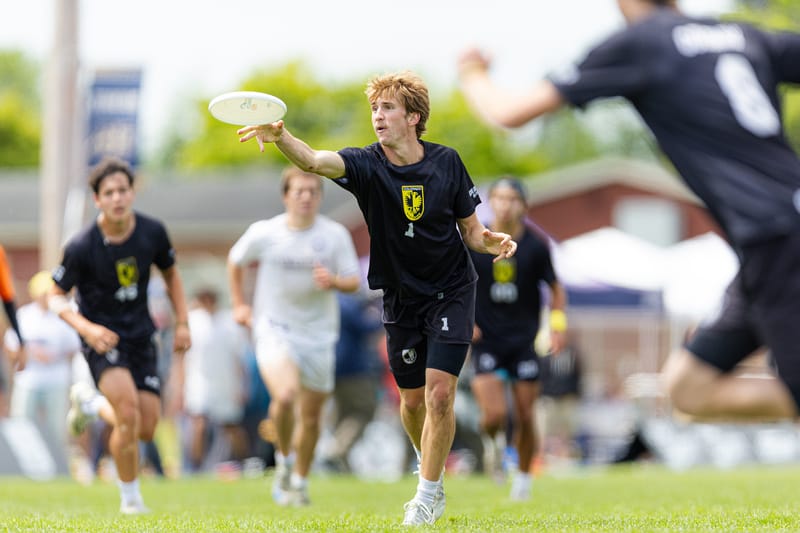
You know the teams. #1 Carleton CUT. #2 Colorado Mamabird. #3 Oregon Ego. #4 UMass Zoodisc.
You know their reputations. Defending champs with the reigning Player of the Year and almost a full line of sophomore all-stars. Blue-blood program hitting one of their periodic highs and featuring a generational offensive talent. Perennial contenders with two different stars leading two different club juggernauts to titles in each of the last two years. The famously deep team brimming with awards-level talent everywhere you look.
They are so clearly, at this point in the season, the four favorites to reach semis again that stepping beyond them feels like a journey into a different land. (No disrespect intended to any of the other teams in our top 10, who could find their way into the mix. Crazier things have happened.) What happens among this group of elites, though? Will Carleton and Colorado run it back for another 1-2 finish with Oregon and UMass settling into also-ran status?
While a ctl+v of last season’s results wouldn’t shock anybody, there’s plenty of cause to believe in the full set of intrasemifinal permutations. Let’s look at what has changed and see if we can extrapolate a little from there.
The finalists are both strong without being invincible. CUT retain their do-everything sun Declan Miller and many of the satellite pieces around him. They lose a primary cutting force and AAA playmaker in Daniel Chen, though. As good as second-year Ellis Newhouse has proven, it isn’t yet clear that he’ll be able to step up to the big time in the same way. Furthermore, it’s unlikely that teams show up to Nationals without a very detailed game plan for how to limit Axel Olson and Nate De Morgan, who can’t count on anything like an element of surprise.
‘Bird similarly lose an O-line playmaker (Levi Tapper) but have already elevated second-year sensation Elliot Hawkins into his spot on the O-line. As Ryan Shigley continues to expand his throwing bag and Zeke Thoreson has developed offensive talent to match his defensive excellence, they should be at least as potent as they were a year ago and likely a touch more consistent. Questions will persist about their efficiency, though: Tobias Brooks, for all his well-documented brilliance, dropped the disc too often considering his usage, and the D-line, even as they improved from early spring to the end of the season, never quite managed to put together a dominant break attack after turns. Keep an eye on both factors as the season gets going.
Of the four 2026 semis teams, Zoodisc perhaps have the most room for improvement, if only because they put in the weakest semis performance. That performance, though, belies a staggering level of top-to-bottom talent. Offensive centerpieces Wyatt Kellman, Ethan Lieman, and Caelan McSweeney are once again going to prove nightmarish in the aggregate, particularly when joined by some combination of Gavin Abrahamsson, Roan Dunkerley, and Mason Stone to relieve the pressure (although all three of them would slot nicely on the D-line as combination aces/D-line offensive leaders) – and Zoo will play through everybody, as always. The potential downside is that along with some veteran handling talent, they’re moving another year beyond having some of the clubhouse leaders (Artie Aucoin joins players like Noel Sierra and Isaac Kaplan in the ranks of alumni) who galvanized their push to the top of the division. Someone will have to fill that leadership role.
And with Ego, you have to squint a little to see what has changed. In 2025, Mica Glass (like CUT’s Declan Miller) cemented his spot as one of few players who can truly carry when it matters, and Raekwon Adkins stepped up from merely being a preposterously talented freshman into true stardom. Those two are set in stone – and so is most of the rest of the roster, which reportedly only lost Chander Boyd-Fliegel from their semifinal run. The improvements that could make a huge difference, then, are 1.) Jonah Hammes and Alex Hall-Witt finding more ways to be dangerous; 2.) A year of high-usage experience doing wonders for Akash McMinn and Mason Weybright on the D-line alongside Ben Horrisberger; and 3.) the potential for a plug-and-play rookie class as good as CUT’s 2025.
All in all, it’s easier to find a reason why one of these teams will take the 2026 championship than to find a reason why any of them won’t make the final four – and far, far easier than trying to pick which one will actually do it.
– Edward Stephens
POTY Watch
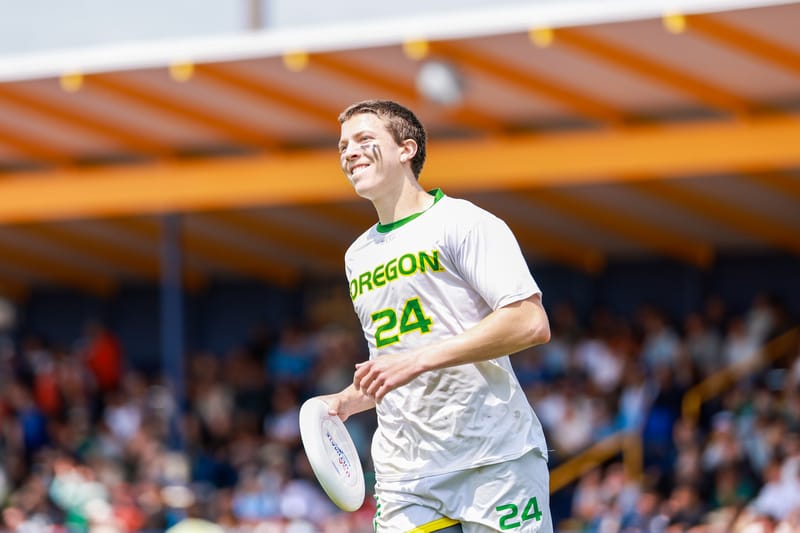
After five seasons of this award’s conversation being dominated by players who were in college before the pandemic and seemingly overstayed their welcome in the division—the Damerons and Ings and Downeys of the world—the last year of any sort of sixth-year eligibility is upon us, and the top three contenders are all still earning their bachelor’s degrees!
Let’s start with the defending award winner, Declan Miller. After being his class’ top recruit and a huge get for CUT in 2022, injuries at back-to-back Nationals prevented him from ascending to the true divisional elite. That is, until this past spring, when he was the clear lead dog for the title winners. Miller is a true five-tool player1: he can throw hucks, break the mark, initiate, streak deep, and lock up in the handler space with the best of them. There’s no question that his senior season will be one to watch out for as Carleton looks to repeat in 2026.
Leading Carleton’s top challenger is the ever-mercurial Tobias Brooks. Mamabird and whichever club team he might have joined for the Series missed him this fall as he took a semester abroad, but we should all expect his ridiculous crossfield flick hucks and dogged nose for the disc to rise to new levels in 2026 while surrounded by a star-studded supporting cast that was able to win Classic City Classic even without him on the field.
Rounding out the top tier is Oregon’s Mica Glass. He has been a very skilled and impactful college player for the last three seasons, but if the 2025 club season is any good indication, one should expect him to level up for Ego in the spring. He was at times Portland Rhino Slam!’s best offensive player during their run to the club semifinals, showcasing heightened maturity and consistency against the best defenders in the game—just imagine what he’ll do against some college kids. Woof.
After these three, I think there’s certainly a reasonable gap at least in terms of hypothetical preseason odds for the award. Anton Orme, Elijah Diamond, and Aaron Bartlett are all in similar positions—players taking their fifth and final years of eligibility, dynamic hybrids who will be instrumental to the success of seemingly quarters-level teams, and important offensive pieces on high-level club teams. It will surely require Cal Poly-SLO, Western Washington, or Michigan to make a strong run at Nationals as well as a gaudy stat line, but it’s easy to see any of these three players sneaking onto the podium in one of those not so unlikely scenarios.
There are definitely some others around the division who could be dark horse candidates. Josh Singleton, Xavier Fuzat, and Wyatt Kellman come to mind, but each of those leaves some doubts—maybe they’ll prove me wrong yet!
– Graham Gordon
A Big Bid Bubble

Only 20 teams will make Nationals in May, but there are give or take 35 teams who should all enter the season with plans to get to Rockford. To be clear to the college students reading this–these teams shouldn’t make literal plans yet, but if everything goes right, they’ll need to find a way to Northern Illinois for Memorial Day Weekend. The top teams in our Power Rankings (Carleton, Colorado, Oregon, UMass, UNC, SLO) will have no trouble qualifying. But, there’s a glut of teams behind them who despite not having a chance at winning a National title, all have the potential to make the Nationals bracket and/or play spoiler to one of the top teams.
With the sheer number of teams we’re talking about, it’s unlikely that every best case scenario described below happens, but they’re all possibilities as we set out on what is sure to be a well-contested season.
Western Washington, Oregon State, Utah, and UBC all have the benefit of recent Nationals experience, but they’ll have to face off against hungry in-region opponents like Victoria, Washington, and Utah State (not to mention Oregon). Based on the collective skill of this group and recent bid history, four or five of these teams should make Nationals. In any other year, it might have been possible for this group to get six or more bids, but a change in the college guidelines this season means that no D-I region can receive more than five bids. Even getting the maximum number of bids will leave a worthy Nationals team sitting in the Pacific Northwest.
This is all not to mention BYU, who is likely good enough to earn a bid but will not compete at Regionals due to their longstanding club policy to comply with school rules that prohibit Sunday play. As these teams cannibalize each other’s results over the course of a competitive season, each of them will be trying to peak for Regionals, because just earning the bid will not be enough–they’ll need to defend it against a pack of worthy challengers.
Likewise, the New England region (headlined by UMass) will face some tight margins for bids, and they’ll likely get fewer than five. In the best, best case scenario, Brown, Vermont, Northeastern, and Tufts all do well enough in the regular season to fit into the top 192, but it’s more likely that this group is battling over fewer bids by the time they gather for Regionals, with all of them will be in the mix given the high talent spread among the region.
Similar to last season, Penn State and Pittsburgh are set up for a showdown in the Ohio Valley region while Georgia Tech and Georgia each hope to represent the Southeast. There is a world in which both teams in a given region earn bids, but that’s far from a guarantee. For Penn State and Georgia Tech, success this season would continue upward trajectories for both teams. Pitt is hoping for a return to Nationals this season after missing out last year–a healthy Micah Davis and a strong crop of rookies headlined by Ezra Beidler-Shenk will help bring up the team’s floor. Georgia will play this year without Scotty Whitley, out with a long term injury, and Aidan Downey who graduated; it will be a transition year, but there’s plenty of Nationals know-how on the team to get them over the hump.
After Cal Poly SLO, it’s likely that UC Santa Cruz earns a bid for the Southwest, but Cal has been known to steal bids, and their institutional knowledge after four straight trips to Nationals is nothing to scoff at. With a stingy zone and possession-based offense, Cal could punch above their talent in early regular season tournaments to stay in the bid picture.
UNC Wilmington, William & Mary, Maryland, and NC State will all need positive results during the regular season to have a hope of joining UNC at Nationals. Wilmington already has a bid to Easterns–a key late-season tournament with plenty of potential to earn algorithm points against the top teams in the division. The other Atlantic Coast contenders would benefit from winning Easterns Qualifier to get that chance, too.
Michigan has not missed Nationals since 2018 and have the best player in the region on their roster, but Davenport is making the jump from D-III with their own compelling collection of talent. Davenport finished last season ranked high enough in the D-I standings to earn a bid, but with a clearer target on their backs it remains to be seen if they can do it again (and if Michigan does their part to earn a second bid rather than relying on the regional autobid per recent custom). If there are two bids at stake, don’t totally count out UChicago who have a star duo of their own in Xander Wilcox and Max Devine.
Behind Carleton CUT, Minnesota and Wisconsin are both proud North Central programs chomping at the chance to get back to Nationals. While neither has the top-end talent to compete with Carleton, positive results at good-enough tournaments could net the region an additional bid. A similar scene plays out after Colorado in the South Central – Texas, Texas A&M, and WashU will all be vying for spots at Nationals. With stars like Xavier Fuzat and Mark Henke in the mix, each team will feel like they have what it takes to contend for a trip.
Ottawa and Cornell surely are battling for the Metro East autobid, but it could be a real battle. Ottawa’s Roth Mohring and Cornell’s fifth-year pickup Leo Xiao each give their respective teams a compelling case to claim the region.
It seems like every year there are a few teams on the edge of the Nationals picture hoping to string together the right results to crash the party. This year, the talent level across the division is rising to the point where every region has a number of teams who can credibly make Nationals and make a splash once they’re there. While this certainly makes any predictions harder, it sets up an incredibly exciting regular season where every game might end up mattering come May.
– Alex Rubin
What Now for Darkside? (Redux)
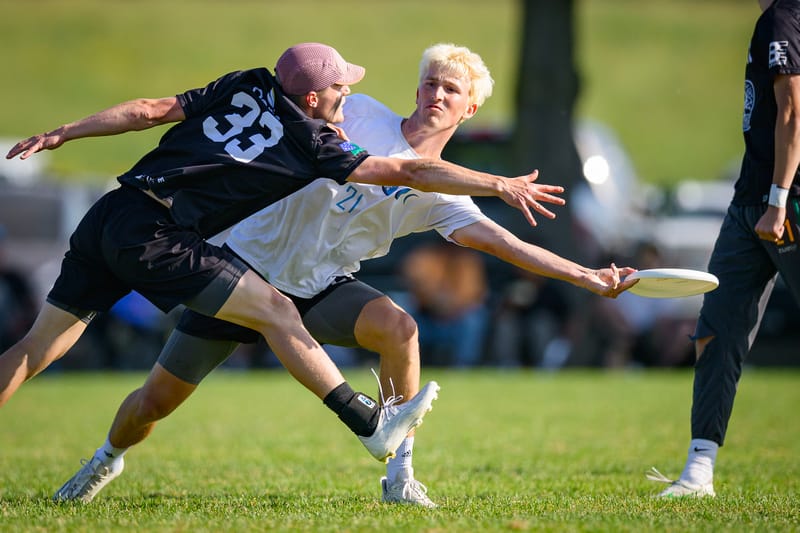
Last year, we wondered what would be next for UNC Darkside, entering a season as something other than reigning champions for the first time since the abbreviated Fall 2021 season. In 2025, an arguably even more impressive Darkside streak ended, as they failed to make semis for the first time since 2013. It was by the absolute slimmest of margins, sure, but it also took the slimmest of margins in the other direction for Darkside to even keep that streak alive in 2024. The feeling of inevitability that has surrounded UNC for a decade is starting to wane, and the pile of questions for the program is quickly growing.
Jon Nethercutt. Matt Gouchoe-Hanas. Elijah Long. Liam Searles-Bohs. Ben Dameron. All five of those players were multiple-time First Team All-Americans, spanning the entirety of Darkside’s semis run.3 Obviously, consistently playing deep into Nationals requires excellent coaching and great depth, but Darkside always had the “our best is better than your best” card to play when forced into hairy situations. That same caliber of player isn’t on Darkside’s 2026 roster. All due respect to Josh Singleton, Matthew Barcellos, and Eli and Seth Fried, all of whom are great players, but they’re much closer to the Kevin Pignone/Rutledge Smith/Anders Juengst/Alex Davis tier of supporting cast, one-time All-Americans, than the superstars that defined Darkside’s dominance.
Perhaps more pressing for Darkside is not what comes in 2026, but in the rest of the decade. Once again, Darkside don’t have their typical five star recruit to build their next iteration around. Is the Triangle pipeline drying up? Is UNC’s aura fading? Maybe one of their lesser heralded recruits becomes that next star, and all this fearmongering is just that. Or maybe Singleton et al put together another season that tops out in quarters4, the recruiting well goes further and further bare, and UNC becomes the next iteration of Pitt? Or, as implausible as it may sound, the next Wisconsin?
– Josh Katz
Players to Watch
Some of the players we think will define the 2026 college season.
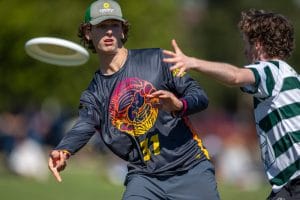
Toby Warren (UC Santa Cruz)
When I look back at the 2025 season and think about which individual player’s stock rose the most, I keep settling on Toby Warren. Maybe we were all underestimating him, or maybe he truly found his footing as the on-field leader the Slugs needed him to be. The real answer is likely somewhere in between. Either way, we expect big things from UC Santa Cruz’s most versatile, gravitational player. He’s already an exclamation mark on either end of a huck, and his recent championship with San Francisco Revolver in club has given him firsthand experience in the art of pushing every step of the way to reach maximum potential.
Felix Moren (Oregon State)

For a Beavers team that return practically their entire roster, Moren has his best ever chance to showcase his skills on the big stage in 2026. Quietly one of the most consistent two-way stars in college the last four seasons, as well as having been an impactful member of Portland Rhino Slam! since he was 18, Moren’s praises are far less sung than his ability should dictate. Maybe it’s partially because he’s played on Oregon State’s D-line for much of their last two successful seasons, but he is a brutally effective offensive player as well.
Sam Grossberg (Georgia Tech)
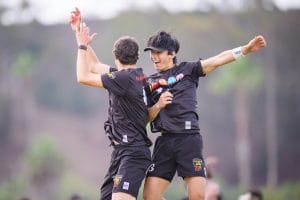
You knew we wouldn’t make it all the way through this primer without pausing to gush about the Grossbergs, right? Sam Grossberg was so utterly sublime during his freshman year that he made the Rookie of the Year podium in the most crowded field in history without even getting a chance to show off at Nationals. There is simply no way to prepare for the way he controls an offense: MFA-level throwing creativity, playmaking less and less bound by the rules of physics, and a calmness in the face of pressure that 10-year club veterans envy. He is poised to lead Georgia Tech to Nationals for the first time in more than a decade.
Elijah Diamond (Western Washington)
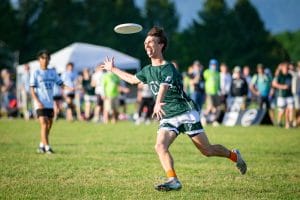
Few players in the world let alone the college division look as smooth on the field as Diamond. He glides in and out of handler cuts and deep strikes with ease. He finds spaces that are undeniably undefendable. He powers through possessions as if wanting to keep his defensive skills a secret. Western Washington is more than a one-person show, but Diamond is the one person at the center of the team’s recent rise. His tenacity, leadership, and drive would befit a POTY candidate if he played on a team in the title race. Honestly, Diamond might be the most likely person in the division to go on a John Stubbs-like run and carry an otherwise unheralded team through the Nationals bracket, and any of his streamed games should be appointment television.
Aaron Bartlett (Michigan)
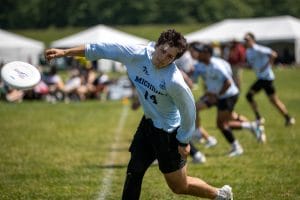
How many three-time defending club champions have ever played a college season? Bartlett hasn’t finished a club season without a title since 2022…and he gets to spend this spring beating up on college students. As MagnUM’s centerpiece, Bartlett does a bit of everything: he’ll catch centering passes, position himself as the first cut, and finish several points with powerful endzone cutting. When games become competitive, he’ll drop in for a few defensive points too. Michigan is a trendy pick to advance far in the Nationals bracket–that level of success is based almost entirely on Bartlett’s on-field gravity, leadership, title-winning know-how and the belief that he will significantly enhance the potential of the team around him.
Raekwon Adkins (Oregon)

How sure are we that Mica Glass is actually Ego’s best player? If the last four months are any indication, Raekwon Adkins has certainly made the leap into superstardom. To recap, he starred on San Francisco Revolver’s championship winning O-line, capping that season by posterizing Nate Goff for the title-winning score. He led Team USA in scoring in the Open Division at Beach Worlds for another gold medal. Now he gets to go back to terrorizing college kids. If this past weekend is any indication (reports indicate Adkins was getting consistently double-teamed at Pac Con), Adkins is poised to put up historic numbers for Oregon. There isn’t a defender anywhere in college that can match Adkins’ combination of lightning speed and quick twitch agility.
Rising Stars
Big contributors to their teams who could make waves in the national spotlight for 2026.
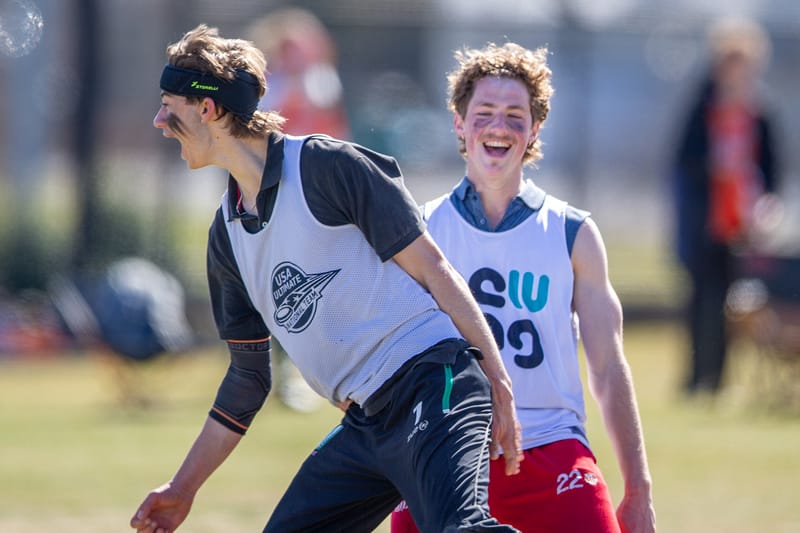
Roan Dunkerley (UMass)
UMass has made a habit in recent seasons of highlighting young players and forming their offense around the strength of multi-talented hybrid-style players. Entering his sophomore season, Dunkerley is ready to make a Lieman-like leap into an offensive focal point who can add another dynamic punch to the Ethan Lieman-Wyatt Kellman core that Zoodisc will build around. While opponents focus their efforts on stopping the proven talents on the team, Dunkerley is in line to receive plenty of opportunities to shine and relieve the pressure on the team’s upperclass players. A skilled overall athlete, Dunkerley could also make an impact on the defensive side of the disc should UMass choose to deploy him there and take the benefit of his offensive impact on the counterattack. Dunkerley’s size, closing speed, and beyond-his-years understanding of spacing will make him an asset no matter where UMass chooses to play him.
Elliot Hawkins (Colorado)
What’s even more devastating than Elliot Hawkins on a D-line? Elliot Hawkins on an O-line. Those of you who watched his breathtaking play with Denver Johnny Bravo during the club season will not be shocked in the slightest to see Hawkins alongside Tobias Brooks, Ryan Shigley, Zeke Thoreson, and Nanda Min-Fink on a world-class Mamabird attack. He plays vertically and deliberately in a way that should mesh extremely well with Shigley and complement the slightly less systematic play of the team’s other stars, and he can fill in to handle any time. Expect his performance to stand out just as much as last year, if not more.
Max Pettenuzzo (Victoria)
It is a shame that we have yet to see Max Pettenuzzo at Nationals because he’s an All-American talent who had the misfortune of operating below the spotlight so far in his college career. He’s certainly an All-Canadian talent, representing his country already at the U-20, U-24, and senior levels since 2022. Given the talent around him, Pettenuzzo makes a pretty good offensive focal point for UVic. He’s able to handle the pressure of getting open for tight resets and can hit some pretty tough throws when asked. But, he really shines as a versatile defender. Pettenuzzo blankets even his most talented opponents, and displays the kind of flexibility and acrobatics typically reserved for highlight reels while stretching for blocks. The Vikes face an uphill climb to make it back to Nationals, but Pettenuzzo has the kind of je ne sais quoi that can carry a bubble team to the season’s final weekend.
You’re All Underrating…
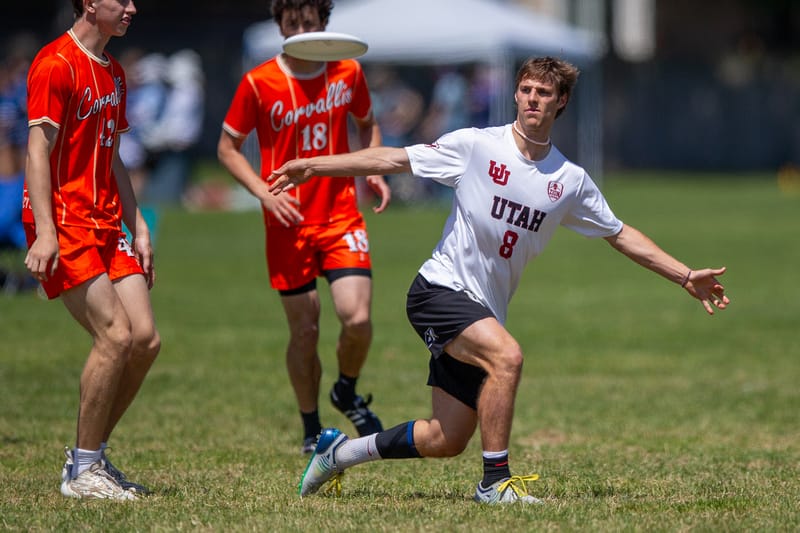
Utah Zion Curtain

Last season, Utah got hot in the right month and rode a wave of Regionals upsets all the way into the Nationals bracket. With most contributors on the team set to return, their experience building to the Series and competing against the best of the best will surely be beneficial as Zion Curtain get set to play another season in the most competitive region in the division. With as many as eight teams vying for spots at Nationals, being able to rely on successful prior experience will give ZCU a leg up, and their taste of success at Nationals was just enough to keep the team hungry and driven to accomplish more in 2026.
– Alex Rubin
Minnesota Ultimate
After a massive senior class graduated from Minnesota which included a quarterfinals appearance in 2024, the Gophers missed Nationals for the first time since 2014 just a year later. Heading into 2026, however, Minnesota has reloaded and has a great shot to earn a bid once again. A heavy contingent of the roster earned high-level reps, gaining chemistry with local club teams like Mallard, who starred handler Matthew Gunter and big man Gabe Jagt. Meanwhile, center handler Ethan Ode played for Sub Zero, along with 5th-year defensive wizards Levi Dohman and Eric Crosby Lehmann (formerly St Olaf 2024 D-III DPOTY runner up). With the addition of a team USA U20 player, Joe Lodahl, the Gophers boast a lineup that appears ready to compete once again at the highest level.
– Calvin Ciorba
Texas TUFF

Texas? Okay, Texas. TUFF were a bracket team for six years running before losing out on a game of score differential musical chairs in 2025. I choose to see that as a blip rather than a trend. In the first place, the trio of Xaver Fuzat, Owen Smith, and Aaron Barcio should hit the apex of their collective power this spring. In the second, because Cullen Baker joins sixth-year Jake Worthington to add a necessary shot of veteran stubbornness that should osmose through the entire roster, and lastly because everybody is about to see that rookie Owen Johnson is the truth. I don’t really believe that the four top teams in our rankings are under threat to miss semis, but if one of them were to falter, TUFF are well-positioned to swoop in to fill their spot.
– Edward Stephens
Western Washington DIRT

They have Elijah Diamond. They also have Cedar Hines. And Zoli Ishikawa-Szabo. That’s as good a top three as just about anyone else in the division can proclaim to have. Sure, they may not have the same depth as the division’s traditional elite powers. But they now have Nationals experience, and can draw on that experience to better optimize their Nationals strategy. Take a page out of the Michigan playbook, rest the top guys against the top seed(s) in the pool, and go full throttle in the bracket. That trio, at full throttle, is nearly impossible to defend.
– Josh Katz
Pittsburgh En Sabah Nur

After a very disappointing 2025, I think Pitt’s combination of coaching and youth influx brings them back to Nationals in 2026, at the bare minimum. Peter Kotz is back for his fifth year, and juniors Micah Davis (returning from injury) and Julius Clyburn figure to feature heavily. They also tout a rookie class that our own Keith Raynor said is “the best class, possibly by a lot,” headlined by HSNI stud Ezra Biedler-Shenk from Masterman and a litany of other plus athletes with throwing upside from the Mid-Atlantic region. What else is new for En Sabah Nur?
– Graham Gordon
Davenport Panthers

No, I don’t mean to stump for Davenport in the “Davenport is going to make semis” way. And yes, I did watch them at D-III Nationals last year. But Davenport is a good team, with some high quality talent, and they did well in the transfer portal again this year. Can they beat Michigan in a one-bid Great Lakes? I’m not sure. Michigan does have Aaron Bartlett. But Davenport is good enough to earn their own bid. If Michigan follows suit with their own bid-earning year, I’d feel good about trusting Jacob Felton in the backdoor game-to-go, and even better about Davenport’s chances at making the bracket once they get to Nationals, especially when they won’t have a giant target on their backs.
– Josh Katz
The Current Power Rankings
College D-I Men's Power Rankings:
| 1 | Carleton |
| 2 | Colorado |
| 3 | Oregon |
| 4 | Massachusetts |
| 5 | North Carolina |
| 6 | Cal Poly SLO |
| 7 | Western Washington |
| 8 | BYU |
| 9 | Oregon State |
| 10 | Texas |
| 11 | Michigan |
| 12 | UC Santa Cruz |
| 13 | Penn State |
| 14 | Georgia Tech |
| 15 | Utah |
| 16 | Brown |
| 17 | Vermont |
| 18 | British Columbia |
| 19 | Pittsburgh |
| 20 | California |
| 21 | Minnesota |
| 22 | Victoria |
| 23 | Washington |
| 24 | Tufts |
| 25 | UNC Wilmington |
If such a thing exists in ultimate ↩
There’s no way a Metro East team will be ranked that high, and the region will surely be set for an autobid ↩
Except, oddly, for 2016, when Darkside had no players on either All-American team. ↩
As we said earlier in this primer, it’s hard to envision any of last year’s semis teams not getting there again in 2026 ↩